
Whole-system duct and dryer vent check with before-and-after photos - you see exactly what came out of your vents
That "$99 whole-house special" is a bait ad - the real number appears once they are in your hallway, or the "clean" is a shop-vac at the register. We photograph the inside of your ducts before and after instead.
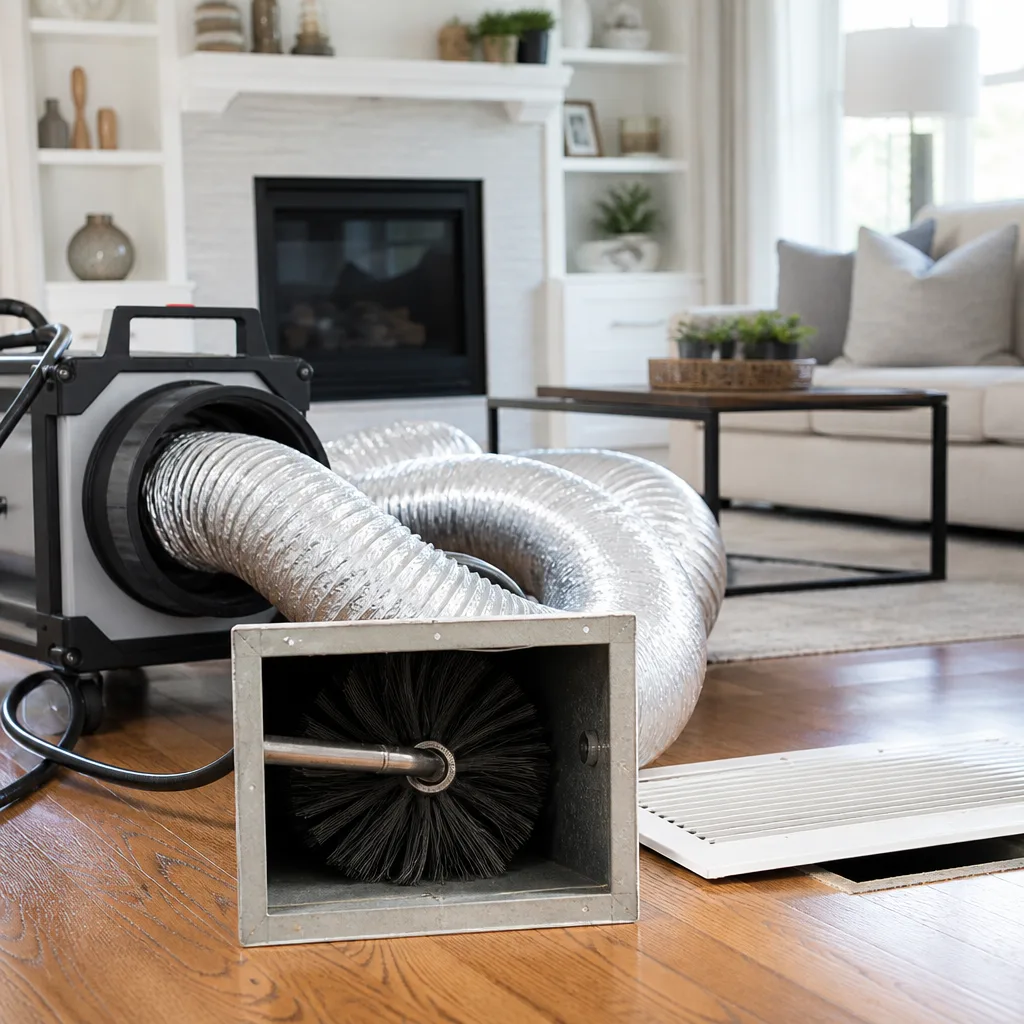
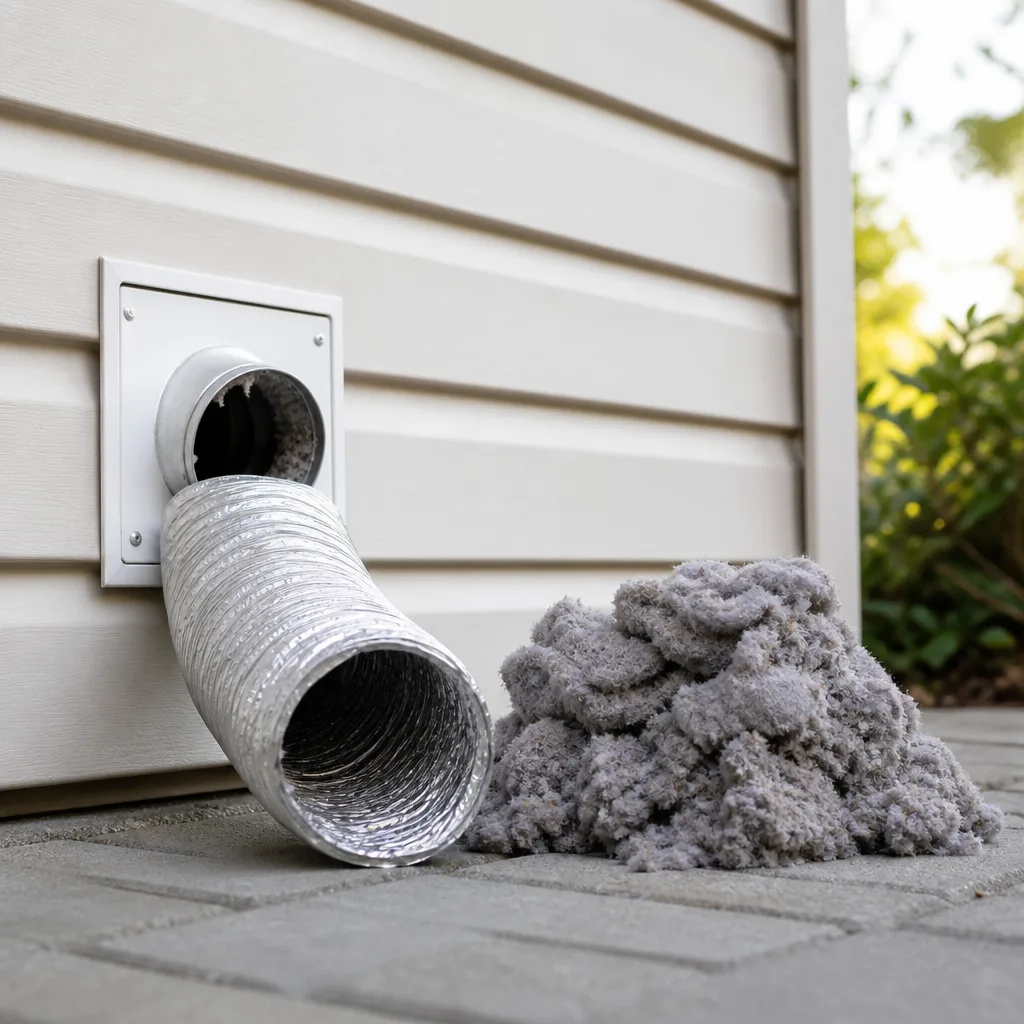
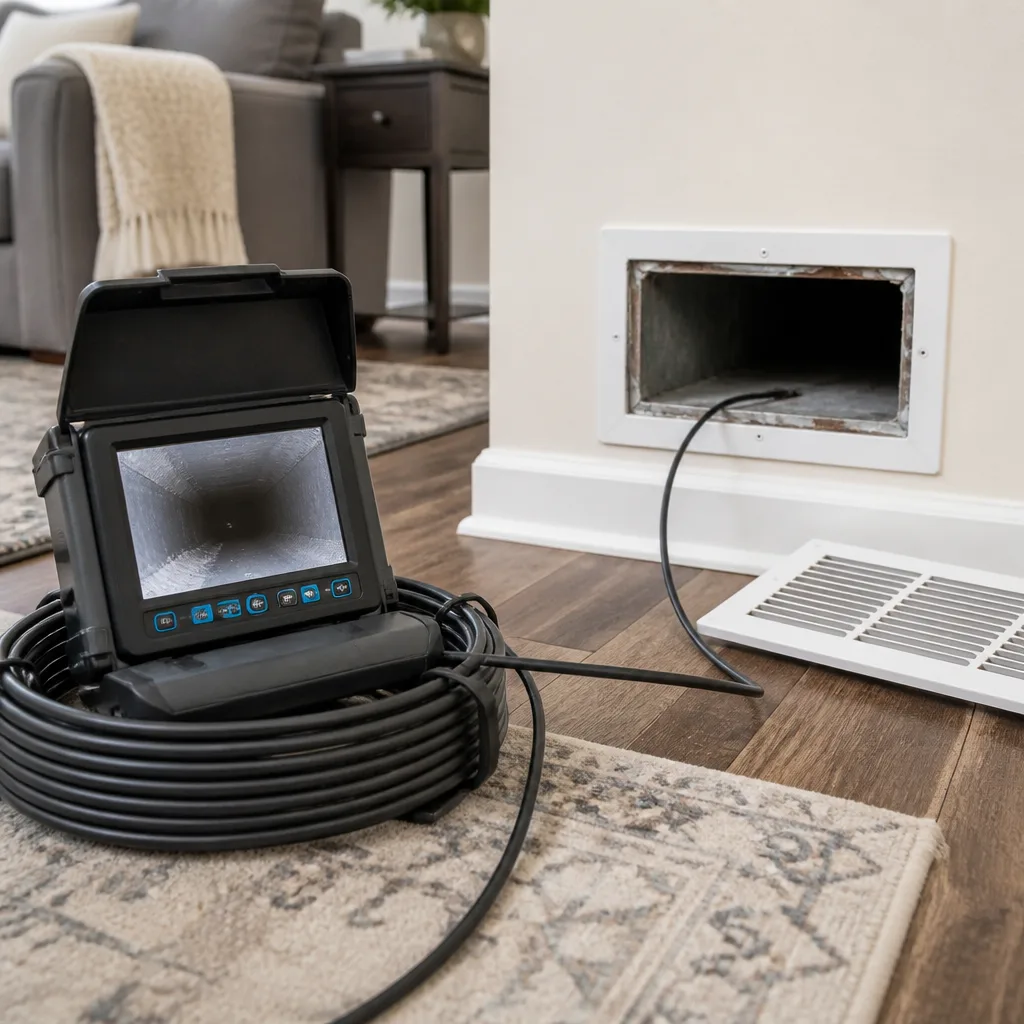
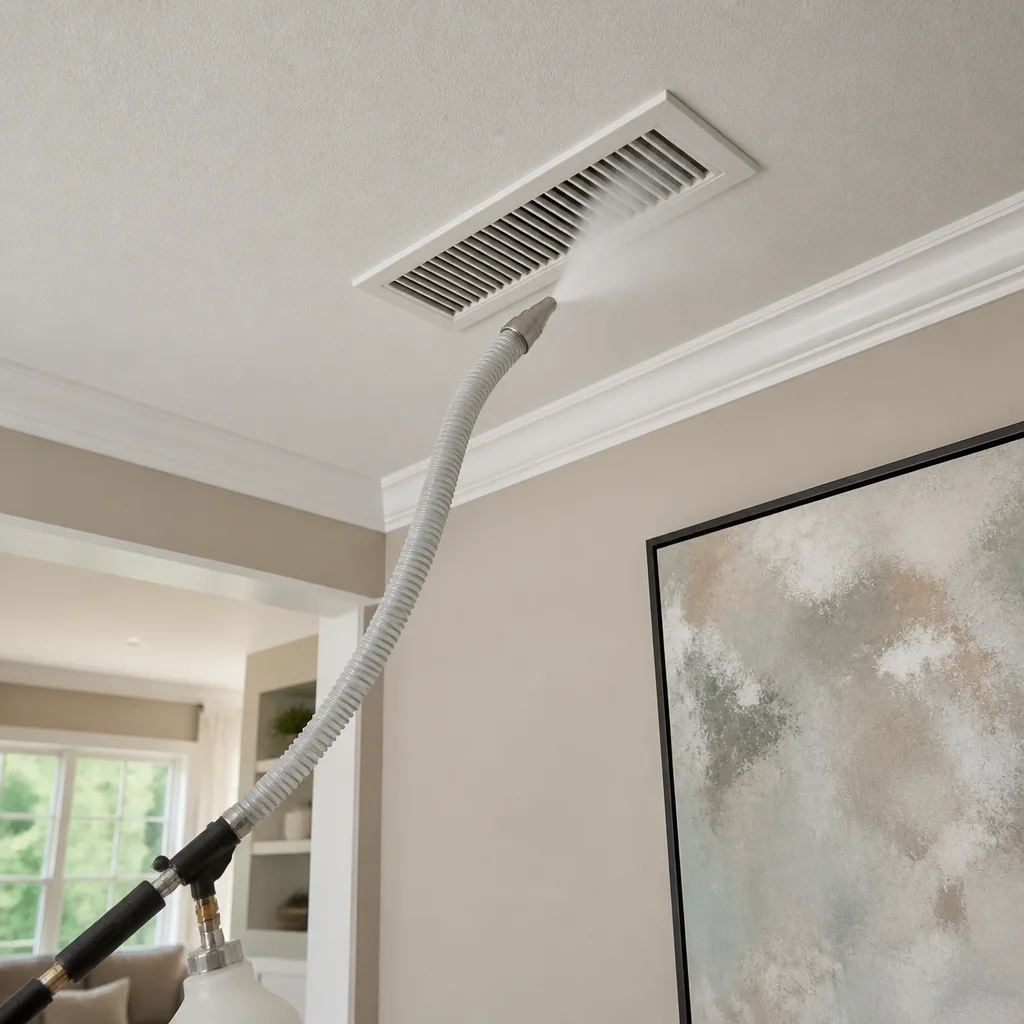
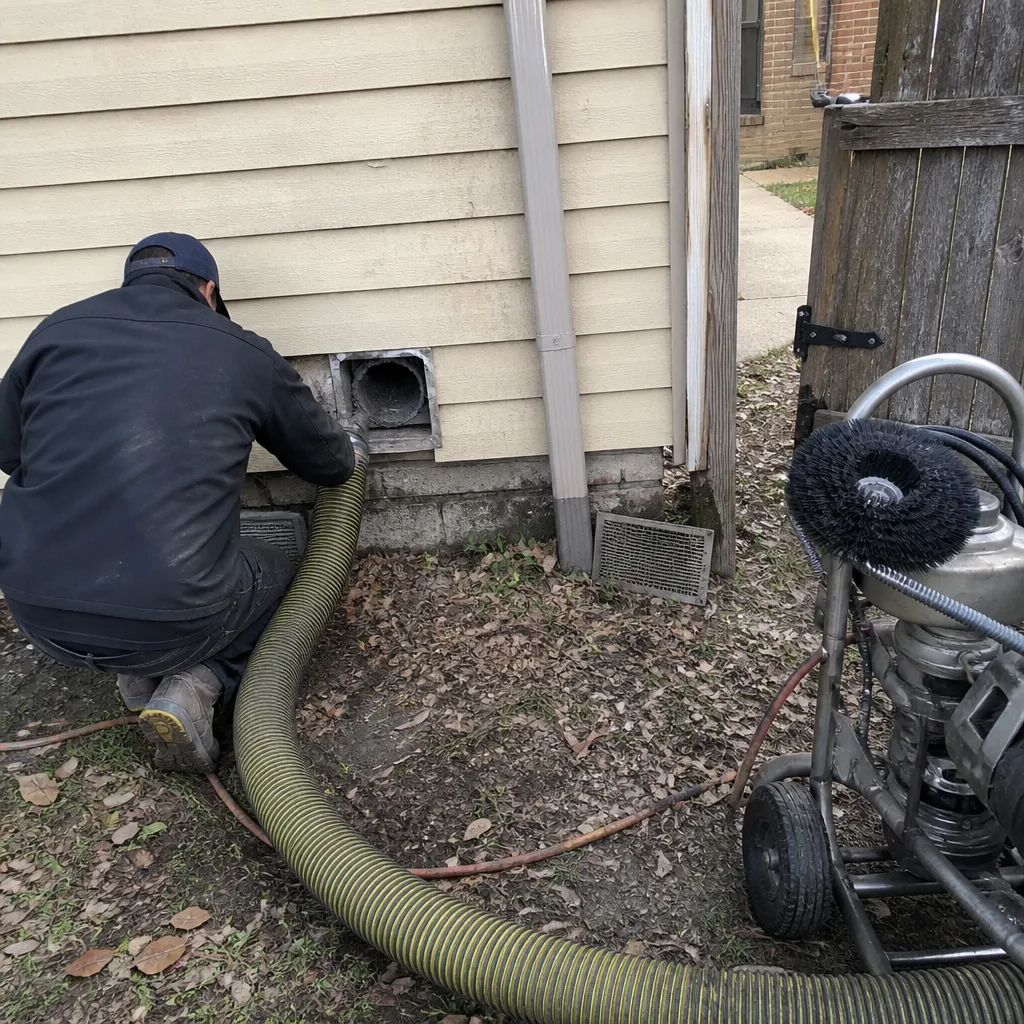 Before
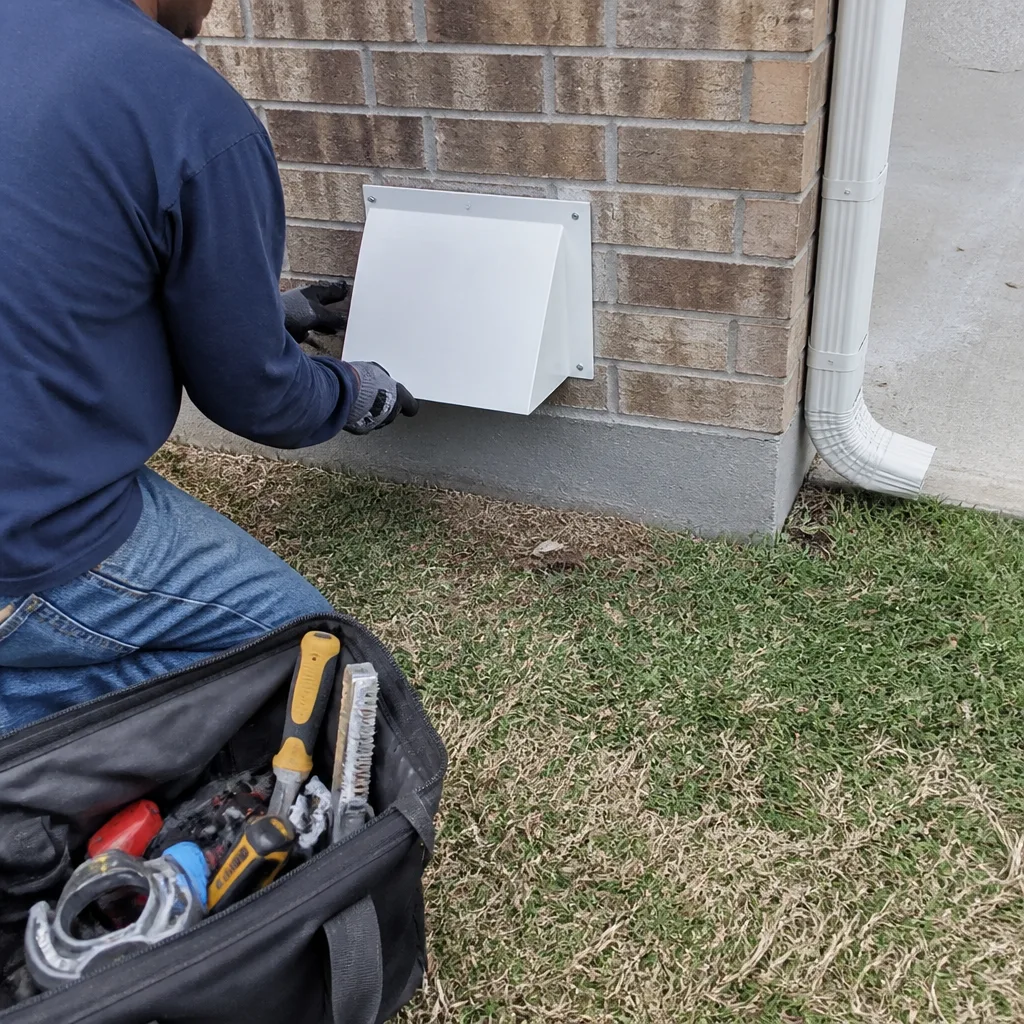 After
After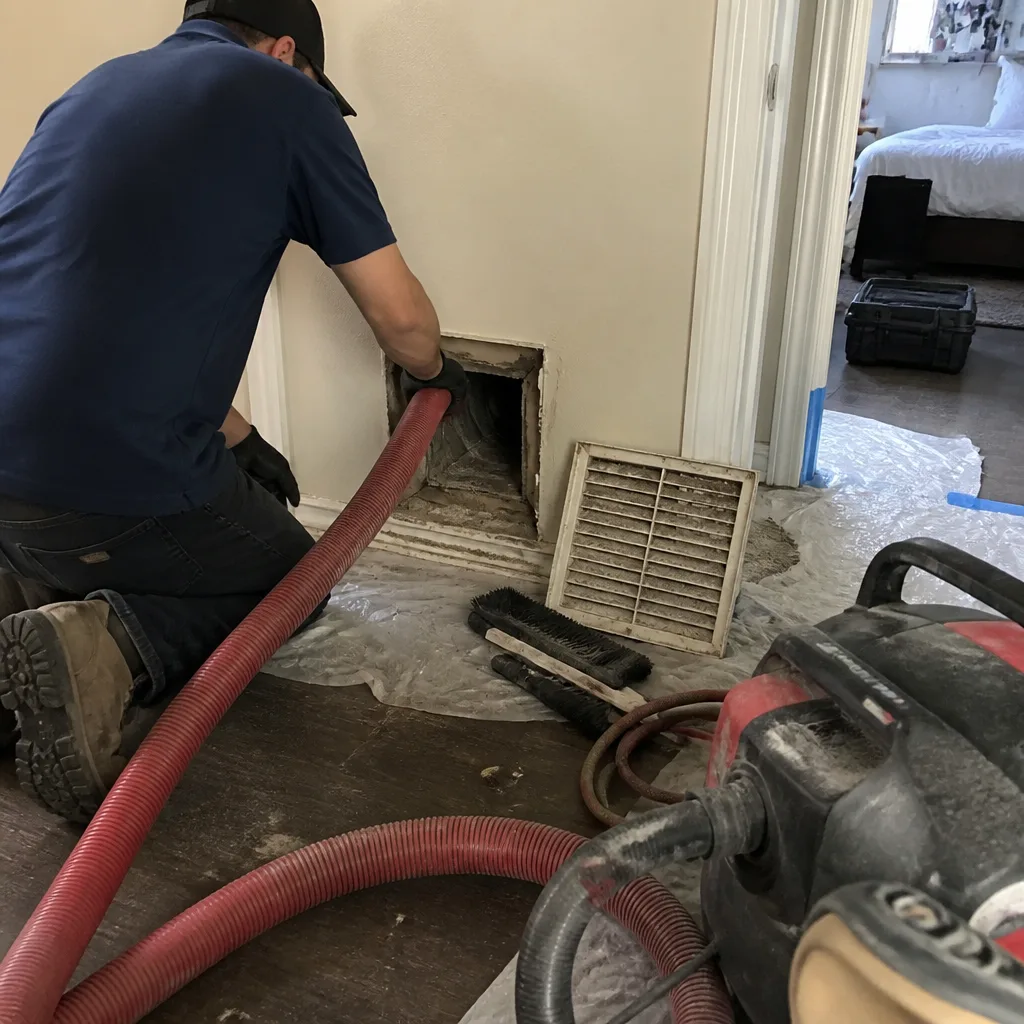 Before
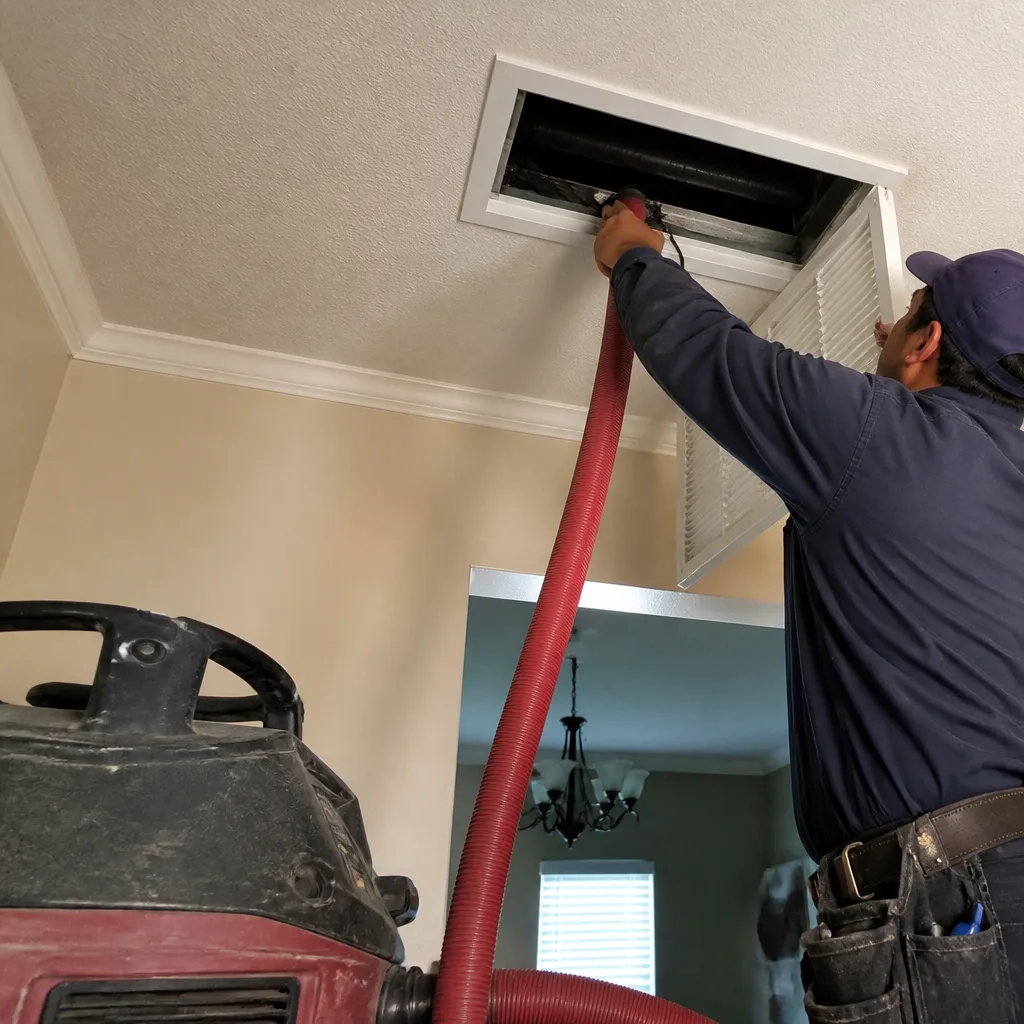 After
After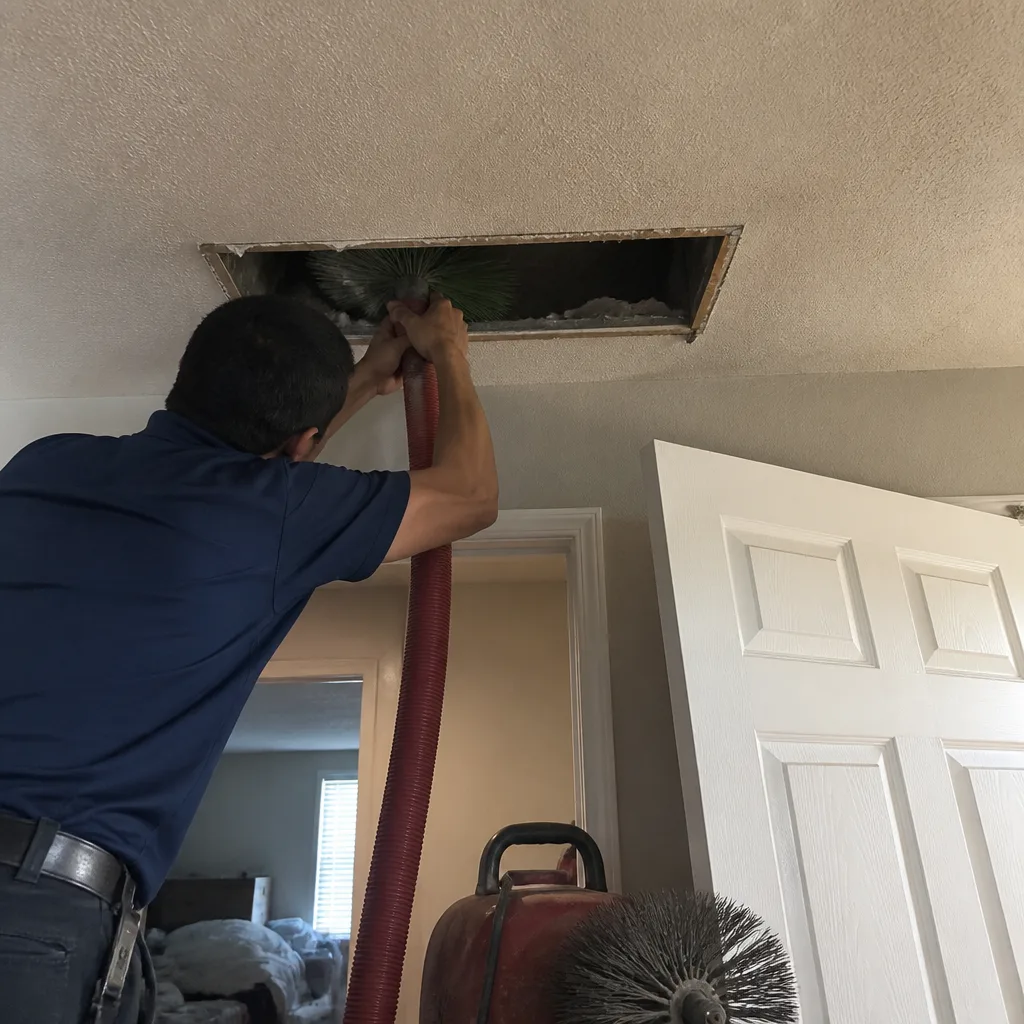 Before
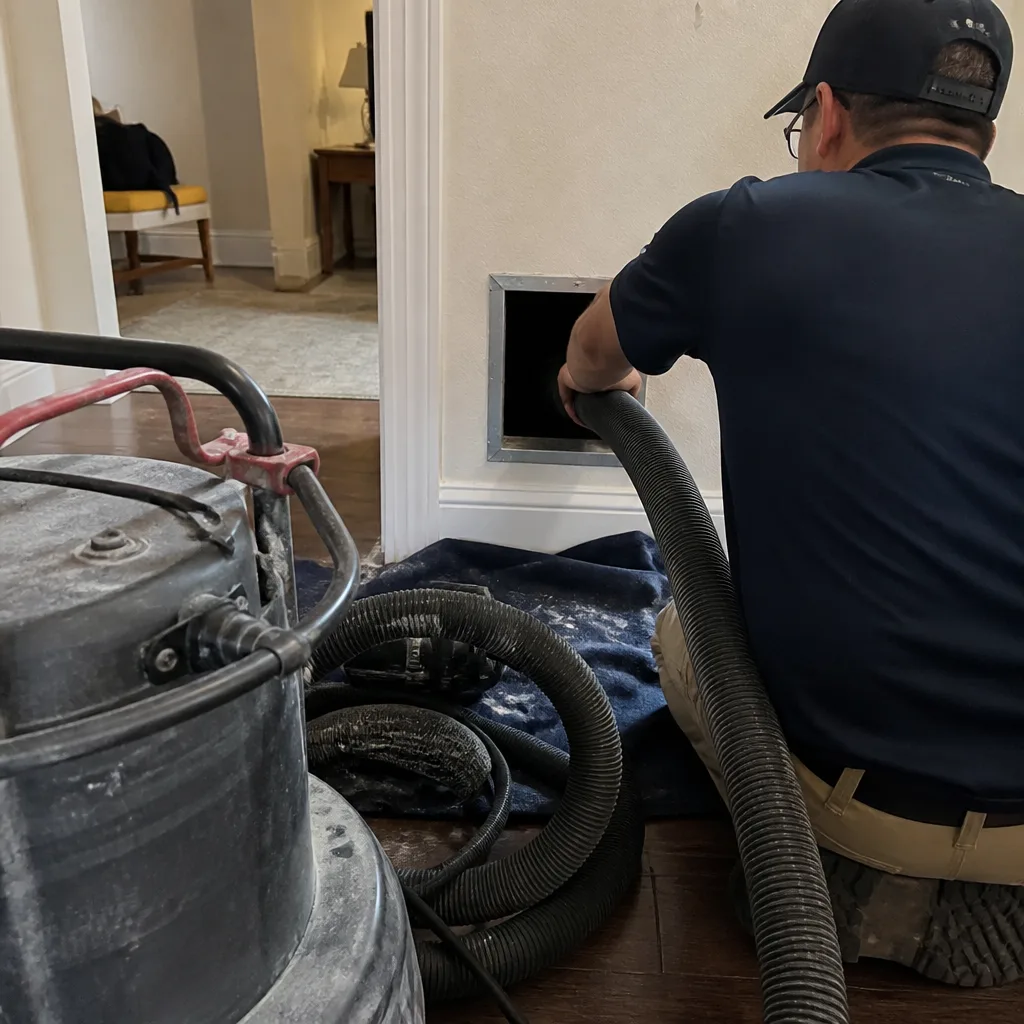 After
AfterRotobrush Vent Sanitizing: The Lewisville Owner’s Guide
Rotobrush vent sanitizing in Lewisville typically runs $340-$520 installed for a complete system treatment, and we stock the full line of Rotobrush-compatible sanitizing agents and application hardware on our Lewisville trucks. Most homeowners who call us notice the problem after a standard brush cleaning leaves odors behind, or after they learn their Rotobrush machine pushed debris through without killing the mold or bacteria that caused the smell in the first place. Here’s the before photo. Now let’s talk about what happens next.
We see this most often in Lewisville homes built between 2005 and 2015, especially in neighborhoods like Castle Hills and Valley Vista, where the flex duct runs are long and the North Texas humidity gives microbial growth a foothold that brushing alone won’t dislodge.
Which Rotobrush Models This Applies To
The vent sanitizing setup pairs with Rotobrush’s negative-pressure extraction machines, specifically the BrushBeast series (models 850, 950, and the 950-HD with HEPA filtration), the original Rotobrush Classic, and the portable Roto-Vac systems. The critical match isn’t the machine itself but the application hardware: the sanitizing injector nozzle, the solution metering valve, and the 3/8-inch braided feed line that runs from the chemical reservoir to the brush head assembly.
Rotobrush OEM sanitizing kits carry part numbers starting with RB-SAN (for the BrushBeast line) and RB-CV (for Classic/Vac combos). The OEM injector nozzle is a 0.4-gallon-per-minute fixed-orifice design. We also stock a quality aftermarket equivalent from Guardsman that uses a variable-flow 0.2-0.6 GPM nozzle with a quick-disconnect fitting - compatible with all Rotobrush wands but especially useful on the 950-HD, where the higher suction can pull diluted solution through too fast if the flow isn’t tuned down.
Here’s the gotcha we run into in Lewisville: the BrushBeast 850 and 950 use different wand diameters (1.5-inch vs. 2-inch), and the injector clip geometry changed in 2019. A pre-2019 RB-SAN kit won’t seat securely on a post-2019 950-HD without the adapter clip, which most homeowners don’t realize they need until the nozzle falls off inside the duct run. We carry both clip styles on every truck.
Signs Your Rotobrush Vent Sanitizing Is Failing
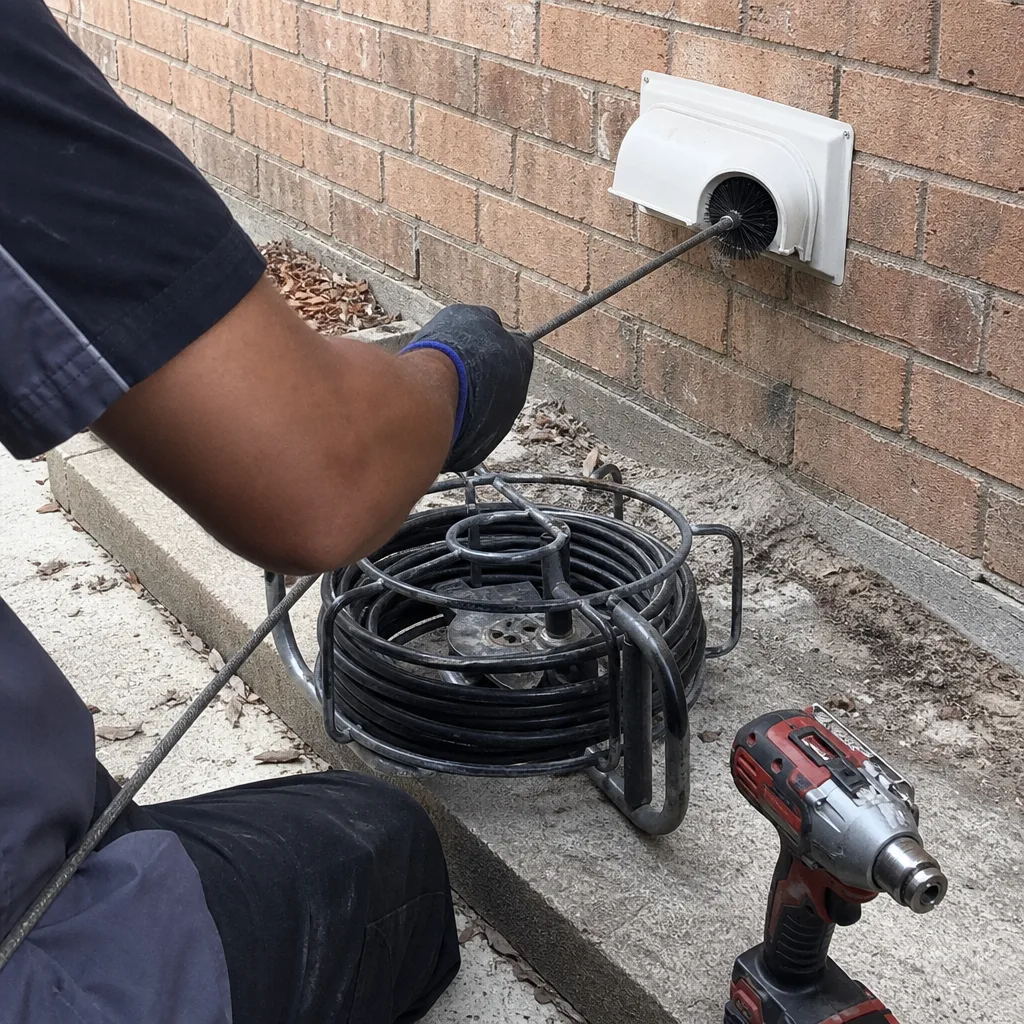
- Persistent musty odor after brushing. The Rotobrush machine agitated debris loose but the sanitizing agent never reached the source. Usually the metering valve is clogged with crystallized residue from a previous job, or the feed line has a pinhole leak that’s dropping pressure before the nozzle.
- Visible moisture or chemical streaking at registers. The injector nozzle is flowing too much solution, often because the fixed orifice has worn larger from chemical erosion. On the Guardsman variable-flow unit, this means the adjustment collar has slipped; on the OEM nozzle, it means replacement.
- No mist visible at the brush head during operation. The feed line has detached at the reservoir bulkhead fitting, or the metering valve failed closed. We find this more often on machines that sit in hot Lewisville garages between jobs - the EPDM line hardens and loses seal at the barb fittings.
- Intermittent flow that starts strong then fades. The reservoir pickup tube has a cracked foot valve, or the venturi port in the wand is partially blocked with dried chemical. This is common when a previous operator ran pure water through without flushing the system afterward.
- Chemical smell in the living space during or after treatment. The application is happening too close to the register, or the negative-pressure balance is wrong and the machine is pushing rather than pulling. Sometimes the sanitizing agent itself is the problem - we only use EPA-registered solutions that are labeled safe for occupied spaces, not the bulk quaternary ammonium compounds some operators buy to cut costs.
BeforeAfterReplacement Cost & What’s Included
| Component | Parts + Labor | Warranty |
|---|---|---|
| OEM Rotobrush sanitizing kit (nozzle, valve, feed line) | $340-$420 | 1 year |
| Guardsman variable-flow equivalent | $280-$360 | 1 year |
| Reservoir replacement (5-gallon or 10-gallon) | $180-$240 | 2 years |
| Complete system sanitizing treatment (labor + agent) | $420-$520 | 365-Day Done Right Promise |
The range depends on three things: how many duct runs we’re treating (a typical Lewisville single-story runs 8-12), whether we need to pull and clean the plenum access to reach the main trunk, and whether the existing hardware is salvageable or contaminated with incompatible chemicals. We put the exact number in writing before any work starts, Haven Standard Clause 1. Every treatment includes the Documented Photo Record - inside every run, before and after - delivered as part of the standard job record.
DIY or Call Us?
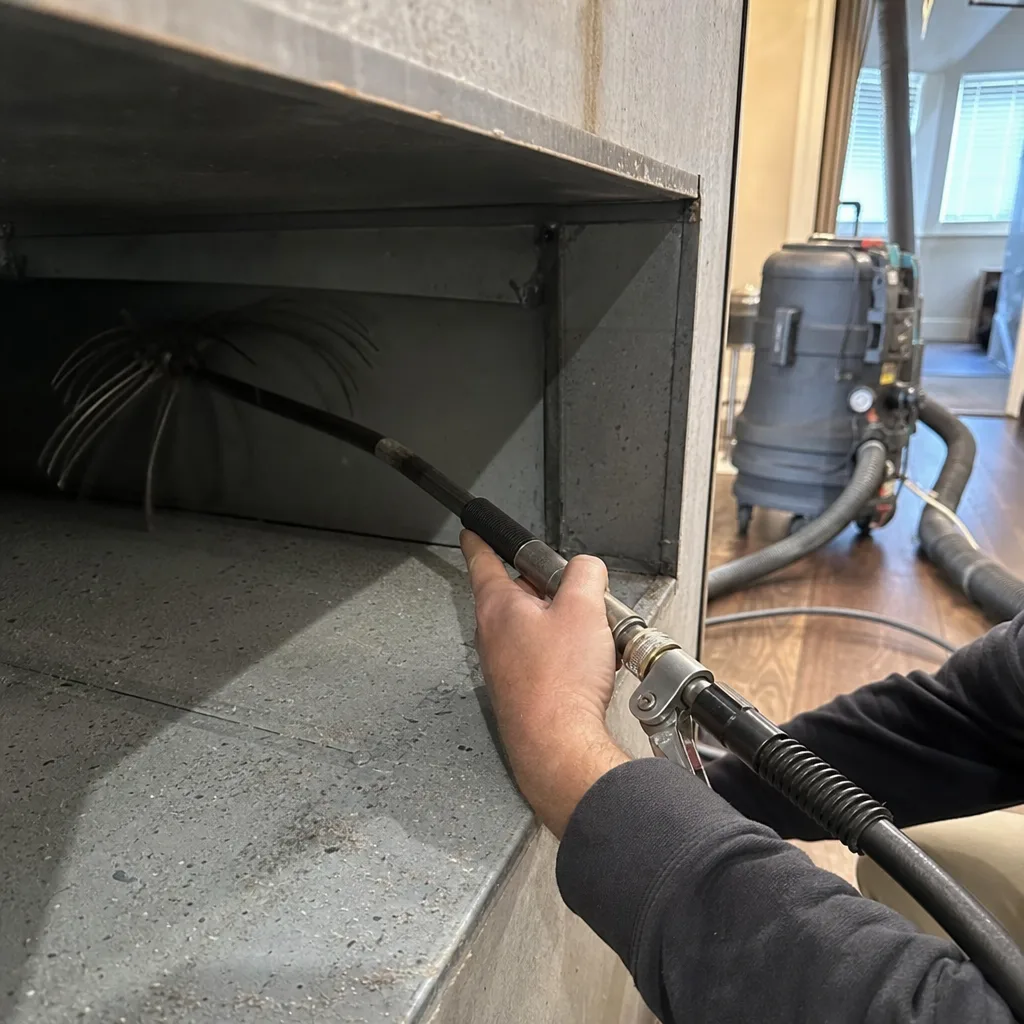
What you can safely check yourself: verify the reservoir has clean, unexpired solution; confirm the feed line isn’t kinked or visibly cracked; and inspect the nozzle orifice for crystallized buildup that might clear with warm water and a soft brush. These three checks solve about 30% of the calls we get.
Where DIY goes wrong: the sanitizing agent concentration matters. Too weak and you’re paying for scented water. Too strong and you’re etching the galvanized ductwork or leaving residues that become a future growth medium. The EPA registration label specifies dilution by pH and water hardness - Lewisville’s municipal supply runs moderately hard at 120-150 ppm, which shifts the effective concentration. We meter with a calibrated mixing valve, not a garden-hose guess.
There’s also the matter of what you’re actually reaching. A homeowner with a handheld sprayer might coat the first six feet of a duct run. Our Rotobrush application pushes atomized agent the full length of the system while the negative-pressure extractor pulls it back out, along with the debris it loosened. Call (940) 240-8552 and we’ll put a written price next to whatever you’ve been quoted.
FAQs
In Lewisville’s climate, a properly applied treatment typically remains effective for 12 to 18 months. The limiting factor isn’t the chemical degrading but new microbial inoculation - every time the HVAC cycles, it pulls in fresh spores from the attic or crawl space. Homes with pets, recent water intrusion, or construction dust may need attention closer to the 12-month mark. Call (940) 240-8552 and we’ll show you what the camera saw.
The feed line and reservoir fittings can often be rebuilt with new barbs and clamps, but the metering valve and injector nozzle are sealed units. We’ve found that cleaned nozzles rarely hold their specified flow rate, which means inconsistent application. We don’t rebuild them - we replace them, document the new part number in your job record, and warranty the work. The labor savings of a “repair” usually evaporate when the homeowner has to call us back.
Hardware replacement alone - nozzle, valve, and line on an existing Rotobrush machine - takes 45 minutes to an hour. A full system sanitizing treatment with the Documented Photo Record runs 2.5 to 4 hours depending on duct count and access. We schedule by the job, not the clock. Tomas Reyes and our crew have run these treatments in Lewisville long enough to know which Castle Hills attics require extra time for safe access.
Yes. We carry OEM Rotobrush sanitizing kits, Guardsman variable-flow equivalents, replacement reservoirs, and the adapter clips for both pre- and post-2019 wand geometries. CleanRun Air Duct Cleaning Lewisville is an independent service provider, not affiliated with Rotobrush, and we stock what we use because we don’t believe in a return trip that the customer didn’t plan for.
CleanRun Duct Repair & Cleaning is independently owned and operated under the Haven Standard, established in 2013. Every job is quoted with a written price before work begins - no exceptions - and concludes with a Documented Photo Record of every duct run. All technicians are background-checked, uniformed, and identified by name before arrival, under Haven Standard Clause 3: Verified Crews. Equipment used includes Rotobrush, Nikro, Abatement Technologies, Honeywell, Aprilaire, and Guardsman. Call (940) 240-8552 for a free estimate or a Free Second Opinion on any written estimate.
Written by Tomas Reyes, Owner, CleanRun Air Duct Cleaning Lewisville at CleanRun Air Duct Cleaning Lewisville, serving Lewisville and nearby areas.