
Last updated September 23, 2026
Whole-system duct and dryer vent check with before-and-after photos - you see exactly what came out of your vents
That "$99 whole-house special" is a bait ad - the real number appears once they are in your hallway, or the "clean" is a shop-vac at the register. We photograph the inside of your ducts before and after instead.
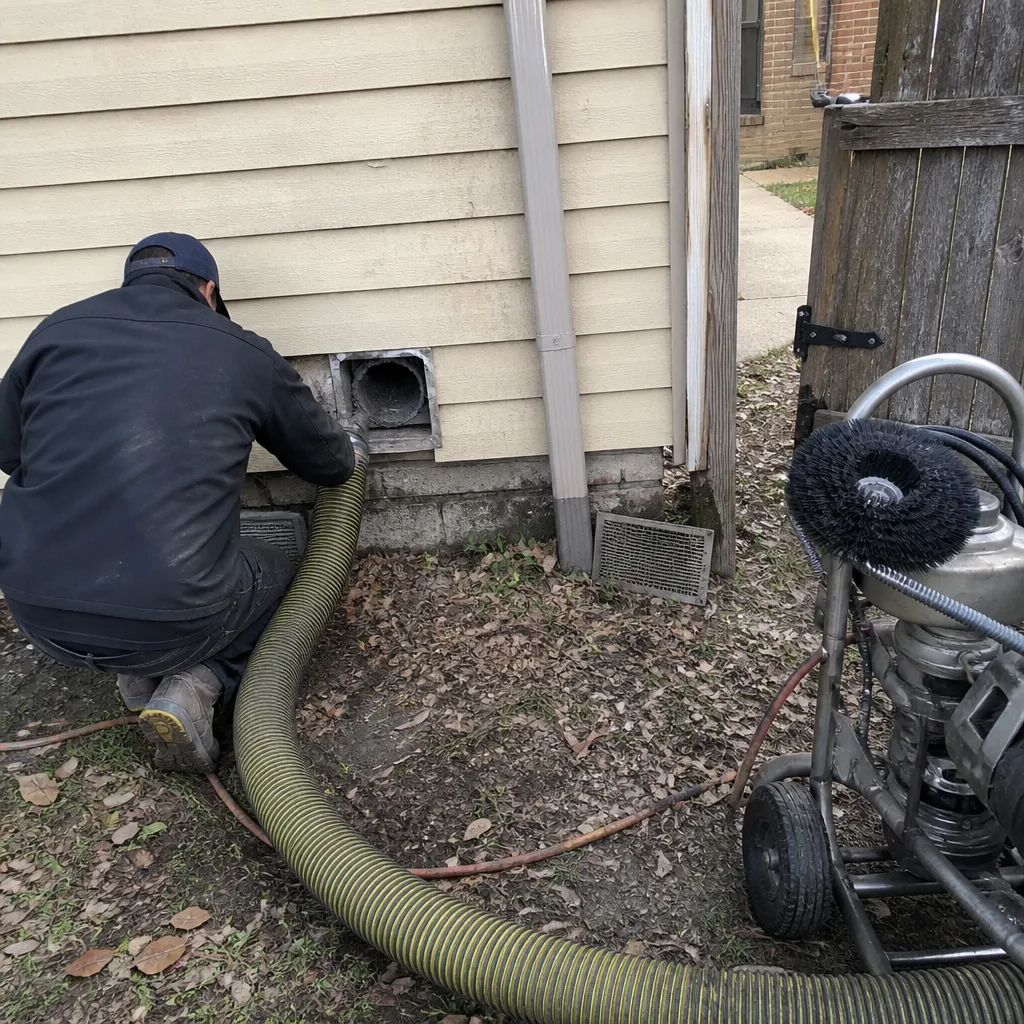 Before
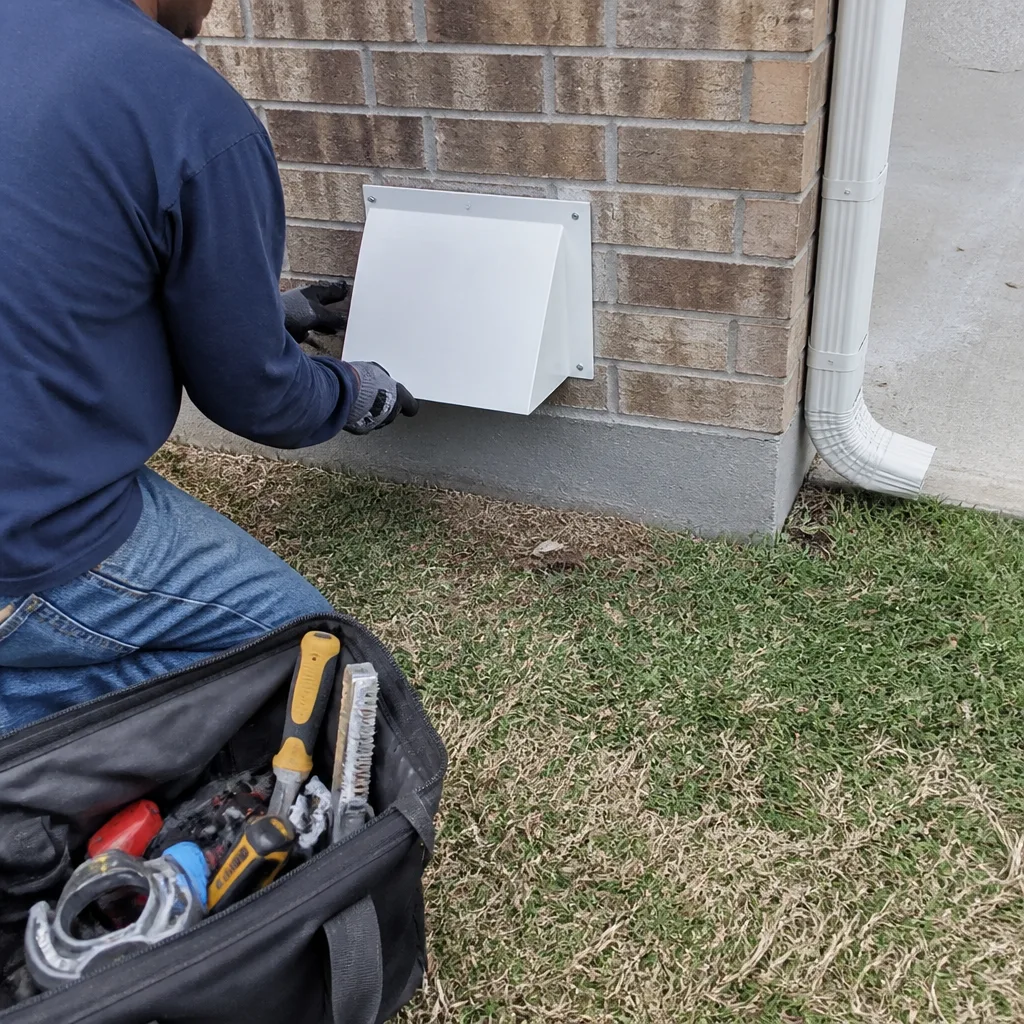 After
After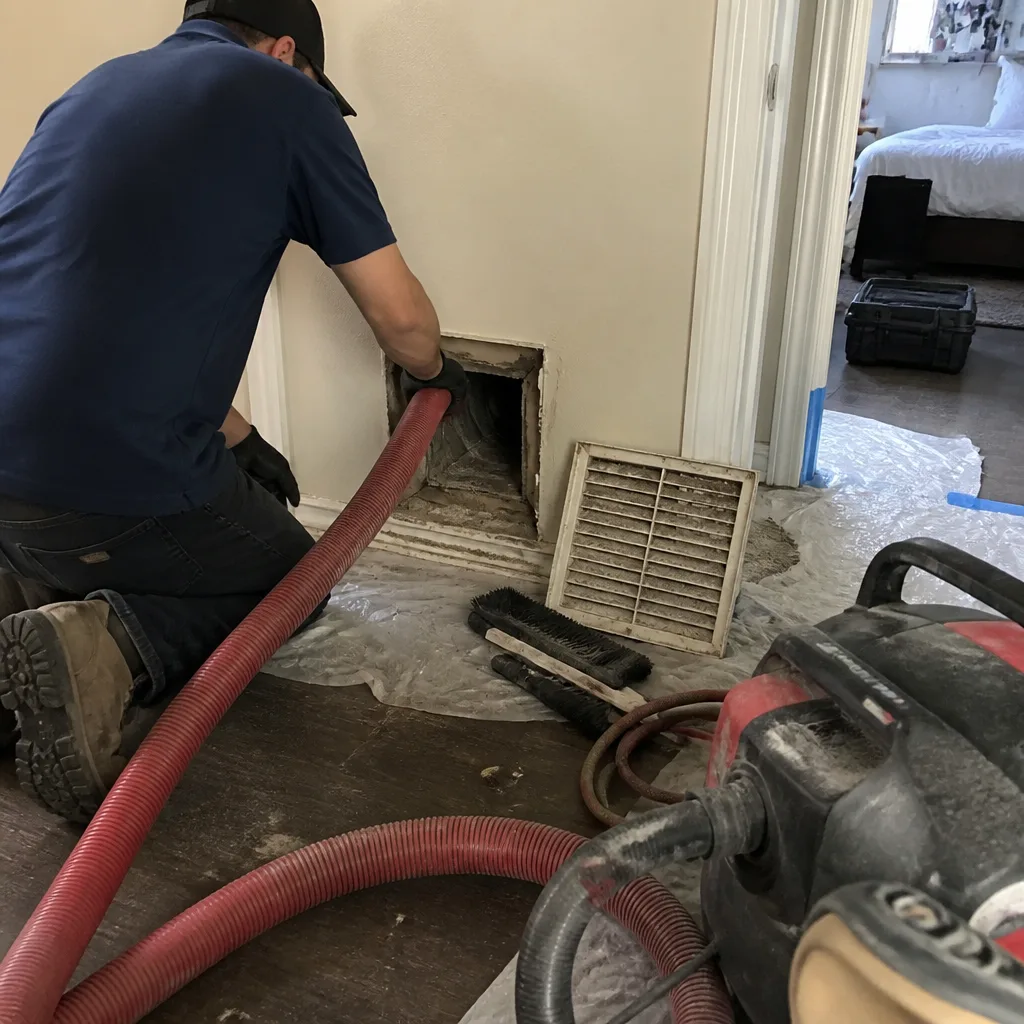 Before
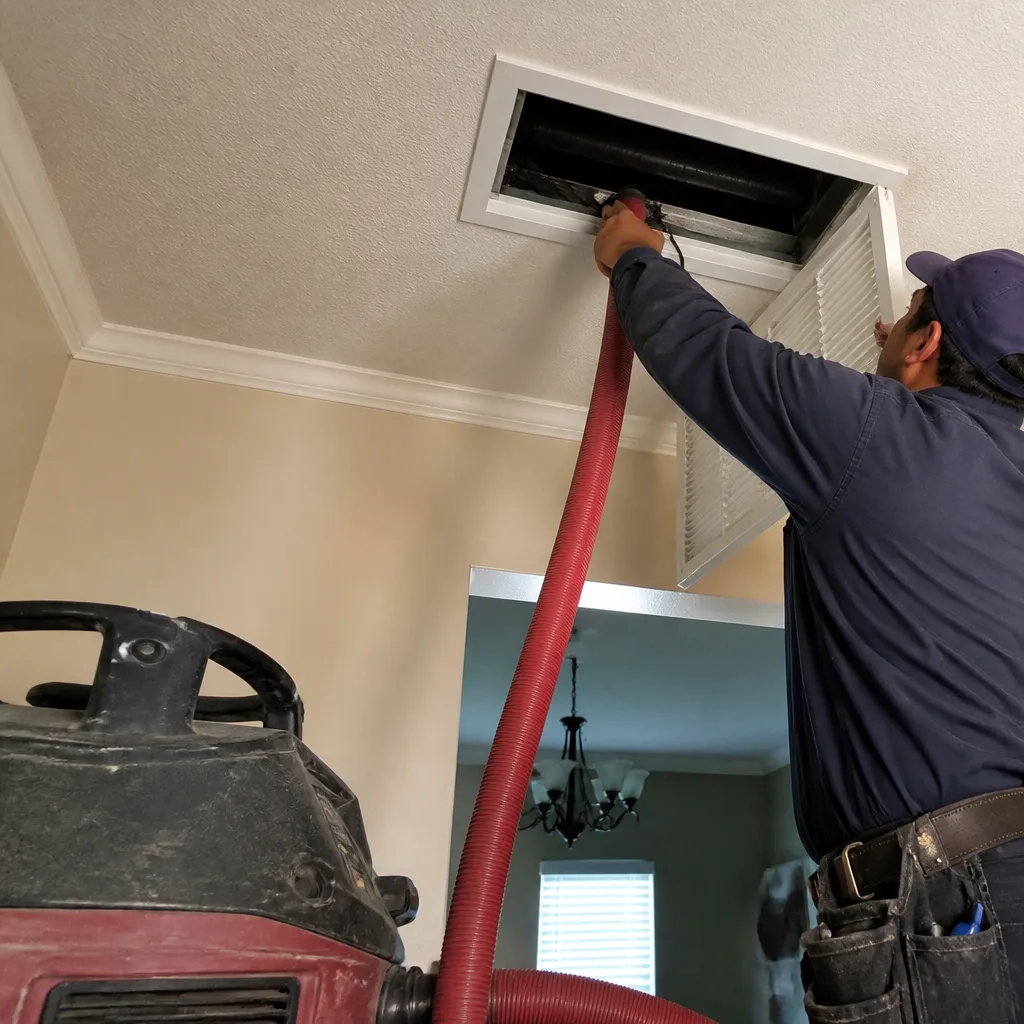 After
After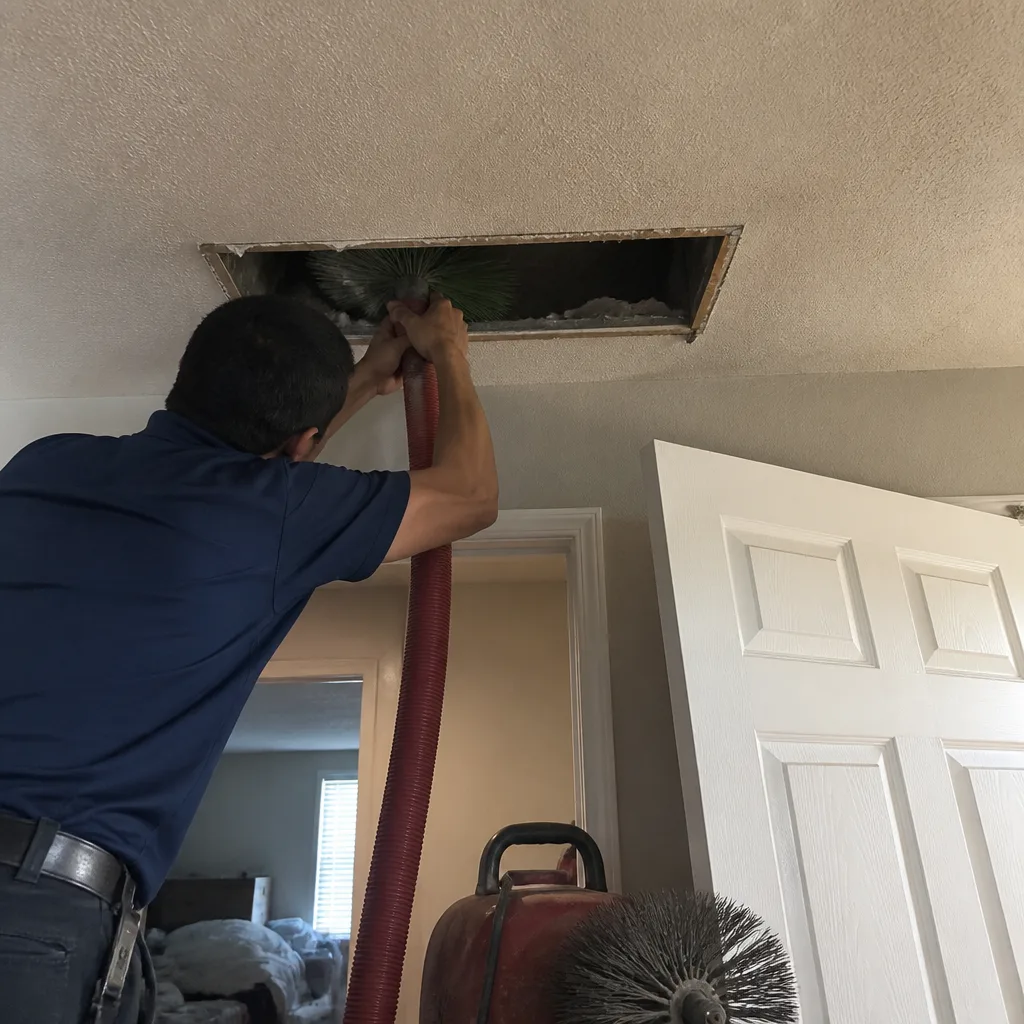 Before
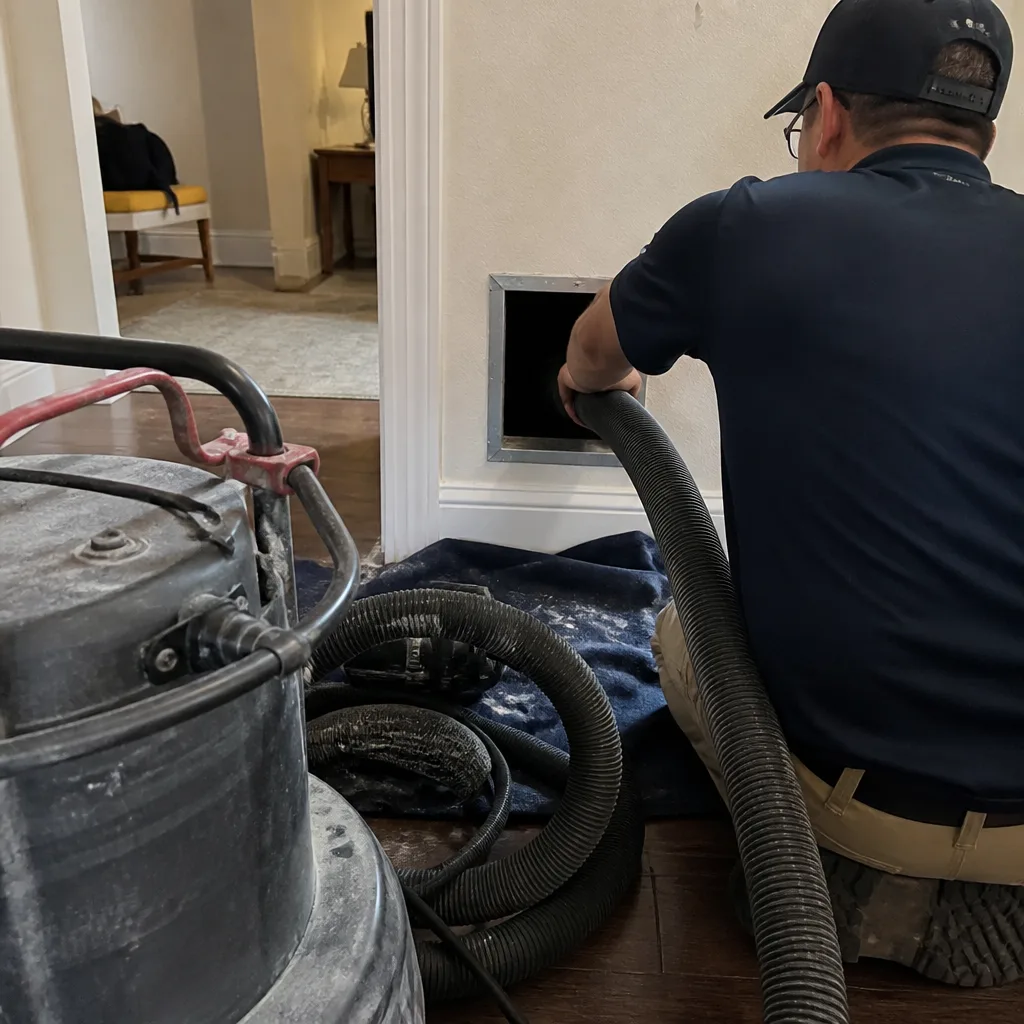 After
AfterHow to Hire a Air Duct Cleaning Contractor in Lewisville: A Step-by-Step Guide
Ask any air duct cleaning company in Lewisville how many linear feet of duct your home has before they name a price. If they quote without knowing, the price is not based on your job. The $79 coupon exists because most homeowners have no hiring framework. They pick on price because they have nothing else to evaluate. In this guide, we’ll give you five questions that, when asked before booking, immediately separate documented-process contractors from volume-discount operations. For more on what to expect, see our Air Duct Cleaning services. These questions work because they require specific answers that can’t be faked.
Quick Answer
To hire a legitimate air duct cleaning contractor in Lewisville, request a written scope that lists your duct count and access method, confirm the company photographs every duct run before and after, verify they use professional negative-pressure extraction equipment from recognized manufacturers, ask what happens if debris extends beyond the quoted scope, and get callback terms in writing before anyone touches your system. A contractor who deflects any of these questions is not prepared to deliver accountable work.
Table of Contents
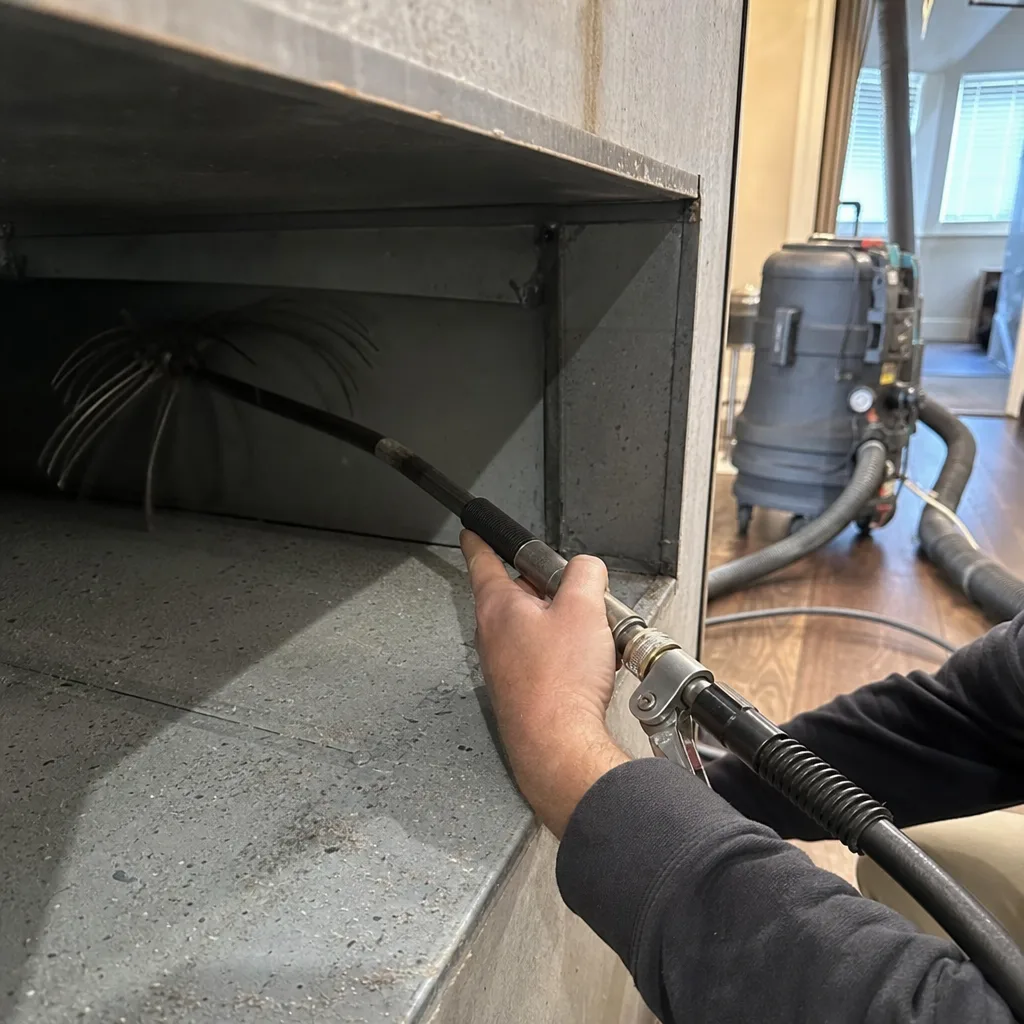
- Why Phone Quotes Without a Duct Count Are Structurally Meaningless
- The Five Pre-Hire Questions That Separate Real Contractors from Coupon Operations
- What NADCA Membership Actually Means (and Doesn’t Guarantee)
- How to Read a Quote Document: Line Items, Red Flags, and “Starting At” Language
- Day-of-Service Red Flags: What to Watch When the Truck Arrives
- Lewisville-Specific Considerations: Climate, Codes, and Common Conditions
- Common Mistakes to Avoid
- When to Call a Professional
- Frequently Asked Questions
- The Bottom Line
BeforeAfterWhy Phone Quotes Without a Duct Count Are Structurally Meaningless
A price given over the phone for air duct cleaning is a guess dressed up as a commitment. Your home’s duct system is not a commodity. Two 2,000-square-foot houses in Lewisville can have dramatically different configurations: one built in 1985 with a single return and flexible duct in the attic, another built in 2015 with three returns, a basement plenum (the main distribution box where all ducts connect), and hard-pipe ductwork running through a conditioned crawl space.
Here’s what a legitimate contractor needs before naming a real number:
- Square footage - gives a rough starting point for system scale
- System age - older systems in Lewisville’s pre-2000 housing stock often have access issues, abandoned duct runs, or asbestos-wrapped plenums that change both scope and safety protocol
- Number of returns - each return requires separate cleaning and photography; a home with one return versus three represents different labor hours
- Access conditions - attic hatch location, crawl space clearance, whether the furnace is in a closet or garage
Without this information, a phone quote is not a quote. It’s a marketing number designed to get a truck on your driveway. The actual invoice arrives after the technician is inside and “discovers” additional work. This is the structural problem with the $79 coupon: the business model depends on the upsell, because the initial price was never connected to the actual scope. For a detailed look at fair pricing, read our Air Duct Cleaning Cost Breakdown: The Lewisville Homeowner’s Reference for 2026.
At CleanRun Air Duct Cleaning Lewisville home, we don’t give phone quotes. We gather the four data points above, often during a brief call answered by a live person, then deliver a written price by text or email before any work is scheduled. Haven Standard Clause 1 requires it. The price lists duct count, access method, and equipment type. If we can’t describe the job, we don’t name a price.
The Five Pre-Hire Questions That Separate Real Contractors from Coupon Operations
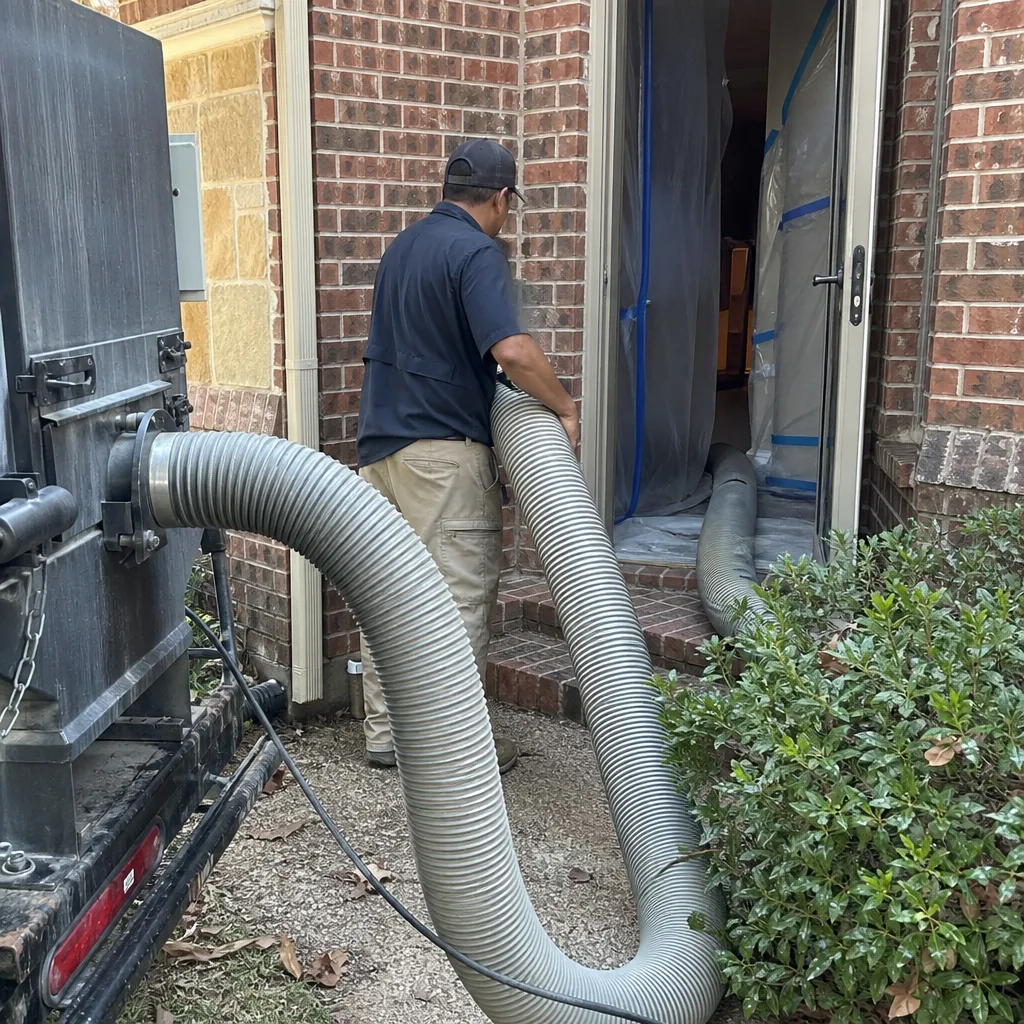
These five questions are designed to be asked in sequence. Each one builds on the last. A contractor with documented processes will answer specifically. A volume operation will deflect, generalize, or become evasive.
Question 1: Will you put the full scope of work in writing before starting?
What a good answer sounds like: “Yes. You’ll receive a document listing each duct run, the cleaning method, the equipment type, and the total price. You’ll sign it before we begin.”
What a deflection sounds like: “We go over everything when we get there” or “The technician will explain it on site.”
The written scope is your only protection against scope creep. It should list: number of supply registers (the vents that blow air into rooms), number of return grilles, whether the plenum is included, whether the blower compartment is included, and the total linear footage of ductwork. If the document doesn’t list these elements, it’s not a scope. It’s a receipt waiting to happen.
CleanRun’s written scope includes every duct run by location - “master bedroom supply, northeast corner” - so the photo record can be matched to the document later.
Question 2: What is your photo documentation policy?
What a good answer sounds like: “We photograph the inside of every duct run before and after cleaning, and you receive the images as part of your job record.”
What a deflection sounds like: “We can take pictures if you want” or “Our equipment has a camera” or “The technician will show you if there’s a problem.”
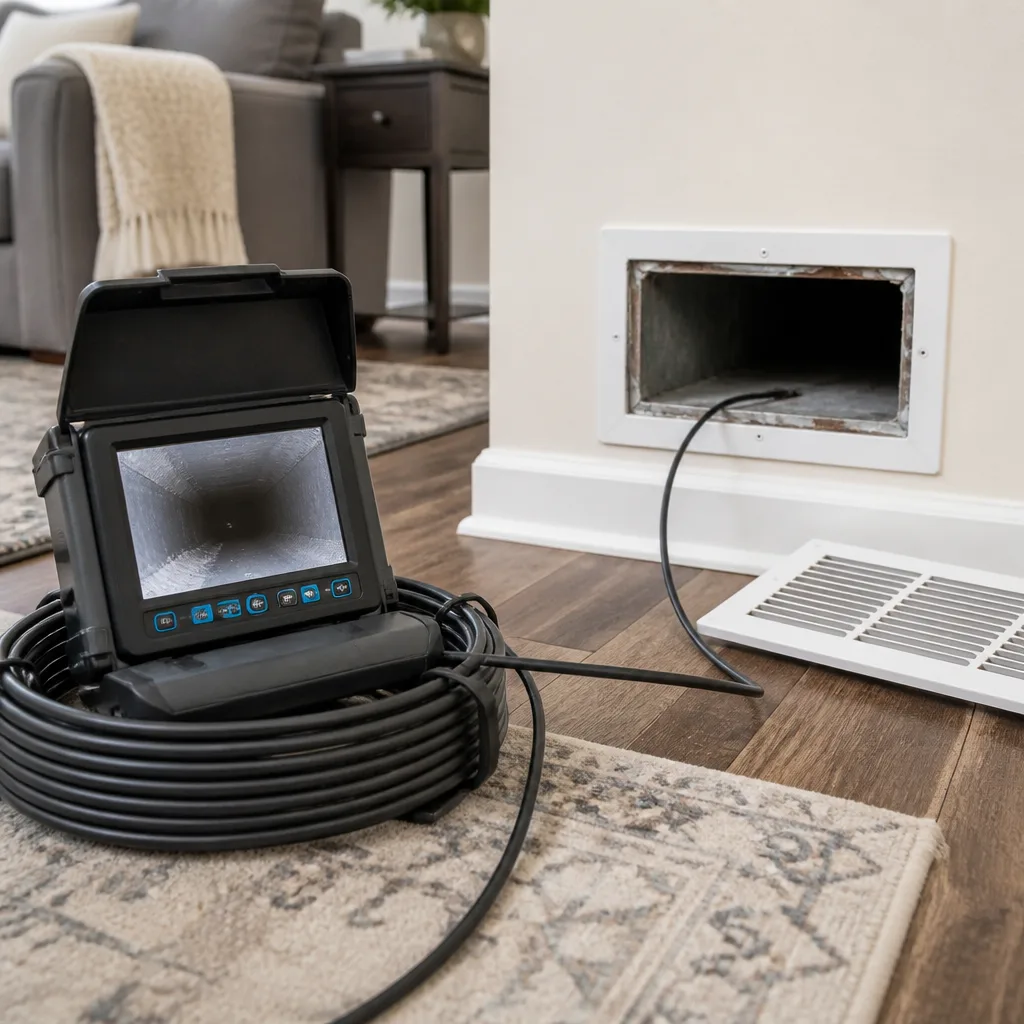
Photo documentation is not optional if accountability matters. The camera shows what the vacuum collected and what it missed. In our experience across 52,000+ homes, the before photo is often the only way a homeowner understands what was actually in their system. We’ve shown homeowners 3-inch debris build-ups at the first elbow (the first bend in a duct run, where airflow changes direction and particles settle), rodent nesting material in abandoned basement runs, and construction dust from 2014 still sitting in supply lines.
A contractor who doesn’t photograph every run is asking you to trust without verify. The photo record is the verification.
Question 3: What equipment do you use, and can I verify the manufacturer?
What a good answer sounds like: “We use a Rotobrush HEPA-filtered negative-pressure extraction system” or “Our primary unit is a Nikro portable power vac with HEPA filtration.” The technician can show you the nameplate.
What a deflection sounds like: “Commercial-grade equipment” or “The latest technology” or “Our vacuums are really powerful.”
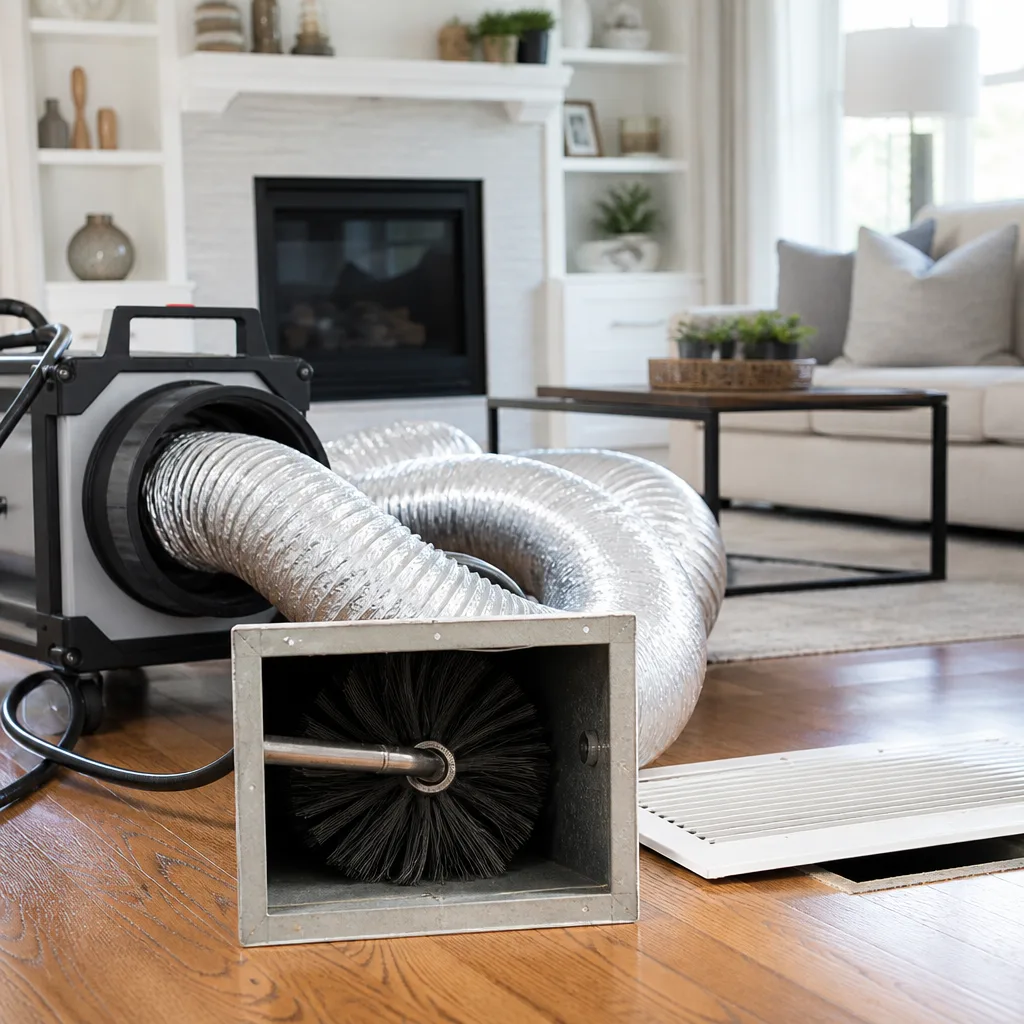
Professional-grade equipment has manufacturer specifications you can look up. The brands we use at CleanRun - Rotobrush, Nikro, Abatement Technologies, Honeywell, Aprilaire, and Guardsman - publish filtration ratings, airflow specifications, and warranty terms. A contractor who won’t name equipment is either using consumer-grade tools or doesn’t know what they’re operating.
Negative-pressure extraction (a method that creates suction throughout the duct system so dislodged debris is captured rather than pushed into living spaces) requires specific airflow and filtration standards. Ask for the CFM (cubic feet per minute) rating and the HEPA efficiency percentage. If the technician doesn’t know, the equipment probably doesn’t meet the standard.
Question 4: What happens if you find debris or damage beyond the quoted scope?
What a good answer sounds like: “We stop, photograph the condition, and present a written amendment with options before doing additional work. You approve or decline. No work proceeds without a new written price.”
What a deflection sounds like: “We’ll take care of it” or “The technician can handle it on site” or “It usually doesn’t happen.”
This question tests whether the contractor treats the original scope as binding or as a floor. In Lewisville’s older neighborhoods like Old Town and the pre-1980 sections near Main Street, we regularly find collapsed flex duct, disconnected returns, and rodent damage that wasn’t visible during initial assessment. The correct response is to document, stop, and re-quote. The incorrect response is to proceed and add charges to the final invoice.
Question 5: What are your callback and warranty terms in writing?
What a good answer sounds like: “We provide a written warranty document with a specific duration, covering specific conditions, with a defined response process.”
What a deflection sounds like: “We stand behind our work” or “Just call us if there’s a problem” or “We have a satisfaction guarantee.”
The 365-Day Done Right Promise at CleanRun is printed on every job record. It states: if the work is not right, we make it right. The mechanism is defined: call the office, a technician returns within 48 hours, the original photo record is referenced, and correction is made at no charge. “Satisfaction guarantee” without these specifics is a marketing phrase, not a contract term.
What NADCA Membership Actually Means (and Doesn’t Guarantee)
The National Air Duct Cleaners Association (NADCA) is a trade organization with membership requirements and certification programs. Homeowners often treat NADCA membership as a final credential, the way they might treat a state medical license. This is a mistake.
Here’s what NADCA membership actually requires: payment of annual dues, adherence to a general code of ethics, and for the ASCS certification (Air Systems Cleaning Specialist), passage of a written exam and completion of continuing education. These are meaningful standards. They are not guarantees of individual job performance.
Here’s what NADCA membership does not guarantee:
- That the specific technician sent to your home holds the ASCS certification - many member companies have one certified individual on staff while sending uncertified technicians to jobs
- That the company uses NADCA-recommended equipment - the organization publishes guidelines but does not inspect member trucks
- That your specific job will be performed to NADCA standards - compliance is self-reported unless a complaint triggers review
- That the price quoted reflects the actual scope - NADCA does not regulate pricing practices
Use NADCA membership as one signal among several. A member company with documented photo records, written scopes, and named equipment is stronger than a member company without these practices. A non-member company with the same documentation may be equally competent. The documentation matters more than the affiliation.
In the Lewisville market, we’ve encountered NADCA member companies that quote $89 “whole house specials” with no duct count, no written scope, and no photo record. The membership did not prevent the coupon model. The questions in the previous section would have revealed the gap regardless of the logo on their website.
How to Read a Quote Document: Line Items, Red Flags, and “Starting At” Language
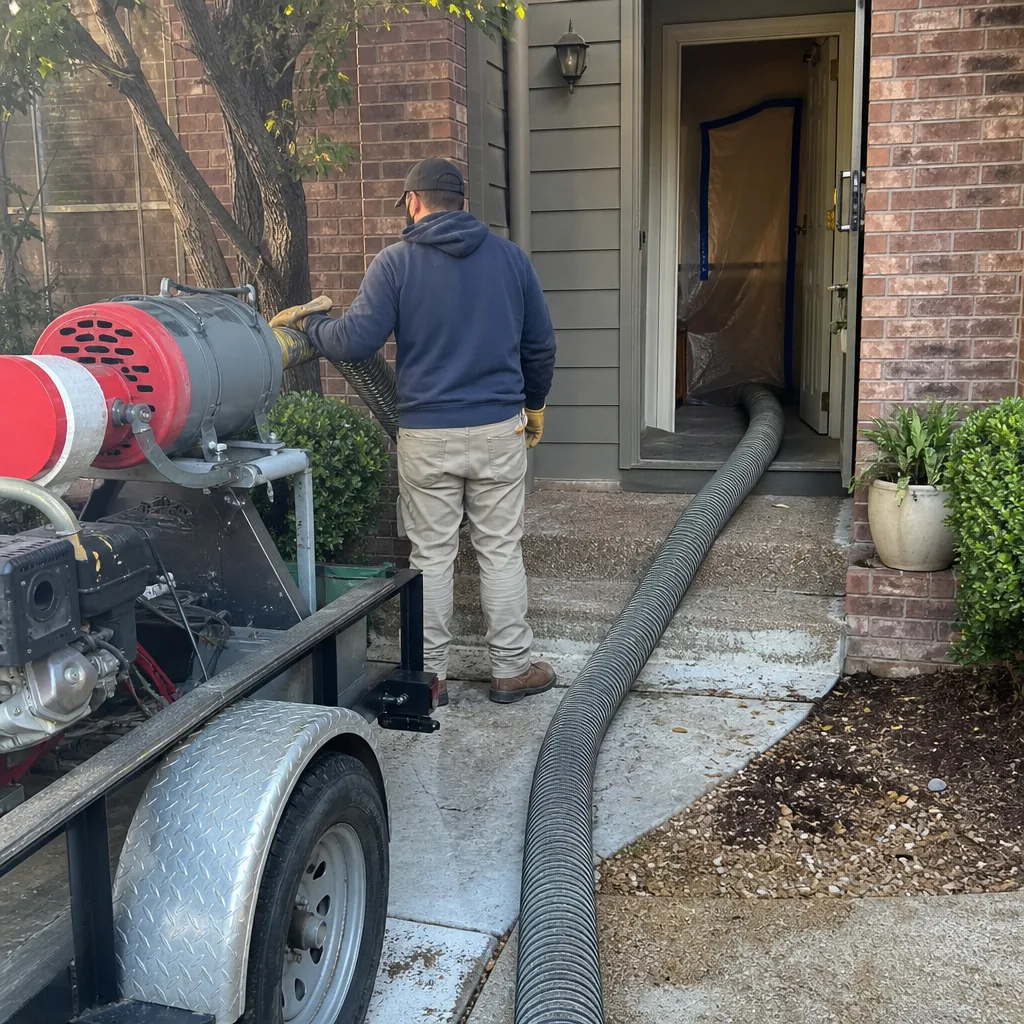
A legitimate quote for air duct cleaning is a small construction document. It describes what will be done, with what, for how much, under what conditions. Here’s how to read one.
Required line items
- Property address and system location - confirms the quote is for your specific home, not a template
- Total linear footage of ductwork or count of duct runs - the basis for labor and equipment allocation
- Number of supply registers and return grilles - each requires individual access and cleaning
- Plenum access and cleaning - the main distribution box where all ducts connect, often the dirtiest component
- Blower compartment and evaporator coil - if included, stated explicitly; if excluded, stated explicitly
- Equipment type and manufacturer - “Rotobrush HEPA negative-pressure system” or equivalent
- Access method - how technicians will reach each component (register removal, attic access, crawl space entry)
- Total price and payment terms - single number, no “starting at,” no “as low as”
- Duration estimate - typical range for the described scope
- Warranty or callback terms - specific duration, specific coverage, specific process
Red-flag language
- “Starting at” - means the number shown is not your price; it’s the minimum for the smallest possible job
- “Up to X vents” - creates an arbitrary ceiling; additional vents become upsell opportunities
- “Whole house special” - undefined scope; the house could have 6 duct runs or 16
- “Technician will assess on site” - price is not fixed; the “assessment” is the sales process
- No equipment mentioned - suggests consumer-grade tools or unwillingness to be verified
- No photo documentation mentioned - no accountability mechanism for work quality
A price that doesn’t list duct count or access method is not a quote. It’s an estimate for an undefined job. The difference matters. A quote is a commitment. An “estimate” in this context is a flexible opening position designed to be revised upward.
At CleanRun, the written price delivered before work starts includes all ten line items above. Haven Standard Clause 1 prohibits the “starting at” construction. The price is the price. If conditions change after panels are removed, we stop, photograph, and present a written amendment. No homeowner discovers additional charges on a final invoice they didn’t approve.
Day-of-Service Red Flags: What to Watch When the Truck Arrives
The hiring process doesn’t end when you sign the quote. The day of service reveals whether the documented process actually exists. Here’s what to observe.
Arrival and identification
The technician should identify themselves by name before entering. Haven Standard Clause 3: Verified Crews requires background-checked, uniformed technicians. Ask for identification. A legitimate contractor expects this and has a process for it.
Pre-work walkthrough
The technician should walk the home with you, noting register locations, access points, and any conditions that differ from the initial assessment. If the technician heads straight to the truck for equipment without seeing your system first, the scope was never real.
Before photography
Before any cleaning begins, the technician should insert a camera into each duct run and show you the condition. This is not a courtesy. It’s the baseline for the after photo and the proof that work was necessary. If the technician starts cleaning without photographing first, there will be no documentation of what was there.
Duration benchmarks
A typical 2,000-square-foot home in Lewisville with 8-12 duct runs, photographed before and after, with proper negative-pressure extraction and register-by-register work, takes 3 to 5 hours. A job completed in under 90 minutes for this scope used a shop vacuum at registers without system-wide extraction. The noise was performed; the cleaning was not.
Written record at departure
When the technician leaves, you should receive: the signed original scope, the photo record (digital delivery is standard), a final invoice matching the quoted price, and warranty documentation. If you receive only a credit card receipt, the contractor has left no evidence of what was done.
Lewisville-Specific Considerations: Climate, Codes, and Common Conditions
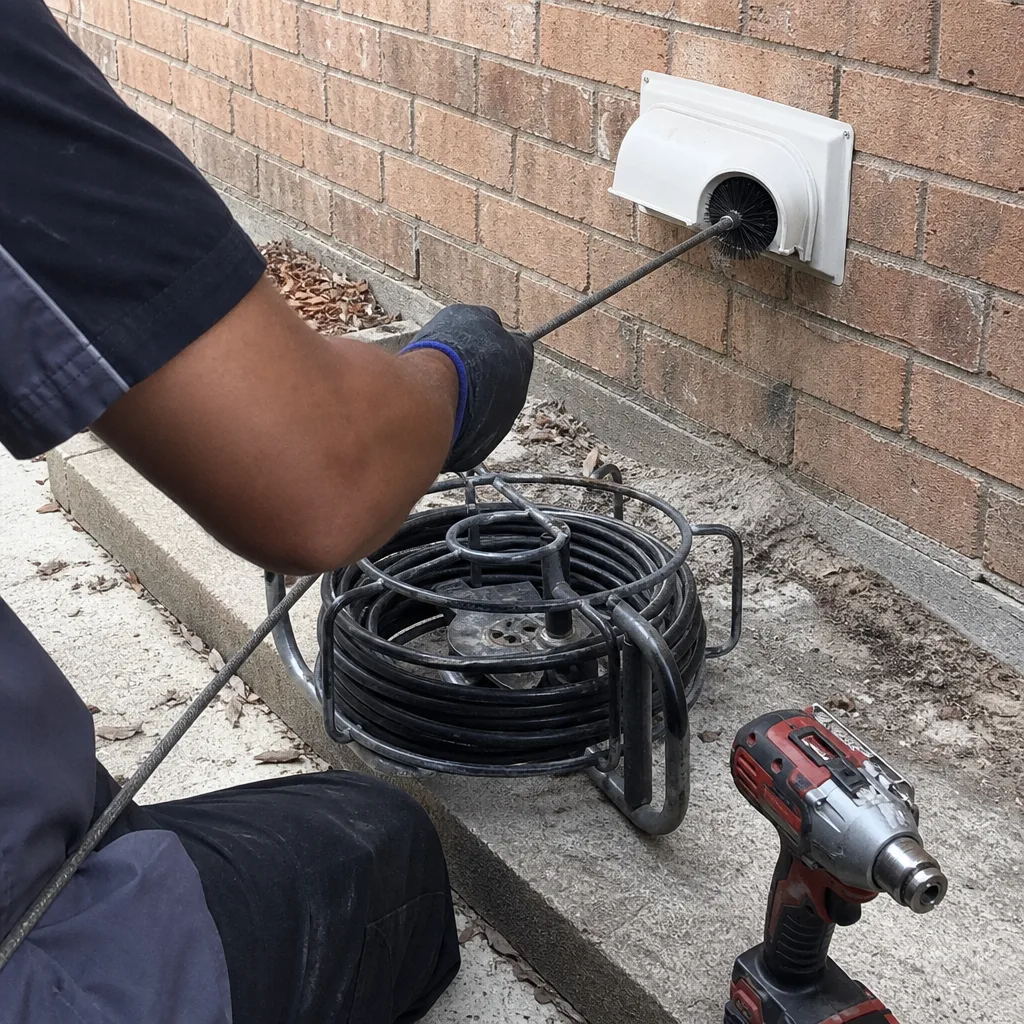
Lewisville’s climate and housing stock create specific conditions that affect duct cleaning scope and approach. A contractor who works Lewisville regularly will account for these without being asked.
Climate and seasonal loading
Lewisville sits in the Cross Timbers ecological region with hot, humid summers and mild winters. HVAC systems run heavily from May through October, pulling outdoor air through return grilles along with pollen, dust, and the fine particulate from the region’s clay soils. In our experience, Lewisville homes show heavier summer loading in return ducts than homes in drier climates. The humidity also supports microbial growth in poorly sealed systems, particularly in attic plenums where temperature differentials create condensation.
Housing age and construction type
Lewisville’s growth waves - 1970s-1980s, 1990s-2000s, and post-2010 - left distinct duct configurations. Pre-1990 homes in neighborhoods like Valley Vista and the original Lewisville Lake area often have metal duct with fiberglass lining, or early flex duct that has degraded. The 1990s-2000s building boom produced homes with adequate flex duct but often poor attic sealing, leading to return leaks that pull attic air and insulation into the system. Post-2010 construction in Castle Hills and similar developments typically has better initial sealing but may have construction debris remaining from build-out. Explore more guides & resources on protecting your home’s air quality.
A contractor should ask your home’s age and neighborhood, not just square footage. The answer changes access strategy, equipment selection, and what we expect to find.
Local code and permit context
Dent County, which includes Lewisville, follows the International Mechanical Code with local amendments. Duct modifications - sealing, repair, or replacement - may require permit and inspection if they alter system capacity or routing. Pure cleaning does not typically require permit, but if your contractor discovers disconnected or damaged duct that needs repair, the scope may cross into permit territory. A knowledgeable contractor will flag this and explain whether the work triggers inspection requirements.
Common Lewisville findings
In our work across Lewisville since 2013, we’ve documented recurring conditions:
- Construction debris in newer homes - drywall dust, wood chips, and fastener fragments from original build-out, still present 5-10 years later
- Pet hair aggregation in return ducts - Lewisville’s high pet ownership rates show in the before photos
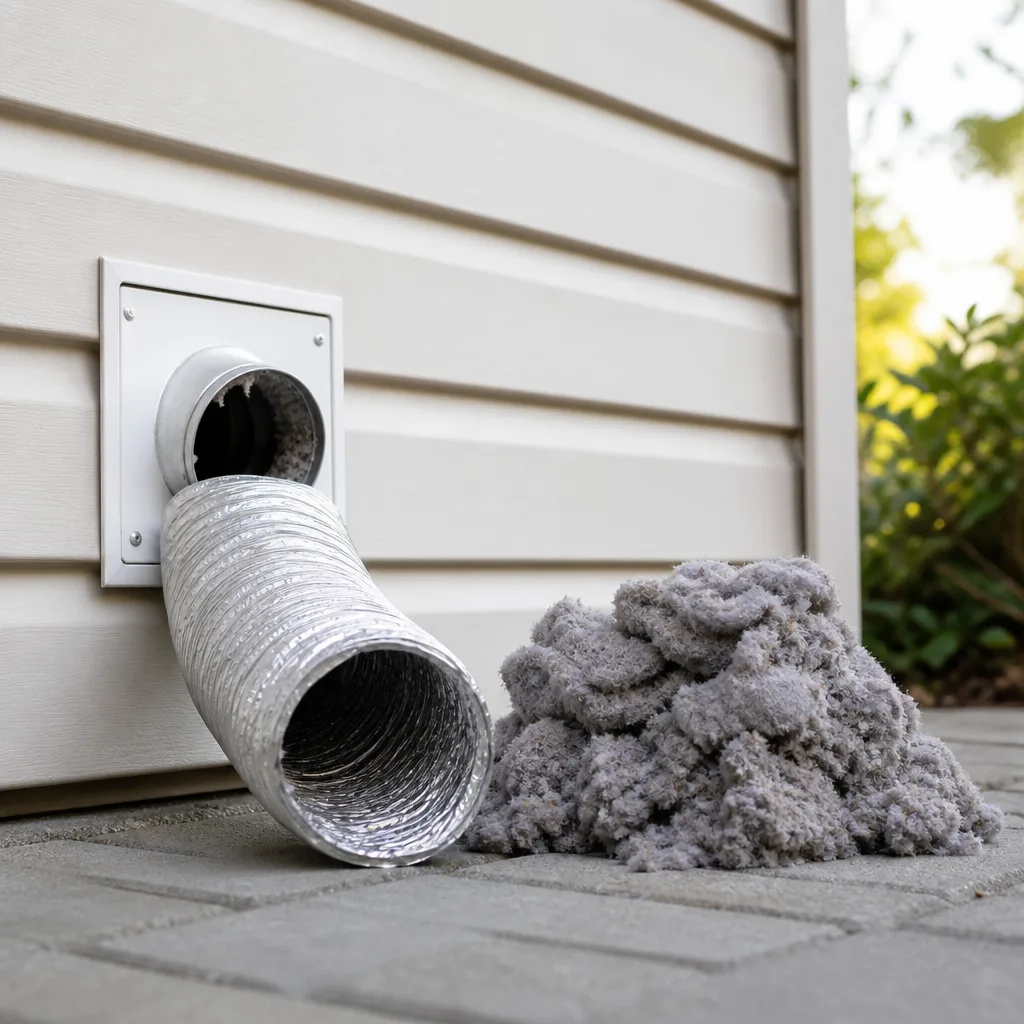
- Collapsed flex duct in attics - the region’s temperature extremes degrade unsupported flex over 15-20 years
- Disconnected returns in crawl spaces - particularly in 1980s-1990s homes where original strapping failed
These findings are not scare tactics. They’re what the camera shows. A contractor who can’t describe local conditions specifically hasn’t worked the market long enough to recognize patterns.
Common Mistakes to Avoid
- Booking on price alone without a written scope. The $79 coupon in Lewisville is not a price; it’s an appointment fee for a sales presentation. The average final invoice for coupon customers who proceed with recommended work is substantially higher than the upfront written price from documented-process contractors.
- Assuming NADCA membership equals job-level accountability. Membership is a baseline credential, not a performance guarantee. The photo record and written scope protect you more than the affiliation logo.
- Not asking about equipment by name. “Commercial-grade” and “HEPA filtration” are unverified claims. Rotobrush, Nikro, Honeywell, and Aprilaire are names you can look up. The difference matters for actual filtration performance.
- Accepting verbal warranties. “We stand behind our work” dissolves the moment there’s a dispute. The 365-Day Done Right Promise exists in writing on every CleanRun job record because verbal assurances are not enforceable.
- Ignoring duration benchmarks. A 2,000-square-foot home cleaned properly takes hours, not minutes. The 90-minute “whole house special” is register vacuuming without system extraction. Your ducts look the same inside after as before.
- Not requesting the photo record before paying. The photo record is your proof of work performed. If the contractor won’t deliver it before requesting final payment, they may not have taken it.
- Neglecting to verify technician identity. Haven Standard Clause 3 exists because homeowners deserve to know who enters their home. Any contractor resisting identification has not invested in crew verification.
When to Call a Professional
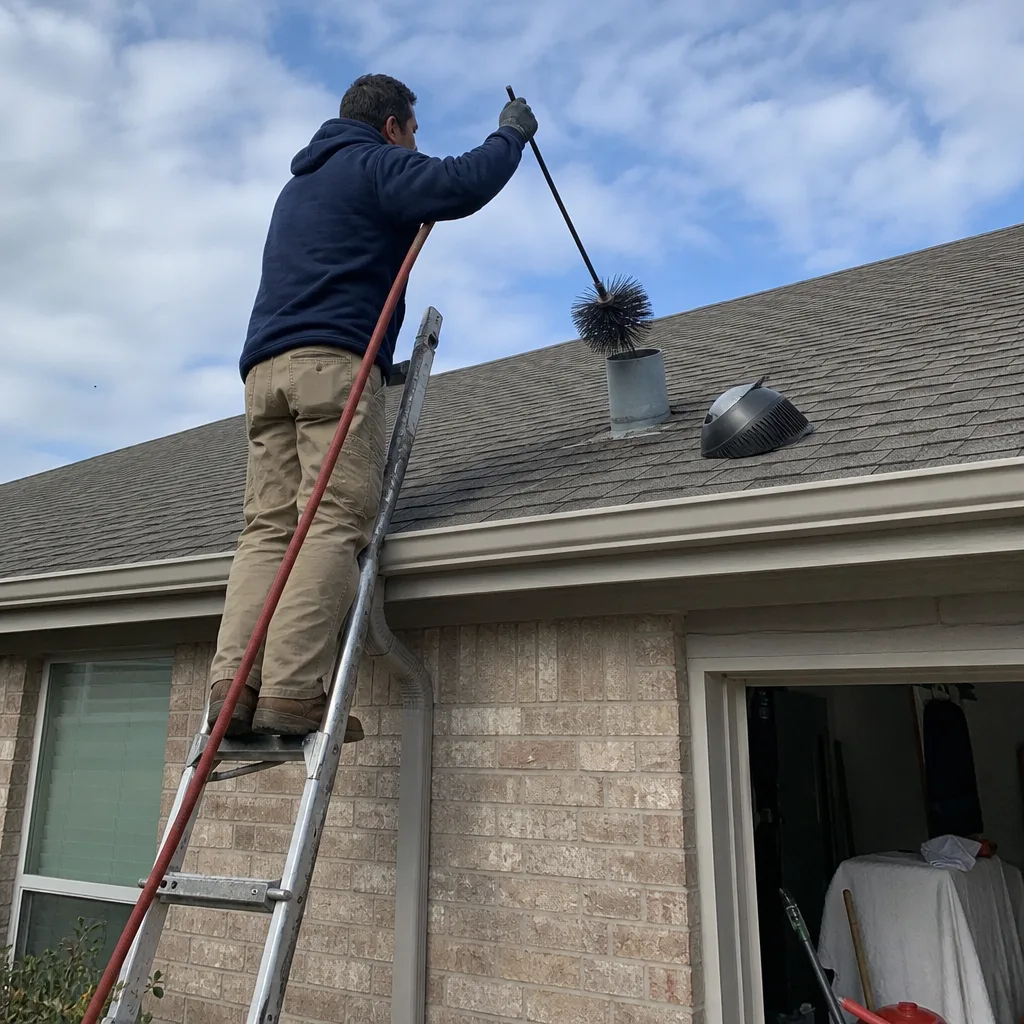
Call a professional when you can see dust debris at registers that returns after cleaning, when airflow is noticeably uneven between rooms, when your HVAC filter loads faster than manufacturer intervals, or when you’ve completed renovation work that generated drywall dust or sawdust. These are not emergencies. They’re maintenance signals that, addressed properly, prevent larger system problems.
Also call when you’re buying a home in Lewisville and the inspection report notes “duct cleaning recommended” without specifics. A qualified contractor can camera-inspect the system and tell you whether cleaning is actually needed or whether the inspector used generic language.
CleanRun Air Duct Cleaning Lewisville offers free estimates in Lewisville. Every estimate includes a written scope with line-item pricing, no obligation to book. Call (940) 240-8552. We also provide Dryer Vent Cleaning in Lewisville and HVAC Cleaning in Lewisville as documented services under the same H.A.V.E.N. Standard.
Frequently Asked Questions
Whole-system air duct cleaning in Lewisville typically ranges from $400 to $900 for a standard residential home, depending on duct count, system age, and access conditions. The low end covers smaller homes with straightforward access; the high end covers larger homes with multiple returns, attic or crawl space access, or conditions requiring additional time. CleanRun delivers a written price before work starts with no per-vent add-ons. Call (940) 240-8552 for an exact quote; estimates are free.
Low quotes typically exclude necessary scope elements or assume undefined conditions that become upsell opportunities. A $79 “whole house” price assumes minimal duct footage, no photography, no written scope, and equipment that doesn’t achieve negative-pressure extraction. The business model requires converting the low quote into a higher final invoice. A legitimate quote lists every component and arrives at a total that reflects actual labor and equipment costs. Call (940) 240-8552 for a written quote you can compare line by line.
Demand a photo record of every duct run, before and after, delivered as part of your job record. The camera doesn’t lie about debris presence or absence. At CleanRun, this documentation is standard on every visit, included at no additional charge. If your contractor won’t provide it, you have no verification method. Call (940) 240-8552 and we’ll explain what the photo record includes.
For most Lewisville homes, every 3 to 5 years is adequate under normal conditions. Homes with pets, recent construction, or residents with respiratory sensitivities may benefit from more frequent service. The correct interval depends on what the camera shows, not on calendar marketing. A contractor pushing annual cleaning without inspecting your system first is selling frequency, not need.
Air duct cleaning addresses the distribution network: supply and return ducts, registers, and the plenum. HVAC Cleaning in Lewisville extends to the mechanical components: blower compartment, evaporator coil, and sometimes the condensate drain. The two services overlap at the plenum and can be combined, but they are distinct scopes with different equipment and time requirements. A quote should specify which components are included.
Register surfaces and visible grille areas can be cleaned by a homeowner with a vacuum and brush. The interior ductwork, plenum, and blower compartment require professional negative-pressure extraction equipment and access tools. Attempting to reach beyond registers risks damaging duct lining, disconnecting joints, or releasing accumulated debris into living spaces without proper containment. For the full system, a documented professional process is the appropriate approach. Call (940) 240-8552 for a written scope and photo-recorded work.
The Bottom Line
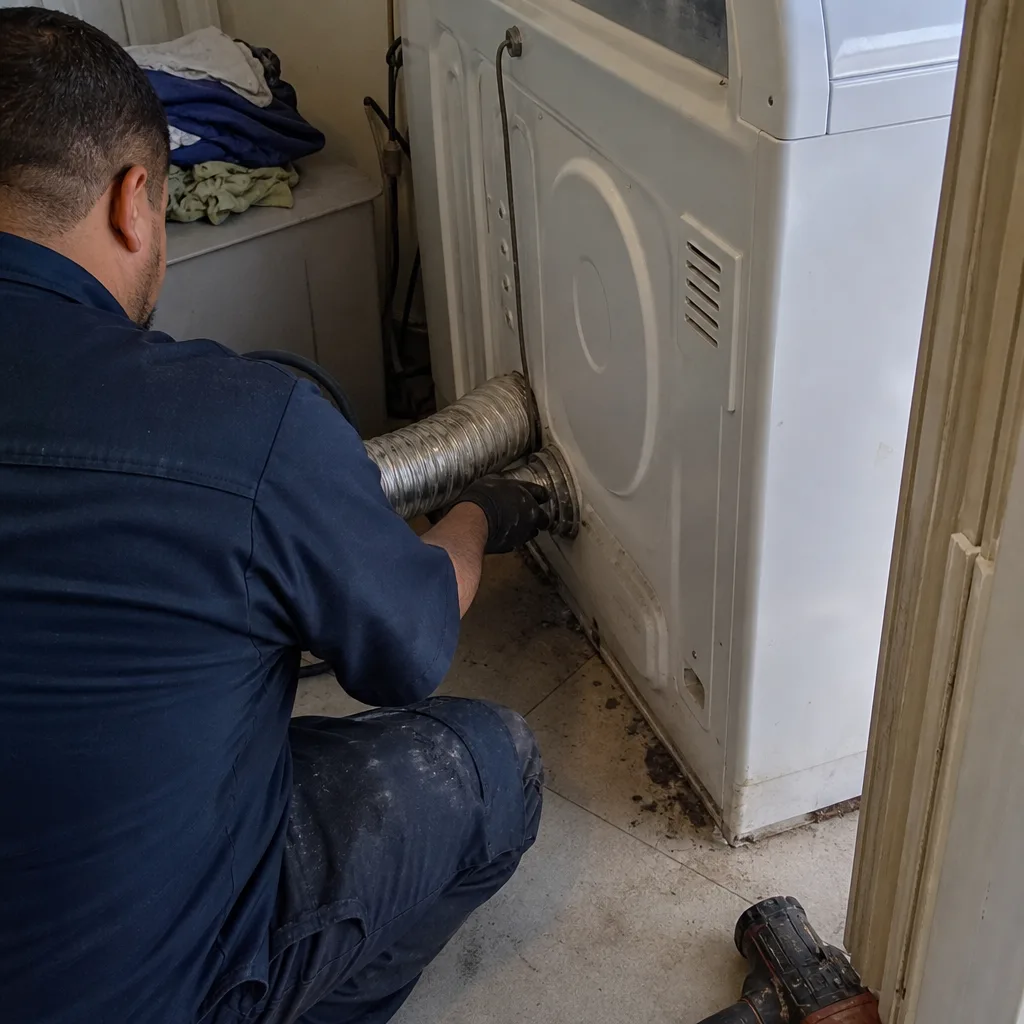
Hiring an air duct cleaning contractor in Lewisville comes down to documentation versus promises. The five questions in this guide - written scope, photo policy, equipment verification, scope-change protocol, and written warranty - require answers that cannot be faked. A contractor with real processes will answer specifically and welcome the scrutiny. A volume-discount operation will deflect, generalize, or pressure you to book before you ask.
The $79 coupon persists because homeowners lack a framework. You now have one. Use it before any truck arrives at your Lewisville home.
Written by Tomas Reyes, Owner at CleanRun Air Duct Cleaning Lewisville, serving Lewisville since 2013.