
Last updated September 23, 2026
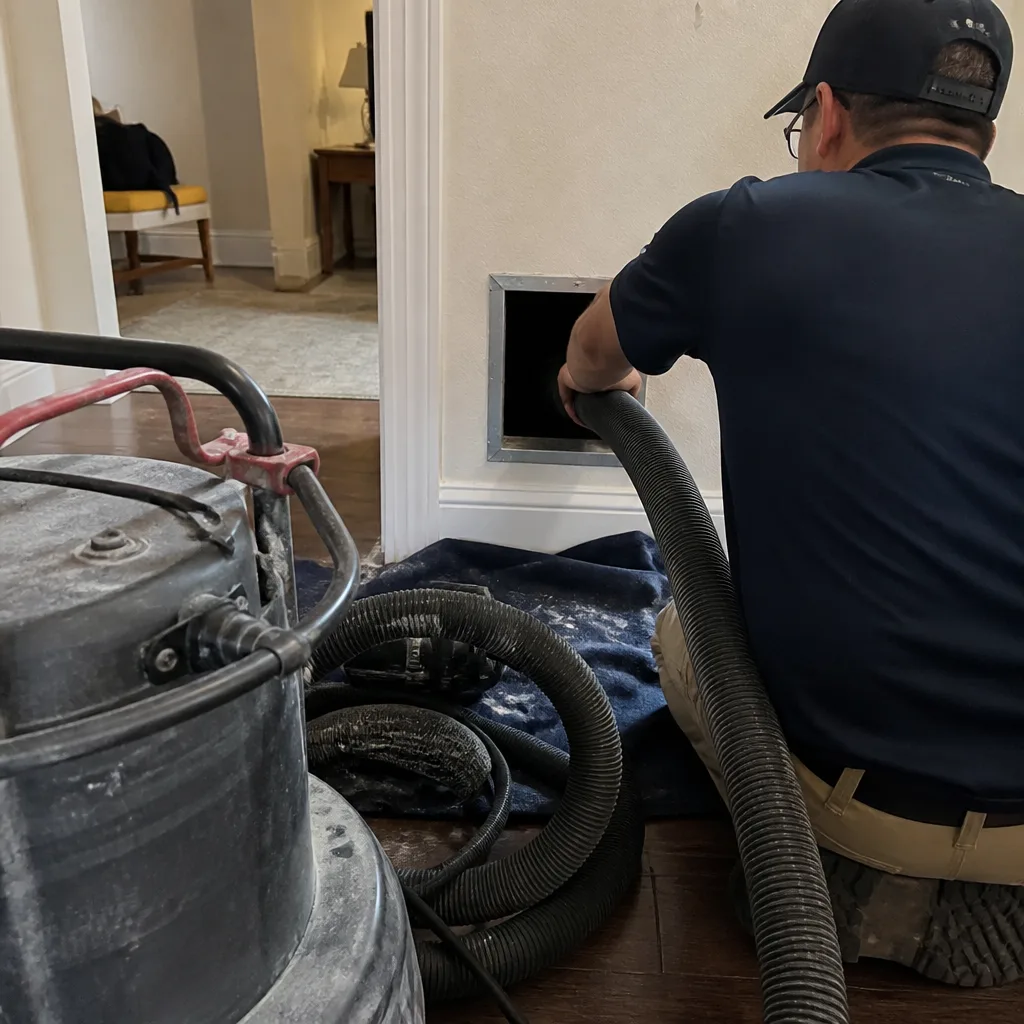
Whole-system duct and dryer vent check with before-and-after photos - you see exactly what came out of your vents
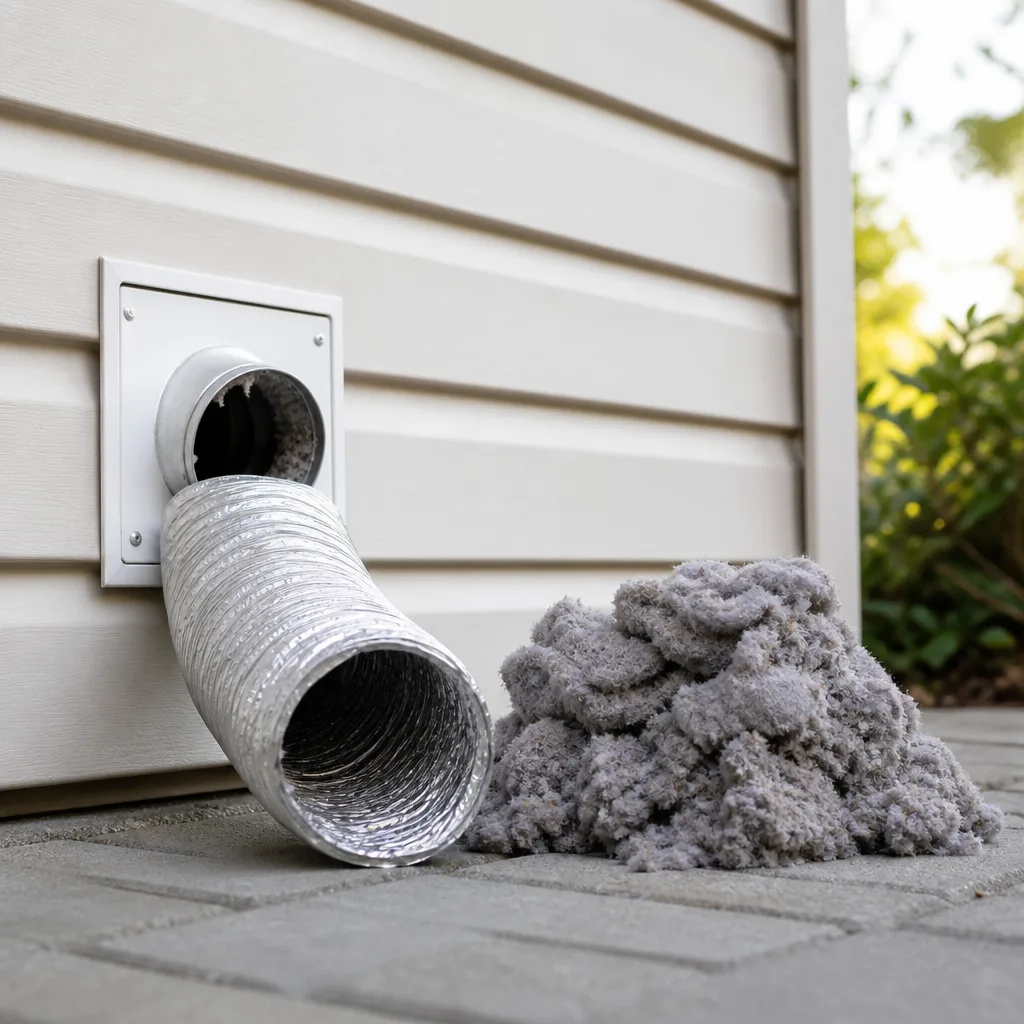
That "$99 whole-house special" is a bait ad - the real number appears once they are in your hallway, or the "clean" is a shop-vac at the register. We photograph the inside of your ducts before and after instead.
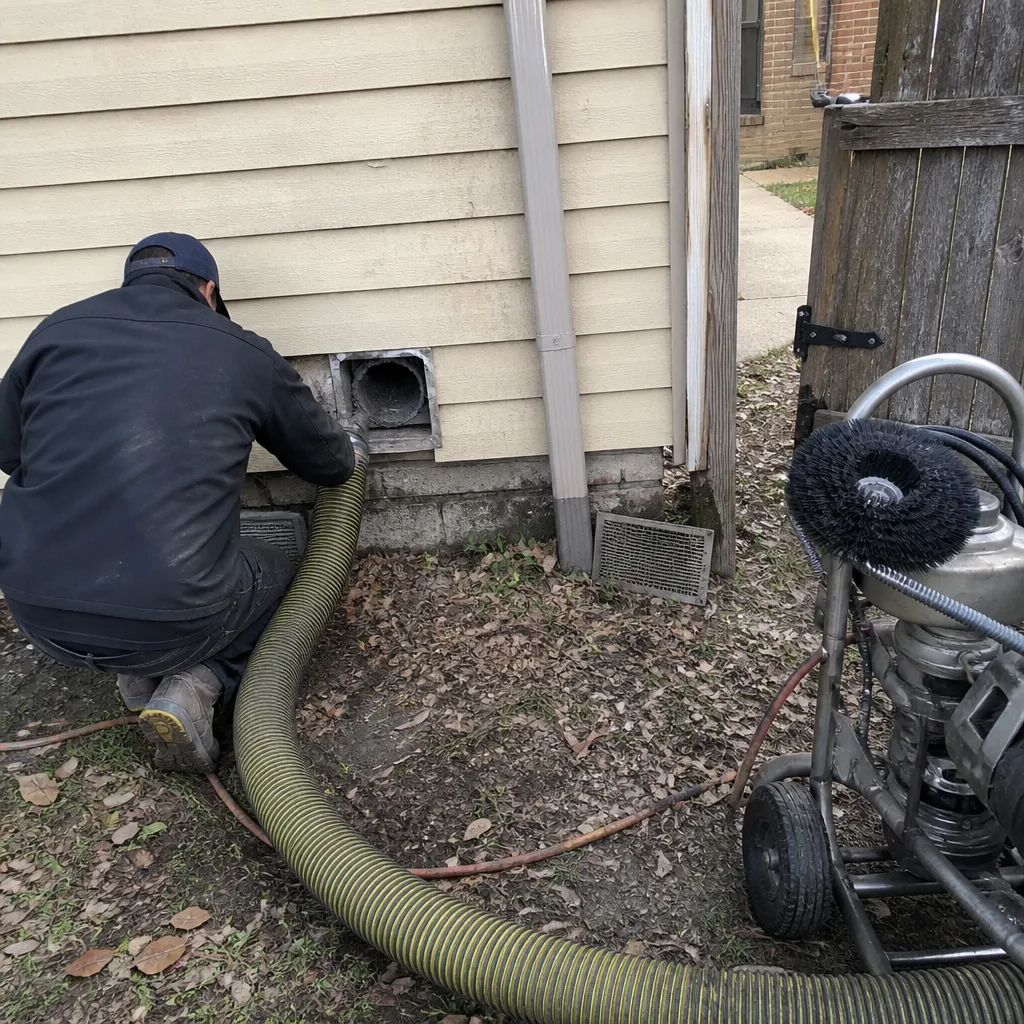 Before
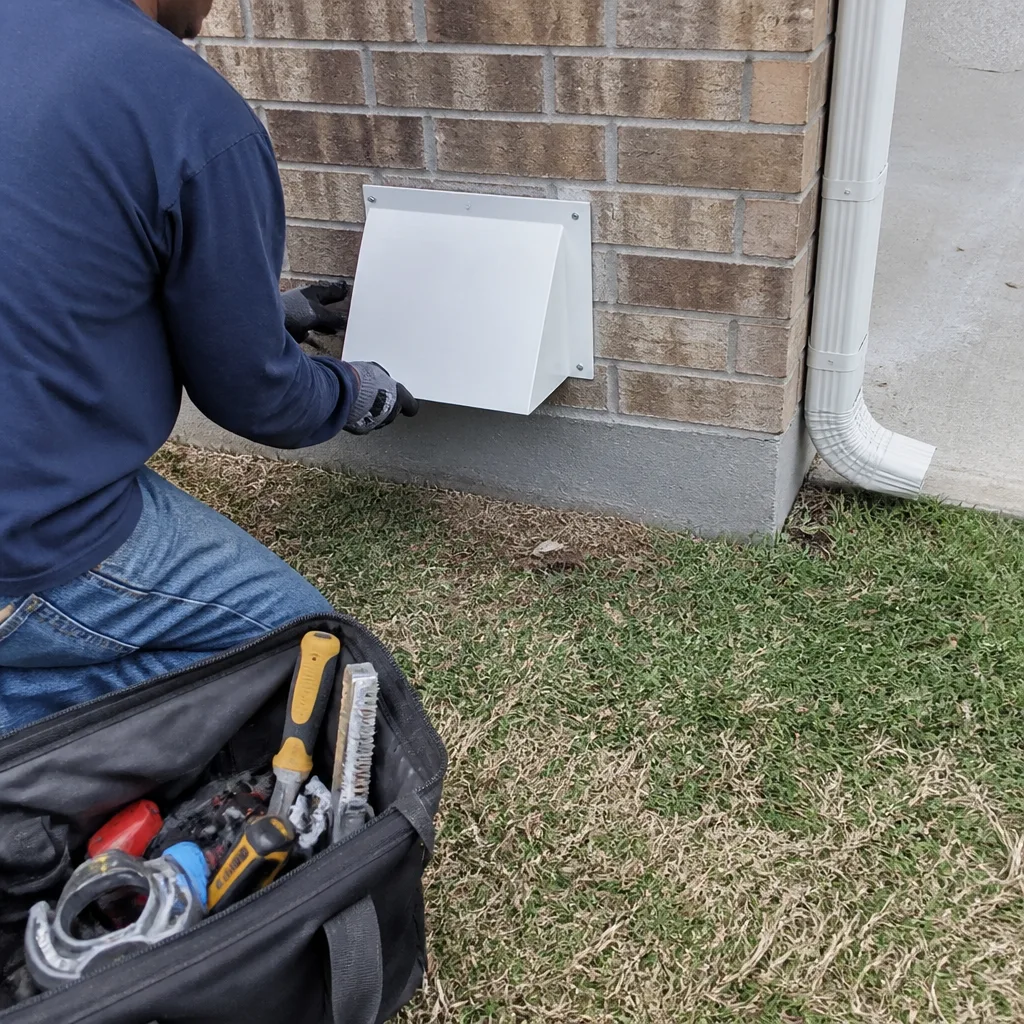 After
After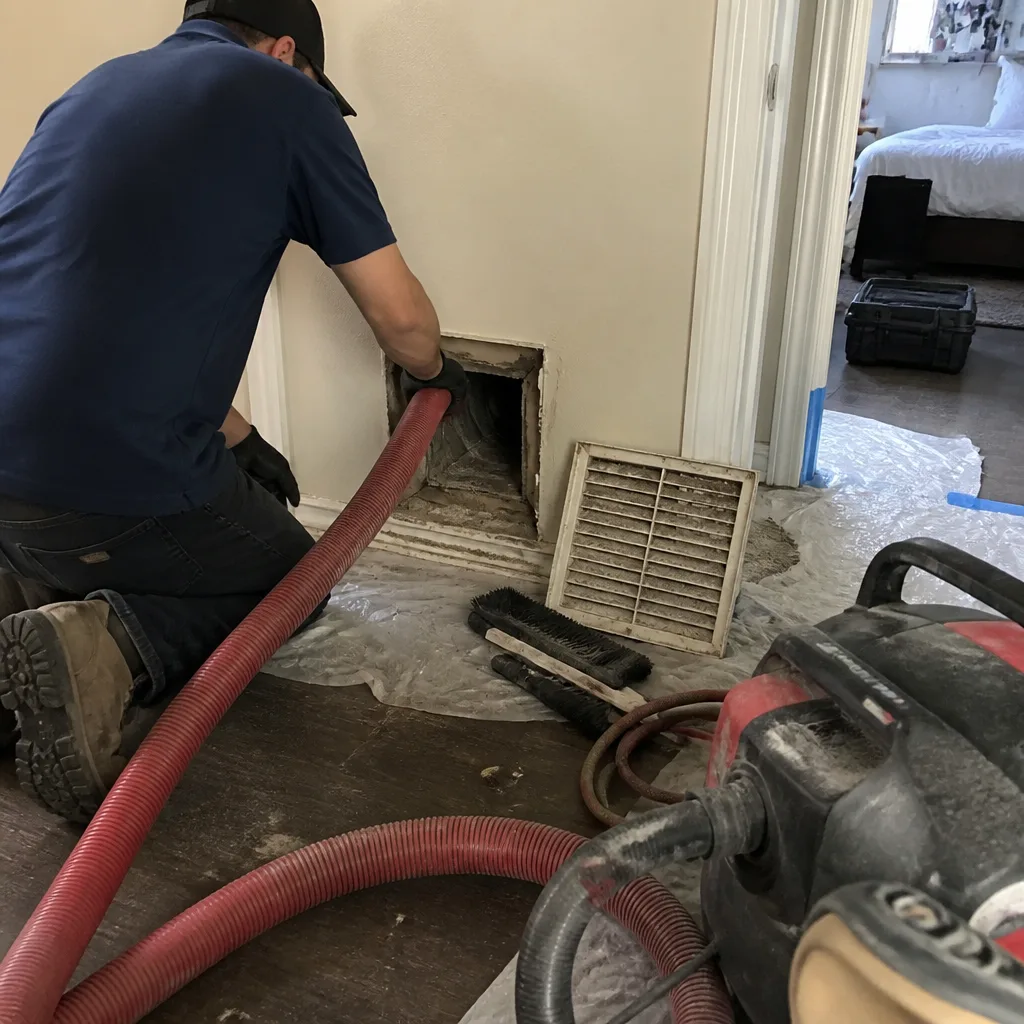 Before
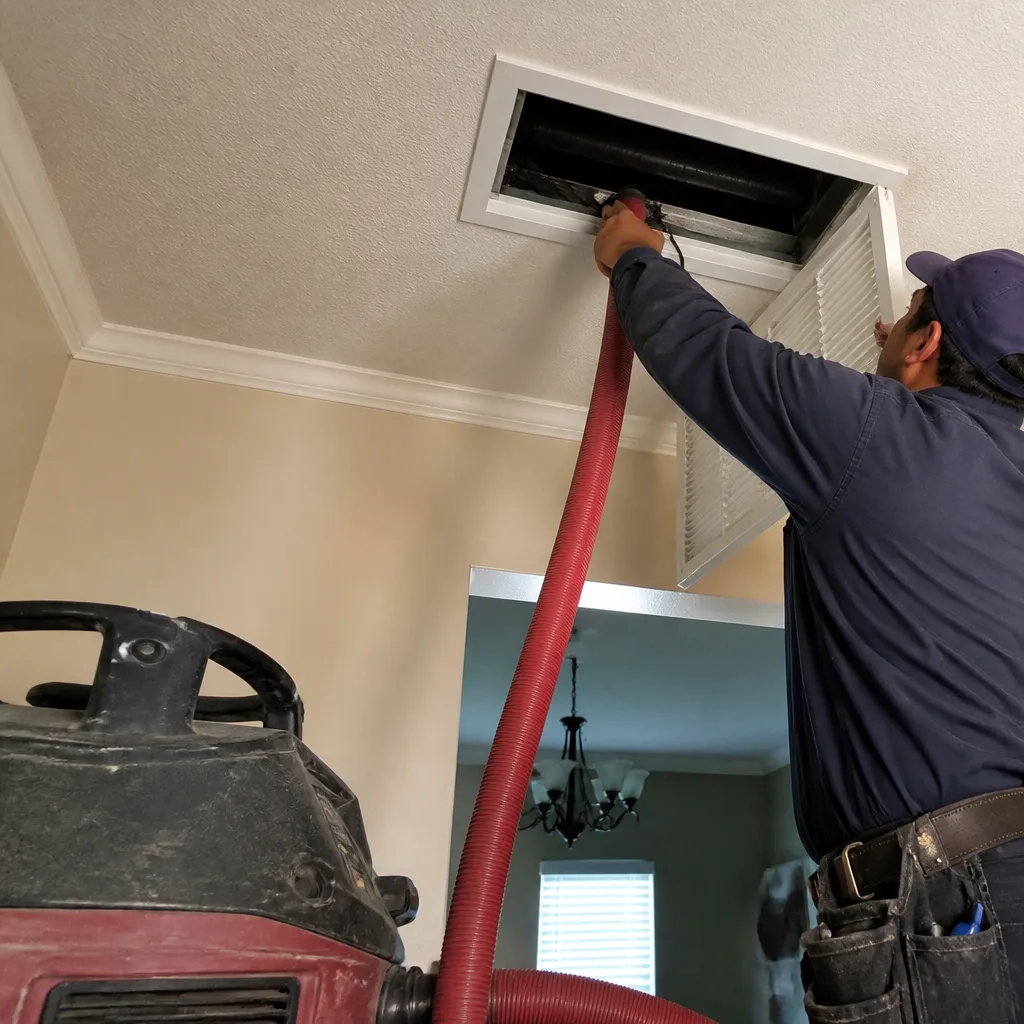 After
After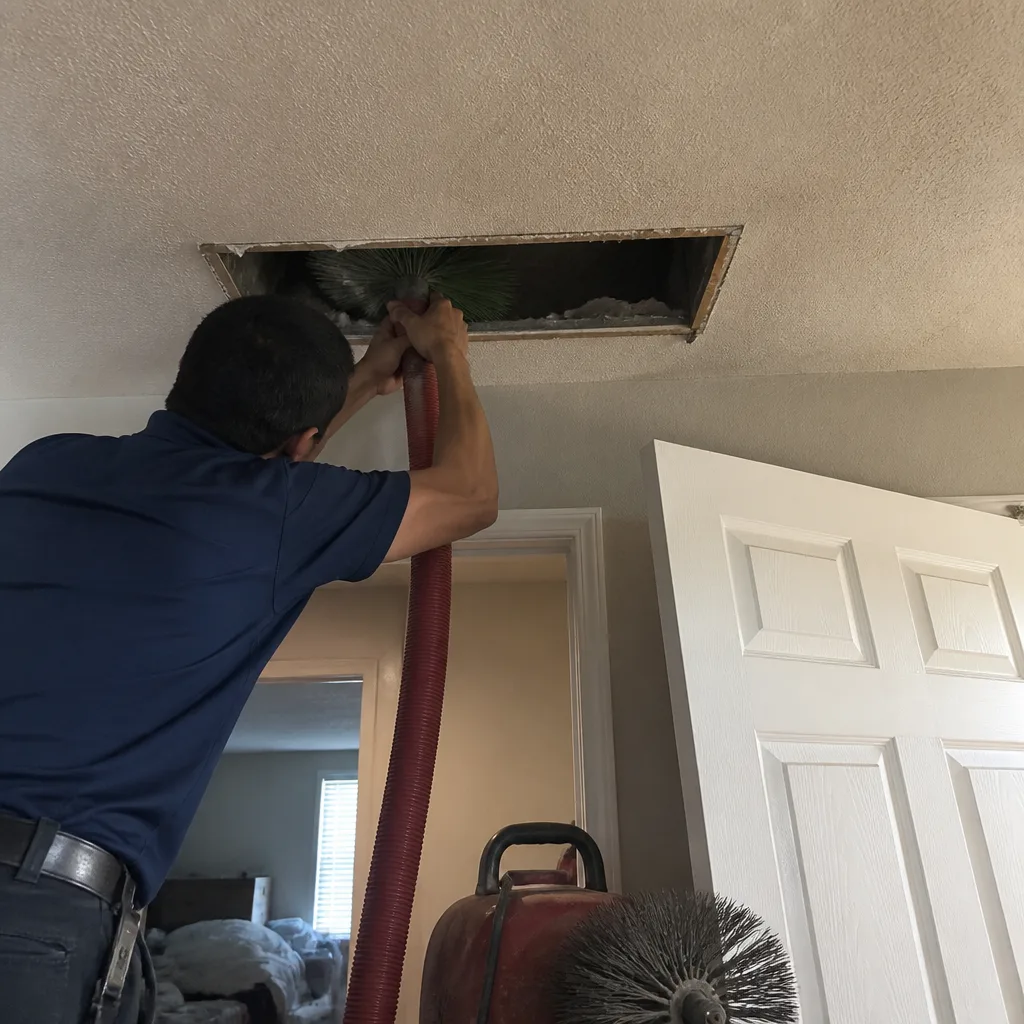 Before
 After
AfterSeasonal Air Duct Cleaning Care for Lewisville: Year-Round Homeowner’s Guide
Cleaning your ducts every three to five years is the industry’s standard advice, and it was written for a generic climate. Lewisville averages 37 days above 100°F and runs a high-humidity corridor from June through September - that is not a generic climate. In our work across Lewisville since 2013, we’ve documented that North Texas homes experience two distinct contamination acceleration windows and two stabilization periods. The homeowners who align professional service with those windows get measurably better outcomes than those who follow an arbitrary calendar. This guide maps the actual seasonal risk curve for Lewisville homes, with specific observations you can match against your own registers and a month-by-month action calendar. For Air Duct Cleaning Maintenance Checklist for Lewisville Homeowners, see our detailed resource.
Quick Answer
For Lewisville homeowners, the highest-value duct service window is April through May, before continuous summer operation begins. A second valuable window falls in October through November, after the summer microbial season and before heating-season pressure changes expose sealing gaps. Between these windows, homeowner maintenance - filter changes, grille inspections, and humidity monitoring - stabilizes conditions without professional intervention.
Table of Contents
- How Lewisville’s Climate Creates Uneven Duct Risk
- Spring: Cedar, Cottonwood, and Return Grille Loading
- Summer: Humidity and Microbial Conditions in Air Handlers
- Fall: Post-Renovation Dust in New-Build Neighborhoods
- Winter: Pressure Changes and Duct Sealing Exposure
- Your 12-Month Lewisville Duct Care Calendar
- Why “The System Was Just Serviced” Doesn’t Mean Your Ducts Were Evaluated
- Common Mistakes to Avoid
- When to Call a Professional
- Frequently Asked Questions
BeforeAfterHow Lewisville’s Climate Creates Uneven Duct Risk
Lewisville sits at the western edge of the Cross Timbers ecological region, where prairie wind patterns meet suburban development density. The result is a specific contamination profile that changes predictably through the year.
Spring brings sustained winds of 15-25 mph from the southwest, carrying pollen from the cedar breaks west of town and cottonwood fluff from the Elm Fork corridor. These particles are large enough to load standard 1-inch filters rapidly but small enough to bypass compromised return grille seals. We’ve photographed return plenums in Castle Hills and Valley Vista during late March that showed 2-inch accumulation of compressed pollen mat - not ordinary dust, but a cohesive layer that restricts airflow measurably.
Summer shifts the risk from particulate to biological. From June through September, Lewisville’s average relative humidity stays above 70% during overnight hours. Air handlers in attics, which is the standard installation for homes built 2015-2025 in neighborhoods like The Highlands and Old Town, experience condensate conditions that persist for 8-10 hours daily. The evaporator coil pan, the duct boots immediately downstream, and any low-point sag in flex duct become environments where microbial growth is photographable within a single season of neglect.
Fall introduces a different profile in Lewisville’s rapidly developing areas. The city issued over 1,200 residential building permits in 2023 and 2024, concentrated in tracts north of FM 407 and west of Garden Ridge. New construction generates concrete dust, drywall particulate, and fiberglass fragment loading that continues for 18-24 months after move-in. We’ve documented this in duct runs where the camera showed glittering crystalline debris - unmistakably construction material, not organic dust - in homes occupied less than two years.
Winter’s risk is mechanical, not contaminant-based. Heating operation reverses airflow patterns through the duct system. Supply registers become return points during system off-cycles, and the pressure differential of gas furnace operation, typically higher than cooling blower speed, exposes gaps in duct sealing that were asymptomatic during summer. The thermal expansion differential between attic ductwork and conditioned space framing also widens existing leaks.
This uneven risk curve means that a duct system inspected in January may test clean for particulate but fail to reveal the moisture conditions that will develop by August. Conversely, a system inspected in August may show microbial staining that would be invisible in dry January conditions. Timing matters more than interval.
Spring: Cedar, Cottonwood, and Return Grille Loading
Mountain cedar (Juniperus ashei) releases pollen from December through February, with peak counts typically in mid-January. Cottonwood (Populus deltoides) along the Elm Fork and its tributaries sheds seed fluff from April through early June. The overlap creates a spring loading period that affects Lewisville homes in specific, observable ways.
The return grille is the first inspection point. After cedar season, a white-to-yellow film appears on the grille fins - not gray household dust, but a pale, almost fluorescent coating that wipes away as a paste rather than a powder. By late April, cottonwood fluff adds fibrous white strands that mat between grille fins and load the filter face unevenly. We’ve photographed filters from Lewisville homes where the center third was completely occluded while the margins showed clean pleats - an airflow pattern that strains the blower motor and creates negative pressure at the return plenum, pulling attic air through any accessible leak.
The observable signs homeowners can match:
- Grille fins show pale yellow film that reappears within 48 hours of cleaning
- Filter replacement intervals shorten from 90 days to 45 days or less
- Visible cottonwood strands collect on exterior window screens and correspond with interior grille loading
- System blower runs longer to reach thermostat setpoint, particularly in afternoon hours when pollen counts peak
Homeowner action for spring: Replace the return air filter with a MERV 8-11 pleated filter (we specify MERV, or Minimum Efficiency Reporting Value, which rates particle capture performance) in late February, before cedar peak. Inspect grille fins weekly from April through May. If the pale film reappears within one week of vacuuming, the system is pulling unfiltered air from a bypass path - typically a return plenum leak or a filter bypass gap.
Professional value window: Late May, after cedar and cottonwood seasons have concluded, is the optimal timing for a documented inspection. The loading is complete, the summer humidity has not yet begun, and any pollen that has migrated past the filter into the duct run can be photographed and evaluated before summer operation cements it in place.
Summer: Humidity and Microbial Conditions in Air Handlers
From June through September, Lewisville’s climate shifts the primary duct risk from particulate accumulation to moisture-driven biological activity. The mechanism is straightforward: cold air in attic ductwork creates surface temperatures below the dew point of the surrounding air, and the 70%+ overnight humidity provides the water source.
The critical zone is the air handler cabinet and the first 6-10 feet of supply duct downstream. This is where the evaporator coil operates, where condensate drainage occurs, and where any obstruction or slope error in the drain pan creates standing water. We’ve photographed conditions in Lewisville attics where the coil cabinet insulation showed dark staining at the lower corners - a specific pattern indicating repeated wet-dry cycling - and where the flex duct boot immediately downstream showed spotting on the interior surface that tested positive for active growth in laboratory analysis.
The microbial season follows a predictable progression:
- June establishment: First sustained humidity period. Any existing dust film in the duct provides nutrient substrate. Initial growth is not visible to standard photography without UV enhancement.
- July-August amplification: Continuous operation maintains moisture conditions. Growth becomes visible as darkening at duct joints, particularly in low points where condensate collects. Musty odor at registers may be reported, though homeowners often adapt to gradual onset and don’t recognize it until returning from travel.
- September plateau: Peak thermal load continues, but humidity begins declining. Existing growth stabilizes; new establishment slows. This is the last effective intervention window before growth becomes entrenched in porous duct liner.
The observable signs homeowners can match:
- Darkening or spotting on visible duct liner at the air handler connection
- Musty odor detectable within 30 seconds of system startup, diminishing after 5 minutes of operation
- Increased condensation on supply registers during high-humidity periods
- Family members reporting increased allergy symptoms in September, when spore release peaks
Homeowner action for summer: Monitor humidity at the thermostat. If the reading exceeds 60% for more than 4 hours during system operation, the dehumidification capacity is insufficient - either because the coil is dirty, the system is oversized for the load, or duct leakage is introducing unconditioned attic air. Any of these conditions warrants professional evaluation. Clean the condensate drain line monthly with a vinegar flush; algae obstruction is the most common cause of pan overflow and downstream moisture damage.
Professional value window: The pre-summer inspection in April-May is the highest-value service timing for Lewisville homes considering our Air Duct Cleaning services. Systems run continuously from June onward, and debris or moisture conditions found in May have 90 days to become a documented problem. A May inspection that photographs clean duct surfaces provides a baseline; the same inspection that finds moisture staining allows intervention before continuous operation amplifies it.
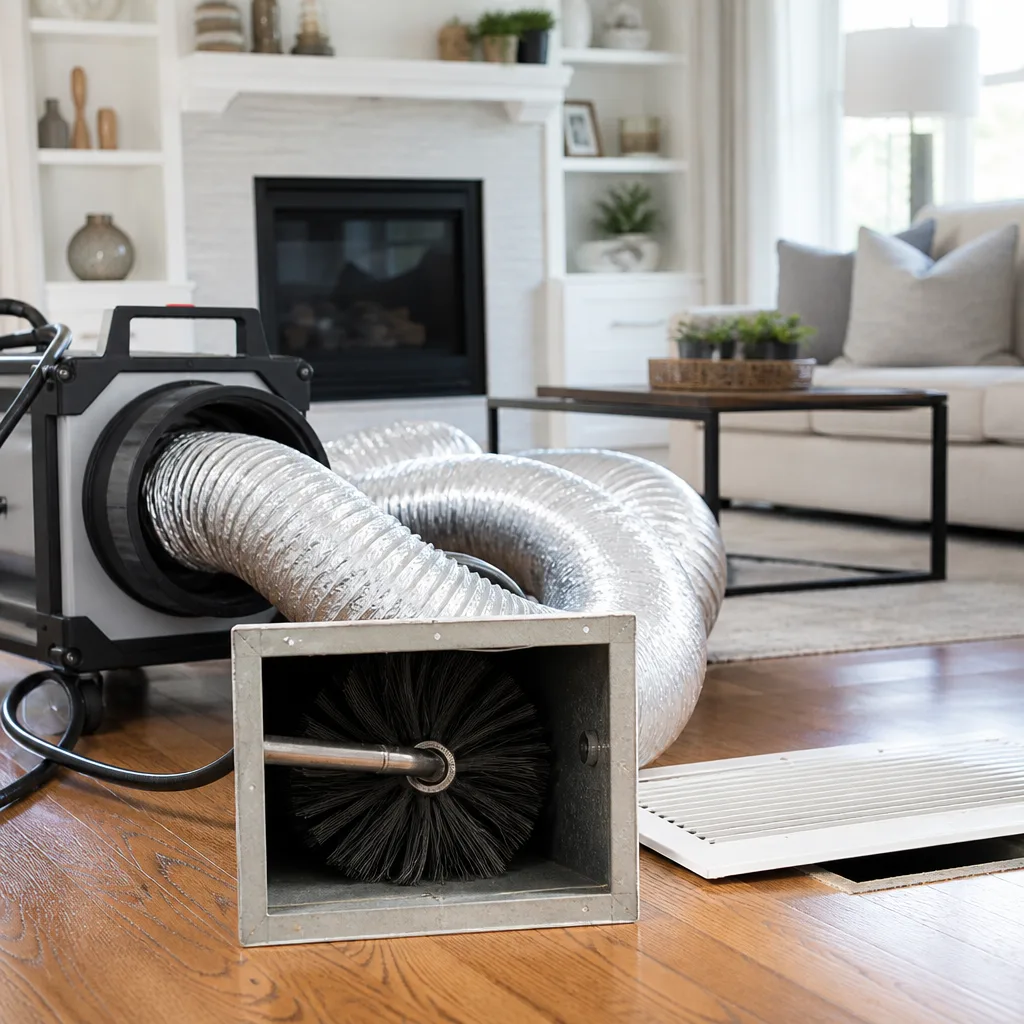
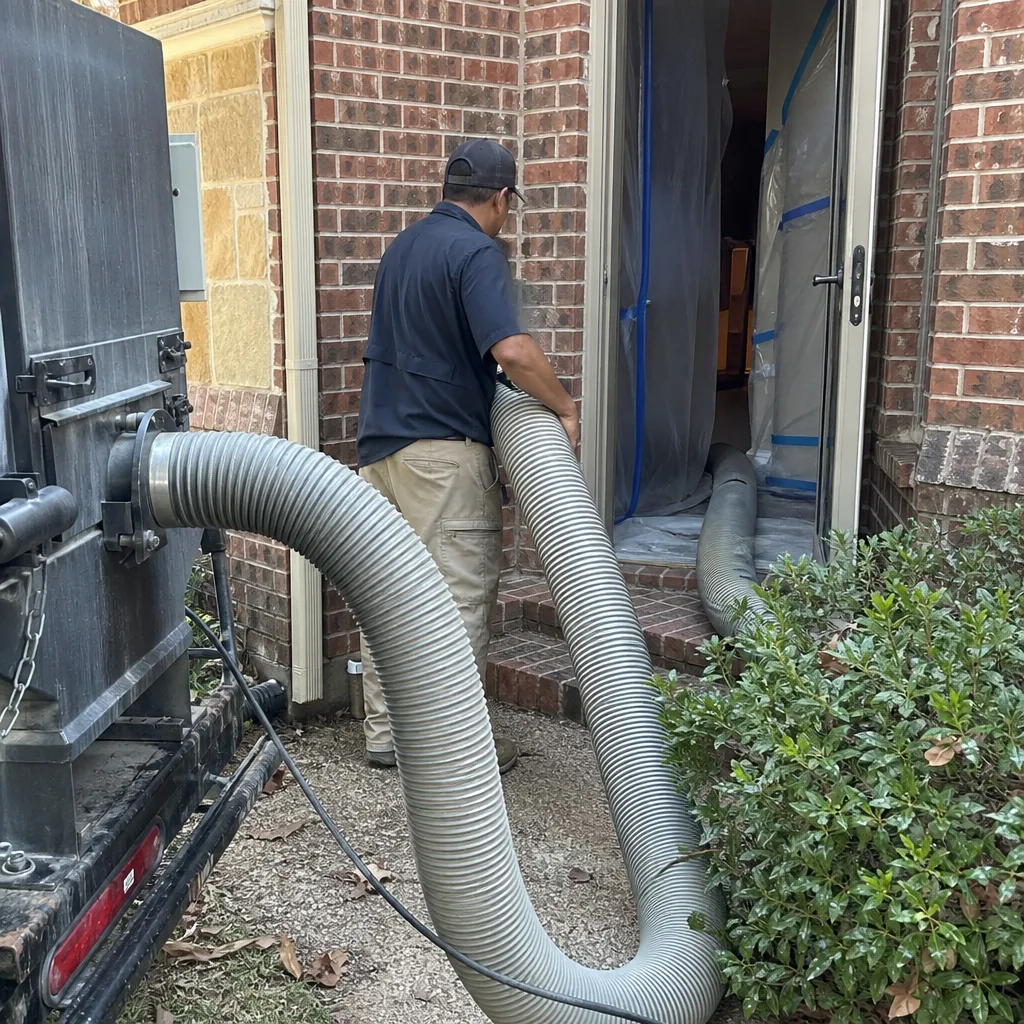
Our crews use Rotobrush and Abatement Technologies negative-pressure extraction equipment for summer-condition cleanings, with photography under visible and UV-spectrum lighting to document biological activity. The photo record is delivered as a standard job deliverable, not an add-on.
Fall: Post-Renovation Dust in New-Build Neighborhoods
Lewisville’s development pattern creates a specific fall contamination profile. The 2023-2024 building concentration in northern tracts means thousands of homes are in their first 24 months of occupancy - the period when construction-generated particulate continues to migrate from wall cavities, attic spaces, and unfinished areas into the duct system.
Construction dust is chemically and physically distinct from ordinary household dust. It contains Portland cement fragment (alkaline, hygroscopic), drywall calcite (fine, respirable), and fiberglass shard (visible as glitter under direct light). These materials behave differently in ductwork: cement fragment absorbs moisture and hardens on duct surfaces; calcite remains powdery and migrates to low-velocity zones; fiberglass shard embeds in flex duct liner and is not removable by standard cleaning methods.
We’ve documented this specifically in Lewisville’s newer neighborhoods. In a 2024 inspection of a home in The Highlands built in 2022, the camera showed a 3-inch debris build-up at the first elbow of the main return trunk - not organic dust, but a gray, granular material that tested positive for calcium sulfate and silicate compounds. The homeowner had replaced filters on schedule and had no reason to suspect the condition. The system had been “serviced” by an HVAC contractor twice, but the scope of that service did not include duct interior inspection.
The observable signs homeowners can match:
- Dust accumulation at supply registers shows glittering particles under direct flashlight examination
- Vacuuming frequency increases without corresponding increase in occupancy or activity
- Filter pleats show gray, granular loading rather than fuzzy organic accumulation
- System was installed or home was completed within 36 months
Homeowner action for fall: If your home was built or substantially renovated within the past three years, inspect the return grille and first accessible duct section with a flashlight and smartphone camera. Document any granular or glittering accumulation. Replace filters with MERV 11 pleated media to capture finer construction particulate. Consider a professional inspection with photo documentation to establish whether the duct system requires extraction or whether the condition is stable and manageable with filter maintenance.
Professional value window: October-November, after summer humidity has declined and before heating season pressure changes complicate leakage assessment. This timing also allows documentation of any summer microbial conditions that developed, establishing a complete annual record.
Winter: Pressure Changes and Duct Sealing Exposure
Heating season in Lewisville runs from November through March, with peak demand typically in January. Gas furnace operation creates different duct conditions than cooling operation: higher supply air temperatures (140-170°F versus 55-60°F), higher static pressure from the blower motor (typically 0.5-0.8 inches water column versus 0.3-0.5 for cooling), and reversed thermal stress on duct joints.
The pressure differential is the critical factor. A blower operating at 0.7 inches static pressure will force air through gaps that were asymptomatic at 0.4 inches during cooling season. The thermal expansion differential between metal ductwork at 160°F and wooden framing at attic ambient (40-60°F in Lewisville winters) also cycles joint seals through expansion and contraction that widens existing gaps.
The result is that winter exposes leakage that summer concealed. We’ve photographed infrared images of Lewisville attic ductwork showing 15-20°F temperature differentials at joint locations that appeared intact to visual inspection. The conditioned air loss is direct energy waste, but the more significant duct consequence is that the negative pressure at return leaks pulls attic air - with its particulate, insulation fragment, and occasional rodent debris - into the system during off-cycle periods.
The observable signs homeowners can match:
- Rooms at duct endpoints are noticeably cooler than central rooms during heating operation
- Dust accumulation at supply registers increases despite unchanged filter schedule
- Utility bills spike in January-February relative to temperature-normalized expectations
- System blower noise increases, indicating higher static pressure from leakage-driven flow imbalance
Homeowner action for winter: Conduct a simple register flow test. Hold a tissue against each supply register with the system running. Consistent tissue deflection across all registers indicates balanced flow; weak deflection at distant registers suggests leakage or blockage. If you identify weak registers, inspect accessible duct sections in the attic for visible gaps at joints or disconnected flex duct.
Professional value window: January-February for duct sealing assessment, using pressure pan testing and duct blaster measurement (a calibrated fan and pressure gauge that quantifies leakage as a percentage of system airflow). This is separate from cleaning scope; the two services are complementary but distinct.
Your 12-Month Lewisville Duct Care Calendar
This calendar aligns homeowner actions with Lewisville’s specific seasonal risk profile. Professional service windows are marked where documented inspection adds measurable value.
| Month | Homeowner Action | Professional Service Window |
|---|---|---|
| January | Replace filter; inspect supply register flow with tissue test | Duct sealing assessment if winter pressure symptoms observed |
| February | Replace filter with MERV 8-11 before cedar pollen peak | - |
| March | Weekly grille inspection for pollen film accumulation | - |
| April | Final filter change before summer; begin humidity monitoring | Primary service window opens: Pre-summer inspection with photo documentation |
| May | Clean return grille fins; verify condensate drain line clear | Primary service window closes: Last effective timing before continuous summer operation |
| June | Monitor humidity at thermostat; flush condensate drain with vinegar | - |
| July | Inspect visible duct at air handler for darkening or spotting | Intervention only if microbial symptoms observed |
| August | Continue humidity monitoring; replace filter if loading visible | - |
| September | Assess allergy symptom patterns; inspect registers for odor on startup | Limited intervention window for established microbial conditions |
| October | Replace filter; inspect for construction dust if home built 2022-2024 | Secondary service window opens: Post-summer documentation; pre-heating assessment |
| November | Verify heating system operation; check for room temperature imbalance | Secondary service window closes: Final inspection before winter pressure exposure |
| December | Monitor energy bills against temperature; re-check register flow | - |
The two professional windows - April-May and October-November - are not arbitrary. April-May captures pre-summer conditions when intervention prevents 90 days of amplification. October-November captures post-summer documentation and pre-winter sealing assessment when the full annual cycle is visible.
Why “The System Was Just Serviced” Doesn’t Mean Your Ducts Were Evaluated
This is the most common misconception we encounter in Lewisville homes, and it costs homeowners the documentation window that would have prevented expensive conditions.
HVAC maintenance and duct cleaning are different scopes with different access points and different documentation. A standard HVAC maintenance visit, typically performed twice yearly, includes: coil cleaning, refrigerant pressure check, blower motor amp draw, capacitor testing, and thermostat calibration. The technician accesses the air handler cabinet, the condensing unit, and the electrical panel. The ductwork interior is not part of this scope.
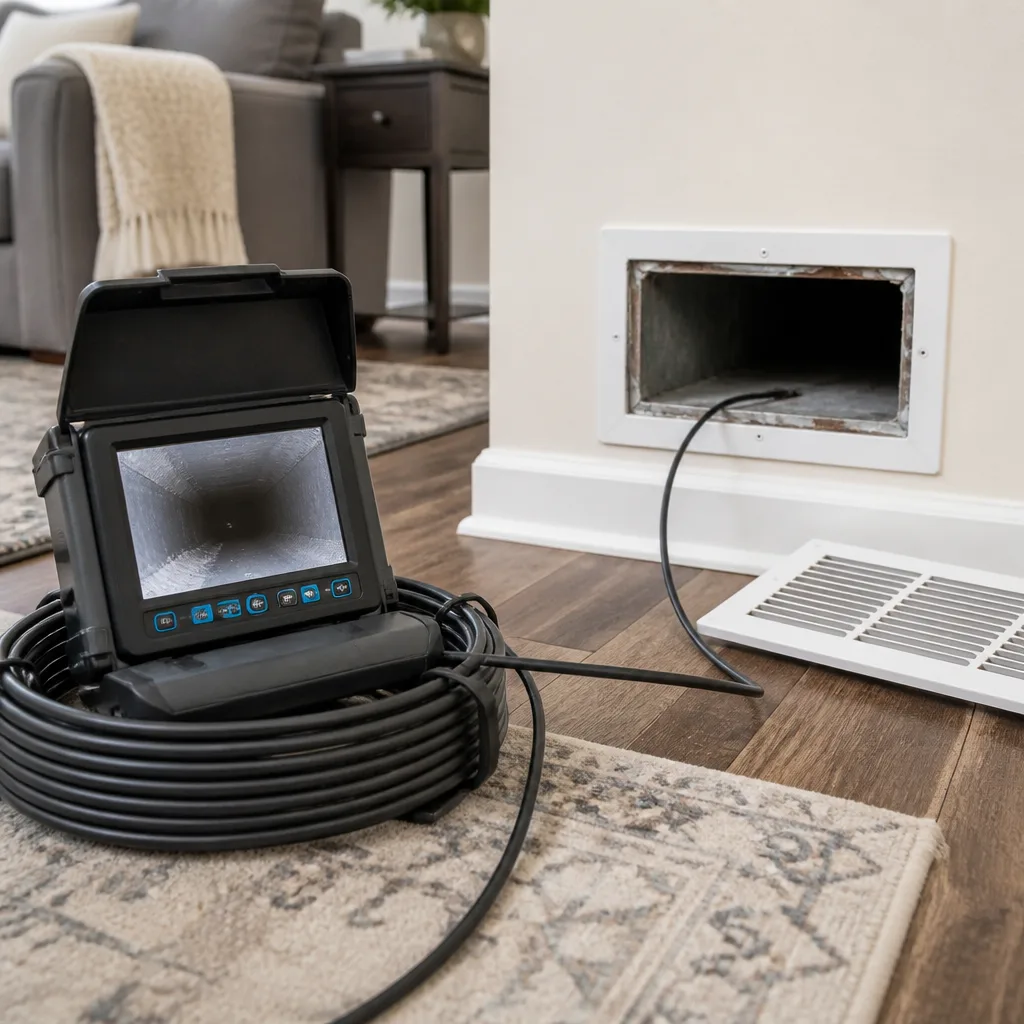
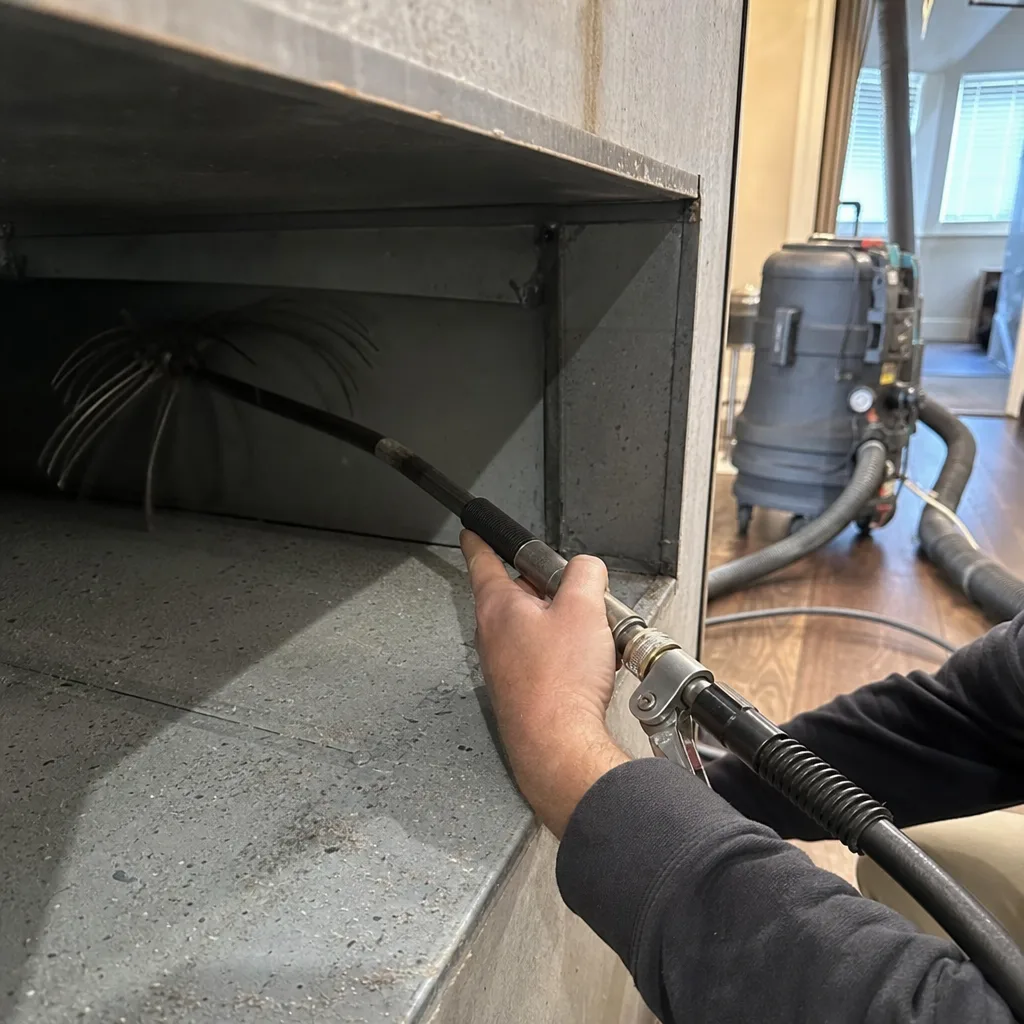
Duct cleaning, properly performed, requires access to every duct run - supply and return - with mechanical agitation and negative-pressure extraction. The tools are different: Rotobrush contact cleaning for lined ductwork, Nikro or Abatement Technologies HEPA-filtered vacuum systems for debris containment, and borescope or digital camera documentation of interior conditions. The technician accesses registers, trunk lines, and the plenum, not the air handler components.
We’ve inspected Lewisville homes where the homeowner believed annual HVAC maintenance included duct evaluation because the technician “looked at everything.” The camera then showed 4-inch debris accumulation in a return trunk that had never been accessed. The HVAC technician performed their scope correctly; the homeowner’s assumption about scope overlap was the error.
The documentation standard also differs. HVAC maintenance typically produces a checklist with checked boxes. Our work under the H.A.V.E.N. Standard produces a Documented Photo Record - interior images of every duct run, before and after, delivered as a standard job record. Haven Standard Clause 1 requires written pricing before work begins; Haven Standard Clause 4 requires photographic documentation of completed scope. These are deliverables, not descriptions.
If your HVAC contractor has not provided dated photographs of the interior of your duct runs, your ducts have not been evaluated for contamination. The two services are complementary, not overlapping.
Common Mistakes to Avoid
- Scheduling cleaning based on a fixed calendar interval without regard to seasonal risk. A Lewisville home with mature trees, multiple occupants, and summer humidity exposure needs different timing than a single-occupancy condo with minimal pollen loading. The interval rule of thumb ignores the actual contamination curve.
- Assuming a new home has clean ducts. Construction debris loading peaks at 12-24 months after completion, not at move-in. We’ve documented severe accumulation in Lewisville homes occupied less than 18 months, particularly in tracts with active adjacent construction.
- Ignoring register observations until symptoms appear. The visible grille is a diagnostic tool. Pale pollen film, glittering construction dust, or dark microbial spotting are specific indicators that correspond to seasonal risks. Waiting for musty odor or energy spike means the condition is already amplified.
- Confusing filter replacement with duct cleaning. Filters capture what reaches them. Bypass leakage, return plenum gaps, and filter installation errors allow unfiltered air into the duct system. A clean filter does not indicate clean ducts.
- Accepting per-vent pricing without a whole-system scope. The industry bait-and-switch model quotes a low per-vent figure, then adds charges for “extra” returns, trunk lines, or sanitizing. CleanRun’s pricing is one flat price per system, agreed in writing before work starts, under Haven Standard Clause 1. No per-vent arithmetic.
- Neglecting the fall inspection window. October-November is the only time when summer microbial conditions, construction dust loading, and pre-winter sealing needs are simultaneously visible. Missing this window means waiting until April for comprehensive assessment.
When to Call a Professional
Call for documented inspection when you observe specific seasonal indicators: pollen film that reappears within 48 hours of cleaning, musty odor at startup that diminishes after five minutes, glittering dust at registers in a home built since 2022, or room temperature imbalance during heating operation that exceeds 4°F from the thermostat reading. These are not emergencies; they are precisely timed documentation opportunities.
CleanRun Air Duct Cleaning Lewisville offers free estimates in Lewisville - call (940) 240-8552. Every estimate includes a written scope and price before any work begins, and every completed job includes a Documented Photo Record of every duct run. We also provide a Free Second Opinion on any written estimate from another provider; bring their quote and we’ll put our number next to it in writing.
Frequently Asked Questions
Whole-system air duct cleaning for a typical Lewisville home ranges from $450 to $850, depending on system size, accessibility, and contamination level. See our Air Duct Cleaning Cost Breakdown: The Lewisville Homeowner’s Reference for 2026 for full pricing details. This is a flat price per system, agreed in writing before work starts - not a per-vent figure that grows during the visit. Call (940) 240-8552 for an exact quote; estimates are free.
The $79-$149 coupon model typically covers a brief vacuuming of accessible registers, not full-system cleaning with mechanical agitation and negative-pressure extraction. The low entry price expands with add-ons for “additional” returns, trunk lines, or sanitizing. CleanRun’s pricing is one flat price per system under Haven Standard Clause 1, documented in writing before any panel is removed.
Every CleanRun job includes a Documented Photo Record - dated interior images of every duct run, before and after, delivered as part of the standard job record. This practice has been in place since our first job in 2013. If a provider cannot show you photographs of your specific ductwork, the work is not verifiable.
For most Lewisville homes, professional evaluation every 2-3 years aligns with the seasonal risk curve, with cleaning performed only when photo documentation shows conditions warranting it. Homes with heavy pollen exposure, new construction, or summer humidity issues may benefit from annual inspection. The calendar in this guide provides month-by-month guidance for determining your specific timing. Explore more guides & resources on maintaining healthy indoor air quality.
No. HVAC maintenance addresses the mechanical components - coil, blower, refrigerant, electrical - through the air handler cabinet. Duct cleaning requires separate access to every run with specialized extraction equipment and produces separate documentation. We’ve inspected many Lewisville homes where homeowners believed annual HVAC service included duct evaluation; the camera revealed otherwise.
April or May, before continuous summer operation begins. This timing captures spring pollen loading, allows intervention before summer humidity amplifies any microbial conditions, and establishes a documented baseline for the year’s heaviest use period. October and November form a secondary window for post-summer assessment and pre-winter sealing evaluation.
The Bottom Line
Lewisville’s climate creates a specific, predictable duct risk curve: spring pollen loading, summer humidity amplification, fall construction dust, and winter pressure exposure. The homeowners who align professional service with the April-May and October-November windows get documented outcomes that arbitrary scheduling cannot match. The rest of the year belongs to homeowner maintenance - filter discipline, grille observation, and humidity monitoring - that stabilizes conditions between professional evaluations. The goal is not frequent cleaning; it’s precisely timed documentation that prevents conditions from becoming problems.
For a free estimate with written pricing before any work begins, call CleanRun Air Duct Cleaning Lewisville at (940) 240-8552. Every job includes a Documented Photo Record and is backed by our 365-Day Done Right Promise.
Written by Tomas Reyes, Owner at CleanRun Air Duct Cleaning Lewisville, serving Lewisville since 2013.