
Last updated September 23, 2026
Whole-system duct and dryer vent check with before-and-after photos - you see exactly what came out of your vents
That "$99 whole-house special" is a bait ad - the real number appears once they are in your hallway, or the "clean" is a shop-vac at the register. We photograph the inside of your ducts before and after instead.
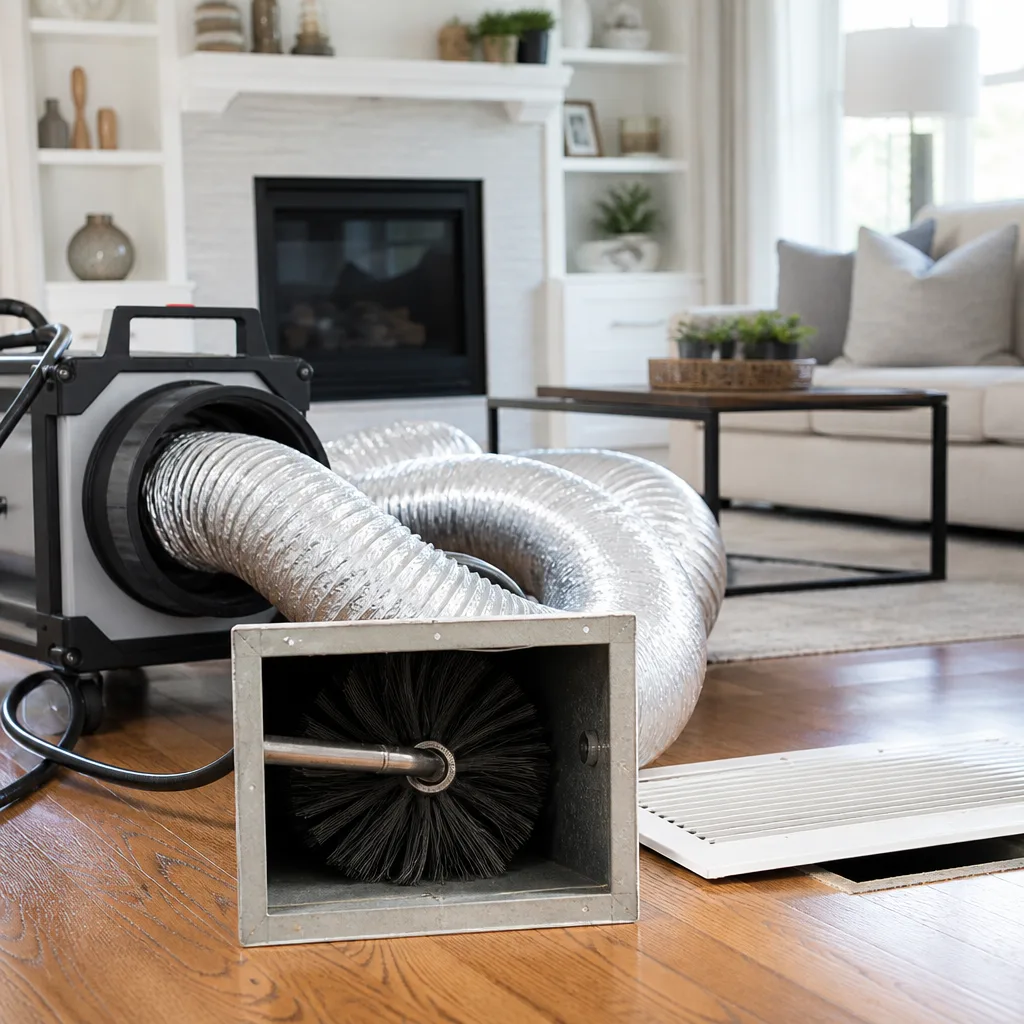
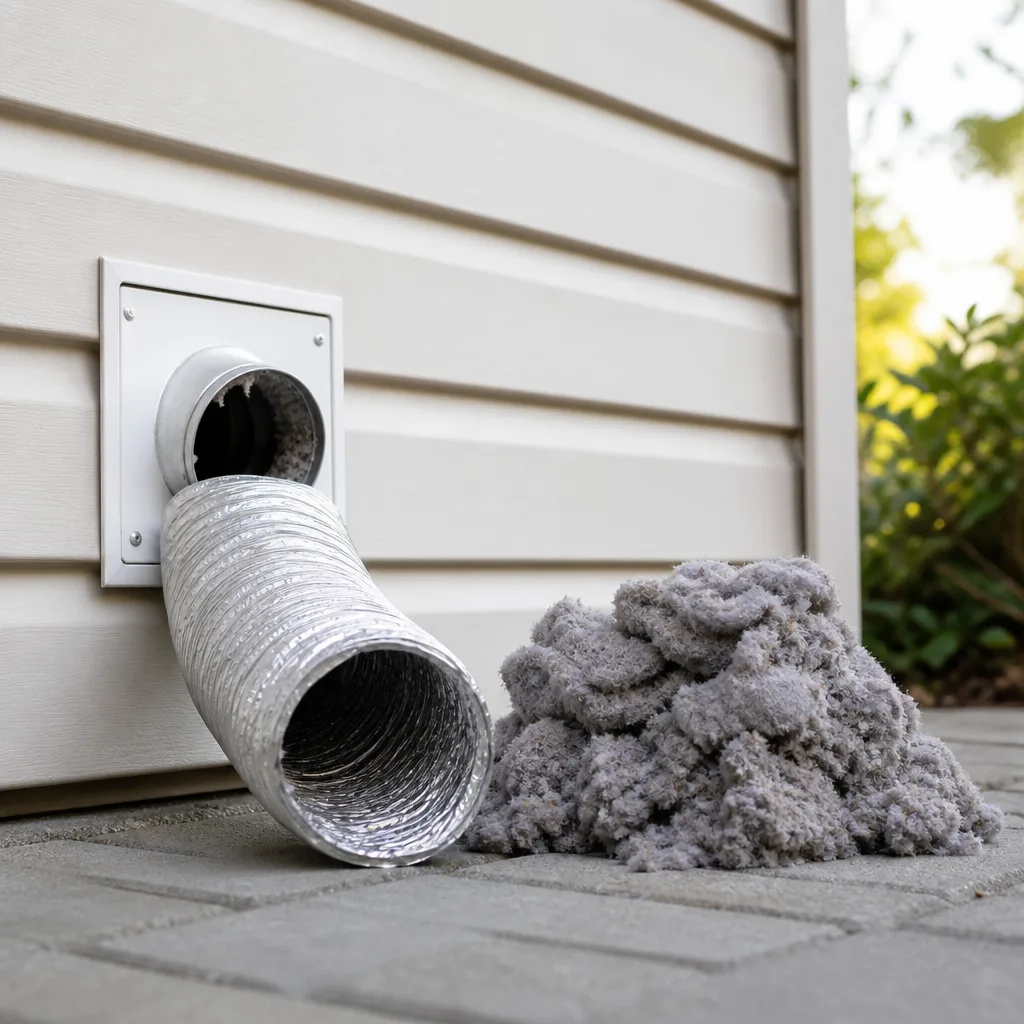
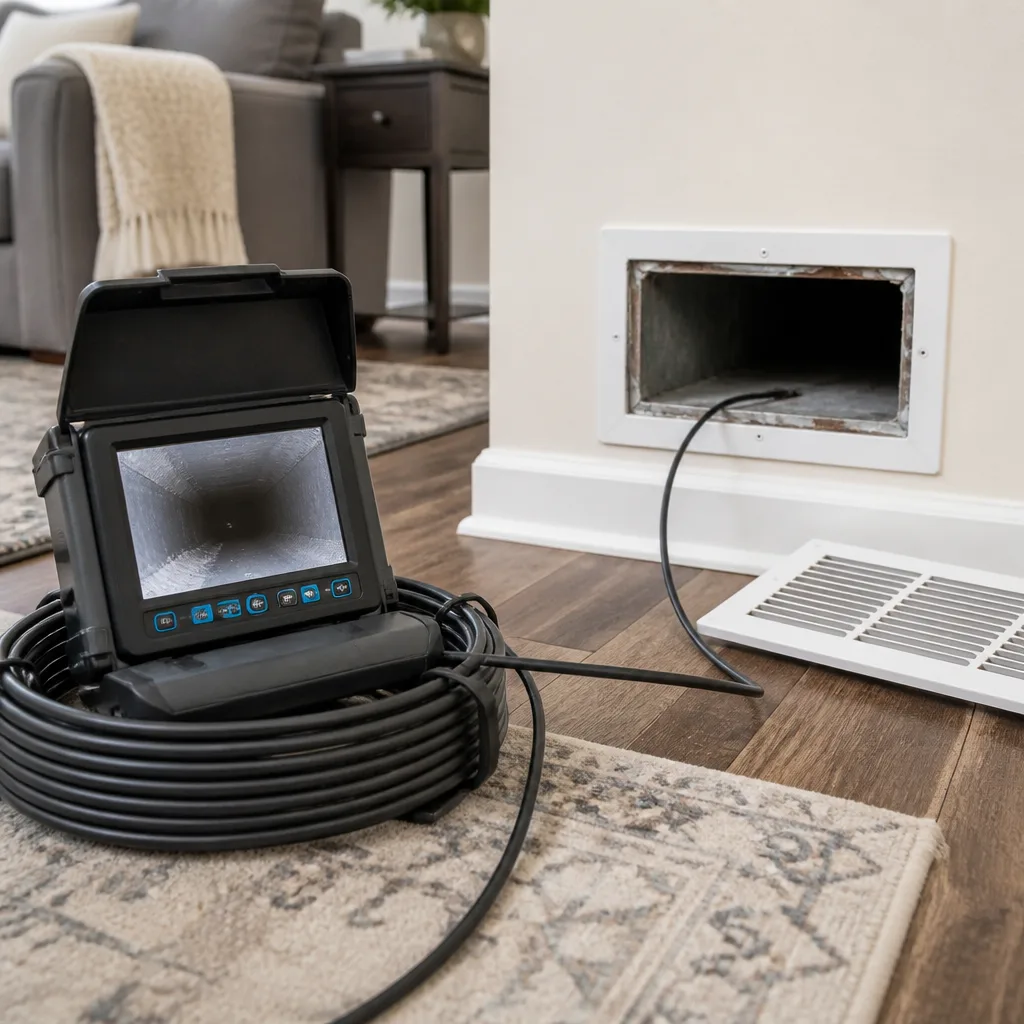
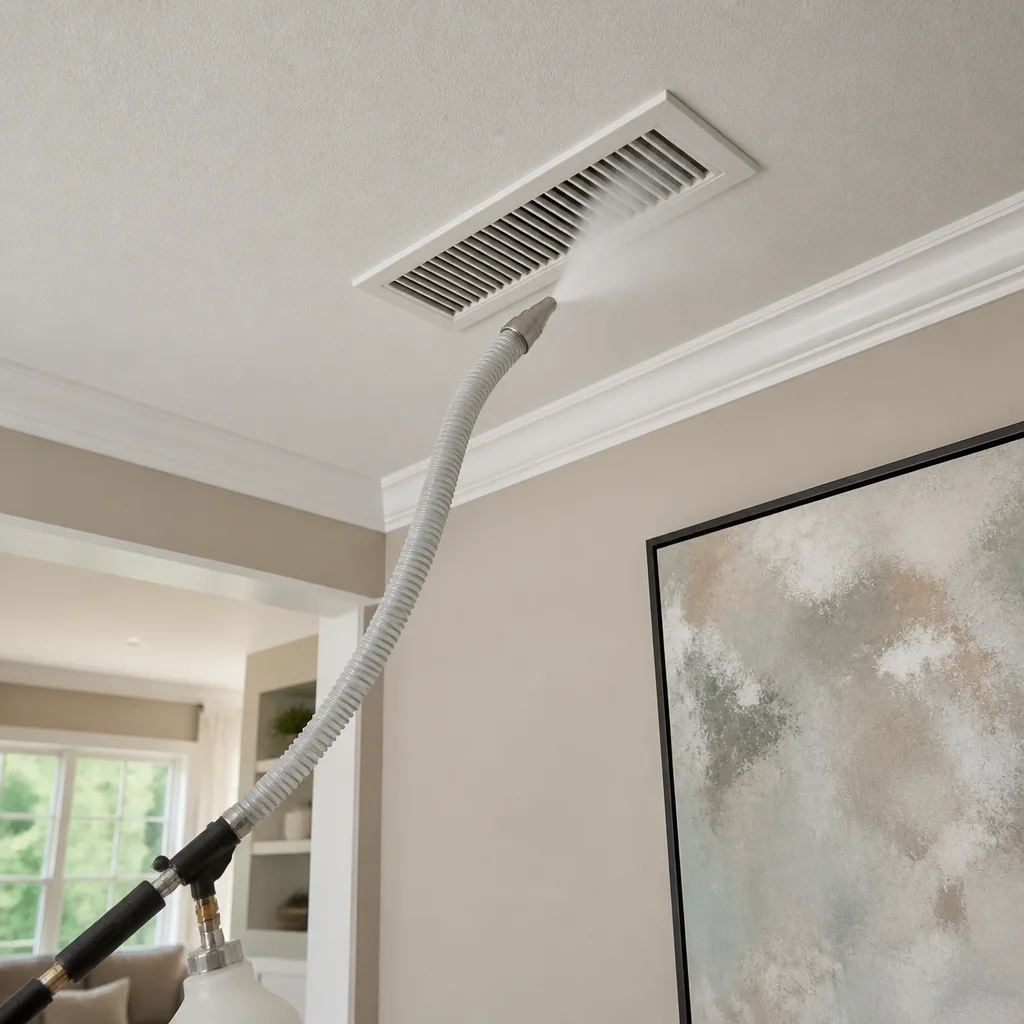
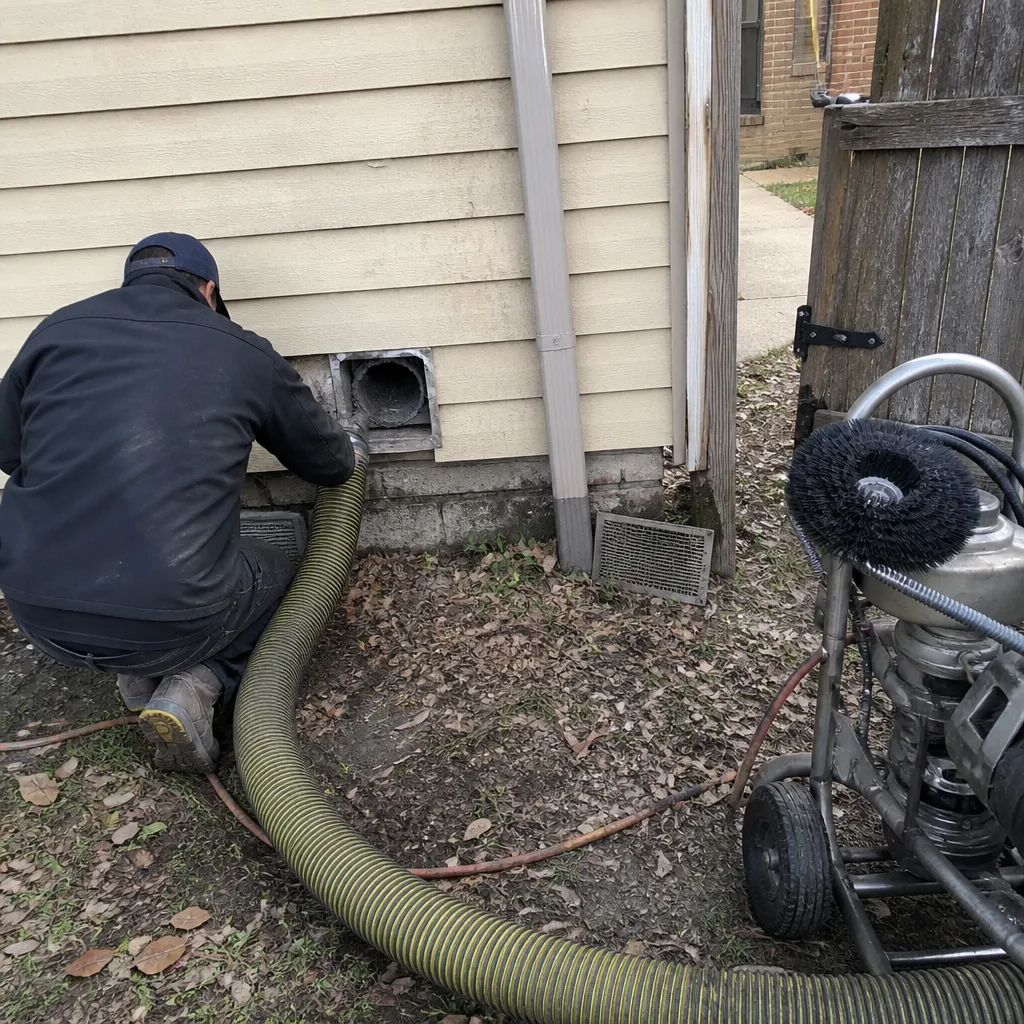 Before
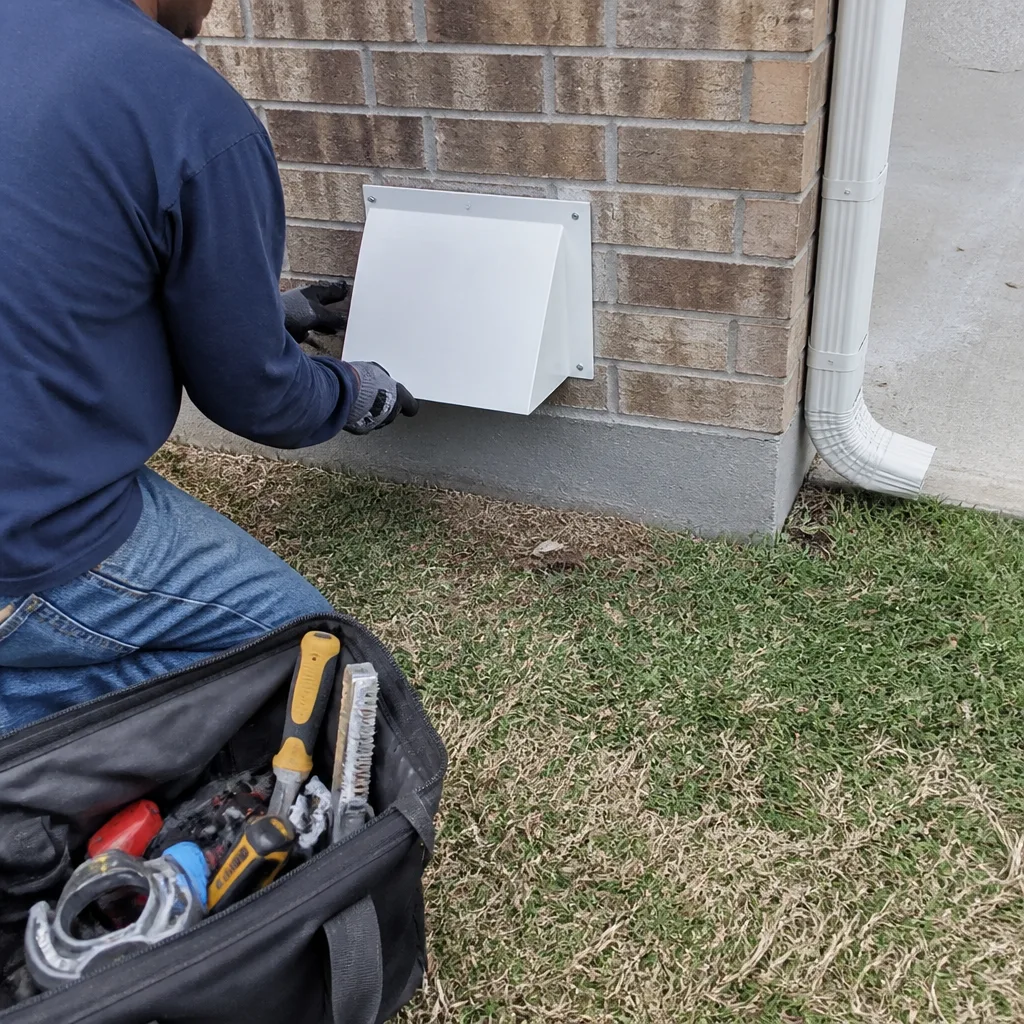 After
After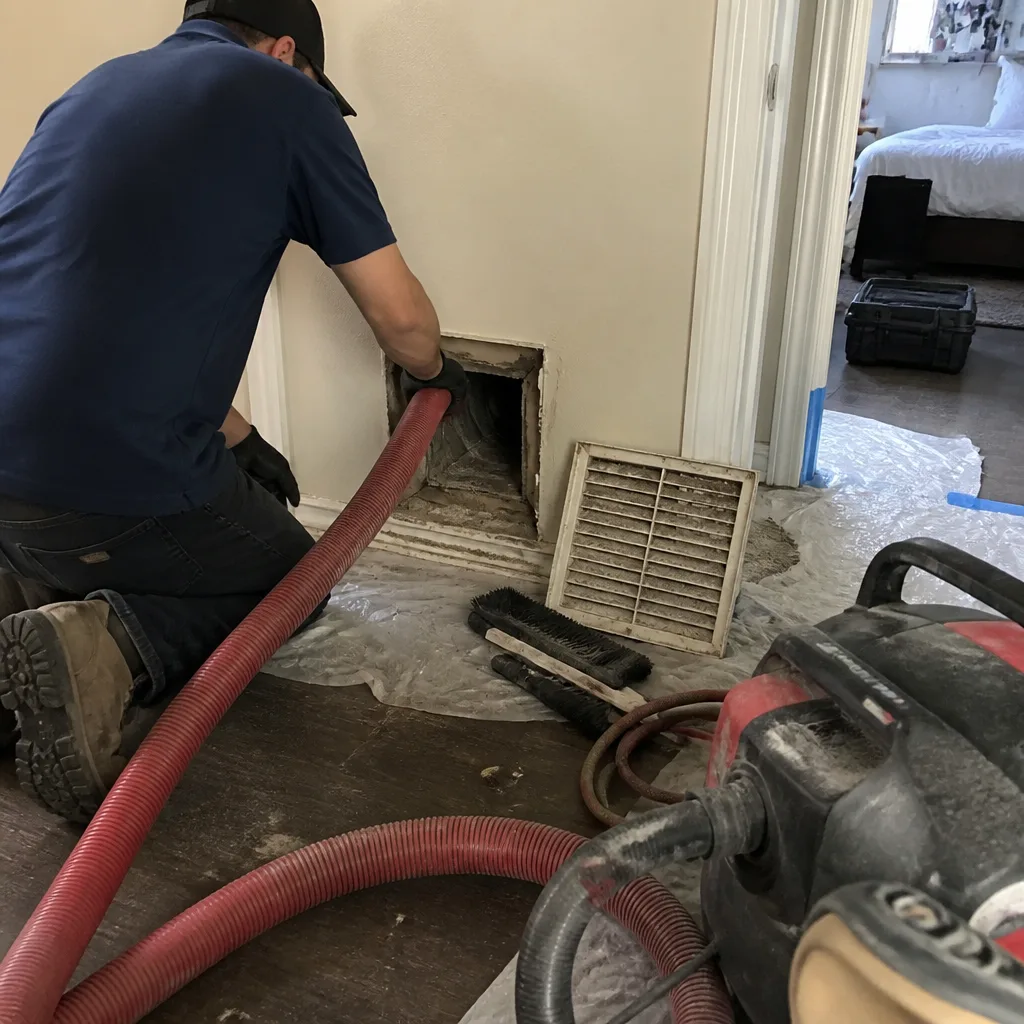 Before
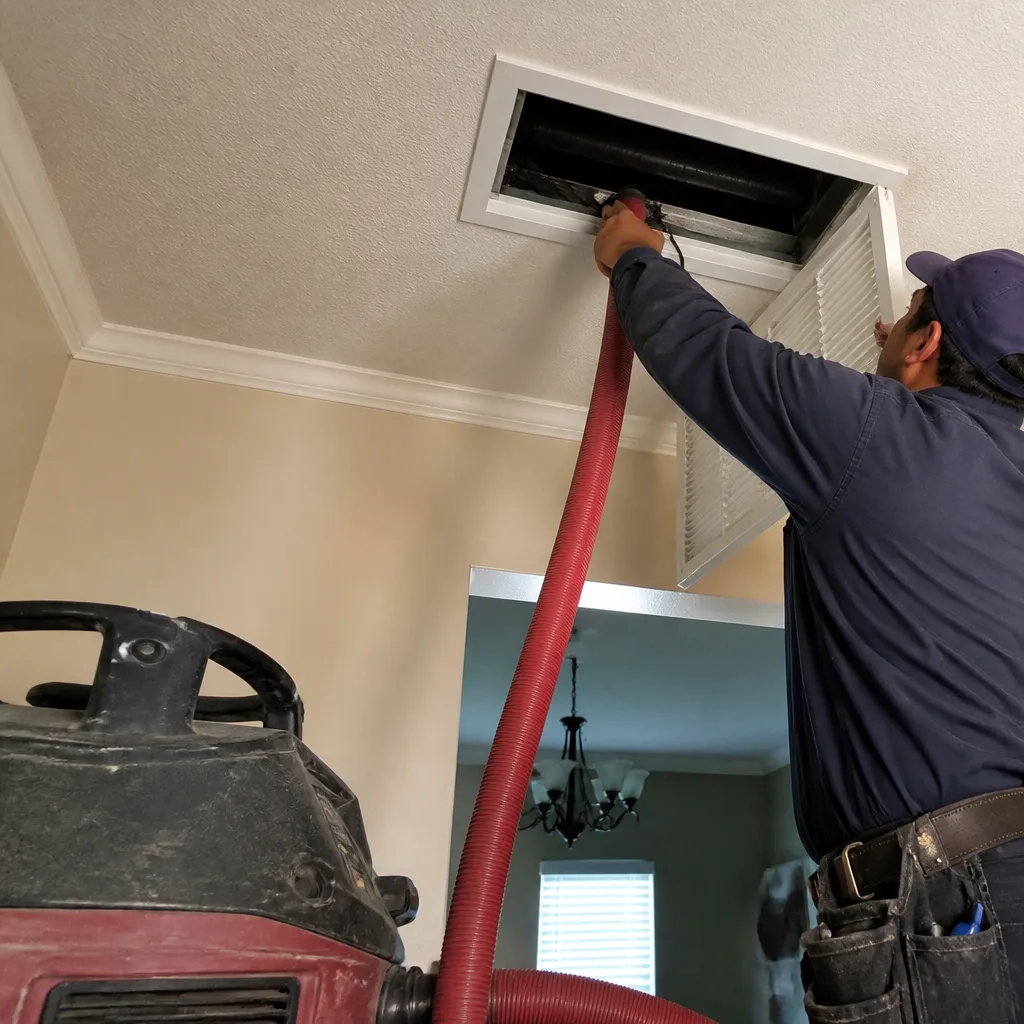 After
After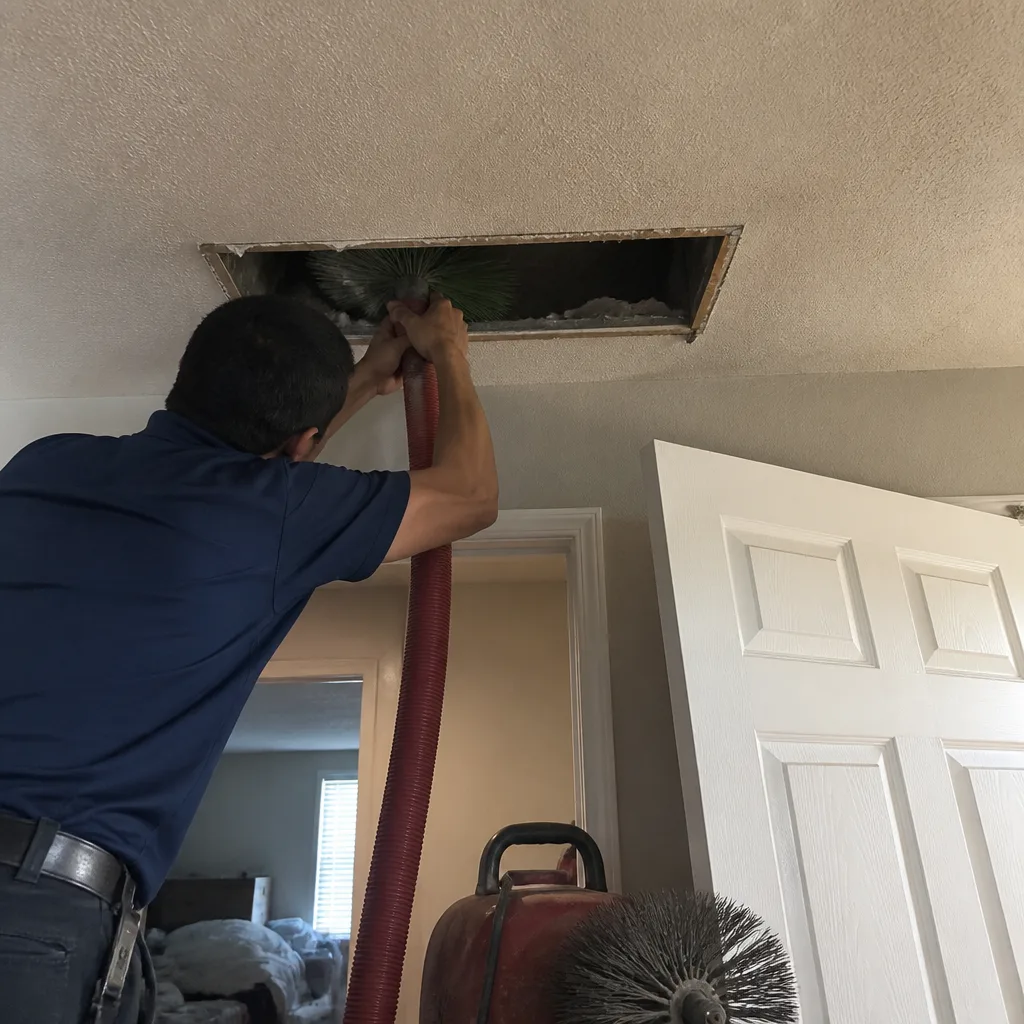 Before
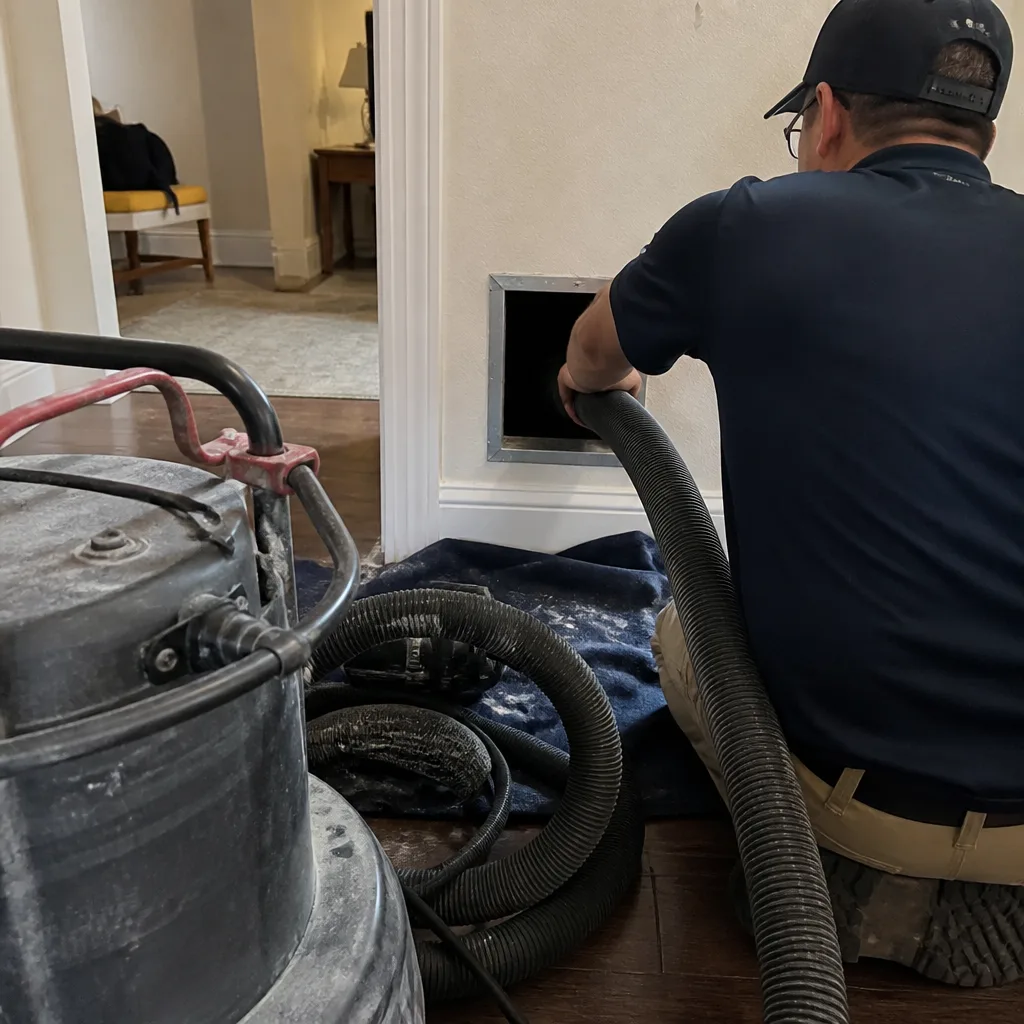 After
AfterAir Duct Cleaning Warning Signs: A Lewisville Homeowner’s Reference Guide
Visible dust on your register grille appears on every warning-sign list in this industry. It’s also what happens when someone forgets to change their HVAC filter for two months. One situation requires Air Duct Cleaning from a professional with a negative-pressure extraction system and a borescope camera. The other requires a $12 filter from the hardware store on Main Street.
Most lists published by duct cleaning companies treat every symptom as equally urgent. After twelve years and 52,000 homes, we’ve learned that approach sells services but doesn’t help homeowners triage. This guide-along with our The Complete Guide to Air Duct Cleaning in Lewisville-assigns each warning sign a severity level based on what it actually indicates inside the duct system, so you can tell the difference between “schedule soon” and “schedule now” without calling a salesperson to find out.
We’ll cover the specific debris types that produce each symptom, the Lewisville-specific false positives that confuse even attentive homeowners, and the documentation protocol that protects you if a contractor’s work doesn’t match their promise.
Quick Answer
Air duct cleaning warning signs in Lewisville fall into three tiers: cosmetic issues like dusty grilles and brief startup odors (address with filter changes and monitoring); functional problems like uneven airflow and short cycling (schedule within 2-4 weeks); and urgent indicators like visible mold, pest debris, or burning smells (call within 24 hours). Cedar pollen season and construction silica from new slab development in surrounding areas produce false positives that mimic duct contamination.
Table of Contents
- The Three-Tier Warning System: What Each Sign Actually Means
- Tier 1: Cosmetic and Routine Warning Signs
- Tier 2: Functional Warning Signs
- Tier 3: Urgent Warning Signs
- What the Debris Looks Like: A Visual Reference
- When the Problem Is Beyond Cleaning Scope
- Lewisville-Specific False Positives
- The Homeowner Documentation Protocol
BeforeAfterThe Three-Tier Warning System: What Each Sign Actually Means
Not every warning sign points to the same underlying condition. We’ve developed this tier system from the photo records of every job we’ve completed since 2013, each one documenting what was actually found after the customer described their symptoms.
The structural reality is this: your duct system is a closed loop of sheet metal, flex duct, or duct board (the fibrous board material used in many Lewisville homes built between 1985 and 2005) that moves conditioned air from your air handler to your rooms and back again. Symptoms appear at the endpoints, but their severity depends on where in that loop the problem originates and what kind of material is causing it.
Here’s how we classify what we see in the field:
| Tier | Timeline | Typical Location | Homeowner Action |
|---|---|---|---|
| 1 – Cosmetic/Routine | Monitor; address within 1-3 months | Register grilles, filter slot, visible duct openings | Filter change, visual inspection, photo documentation |
| 2 – Functional | Schedule within 2-4 weeks | Specific duct runs, plenum connections, dampers | Professional inspection with borescope and pressure testing |
| 3 – Urgent | Call within 24 hours | Air handler cabinet, evaporator coil, duct breaches | Immediate professional assessment; possible HVAC contractor coordination |
The rest of this guide walks through each tier in detail, with the specific debris types and structural causes we’ve documented in Lewisville homes; for related reading, see our DIY vs Professional Air Duct Cleaning: The Lewisville Homeowner’s Decision Guide.
Tier 1: Cosmetic and Routine Warning Signs
These signs indicate surface-level accumulation or normal system behavior. They’re worth monitoring but don’t typically require immediate professional cleaning.
Dust Accumulation on Register Grilles
The thin layer of dust that collects on your register grilles (the visible covers where air enters your rooms) comes from two sources: airborne particles settling on the grille surface, and slight positive pressure at the register face pushing filter-bypassed dust against the louvers.
In Lewisville, we see this most often in homes with 1-inch pleated filters that haven’t been changed in 90+ days, or in homes with bypass around the filter slot due to poor fit. The dust is typically gray, fibrous, and easily wiped away. If the dust is black, oily, or sticky, that’s a different category, see Tier 3.
What to check first:
- Remove the grille and inspect the duct opening behind it. If the interior surface is clean metal with only light dust, the grille itself is the issue.
- Check your filter. A clogged filter increases bypass velocity, forcing unfiltered air through gaps around the filter frame.
- Verify filter size. A 15.5-inch filter in a 16-inch slot leaves a half-inch bypass channel that deposits dust directly on downstream grilles.
We’ve photographed this exact scenario in Castle Hills and Valley Vista homes where the homeowner’s “duct contamination” was resolved with a properly sized Aprilaire filter and a $7 grille replacement.
Brief Odor at System Startup
A musty or dusty smell that lasts 30-60 seconds when your system first cycles on is usually dust and debris burning off the heat exchanger or electric heat strips. In Lewisville’s climate, where heating runs intermittently from November through March, this is normal after periods of disuse.
The smell should dissipate quickly and not return during the same cycle. Persistent odor throughout the cycle, or a sharp chemical/plastic smell, moves this to Tier 3.
Filter Clogging Faster Than Expected
If your filter loads with debris in 30 days instead of 90, your home has either elevated particle load or the filter is doing its job exceptionally well. In Lewisville’s spring cedar pollen season, a MERV 11 filter can load in 2-3 weeks without indicating any duct contamination.
Before scheduling cleaning, try:
- Stepping up one MERV rating to capture more pollen at the filter rather than allowing it to circulate
- Checking for active air leaks in your return ductwork (unsealed panned joist returns in older Lewisville homes pull attic air directly into the system)
- Monitoring whether the accelerated loading correlates with pollen season or is year-round
Tier 2: Functional Warning Signs
These symptoms indicate measurable restriction, imbalance, or contamination inside the duct system. They won’t resolve with filter changes and typically worsen over time.
Uneven Airflow at Specific Registers
When one bedroom is consistently 6-8 degrees warmer in summer despite the system running, the cause is usually a partially blocked duct run (the individual branch of ducting serving that room) or a disconnected flex duct in the attic.
In Lewisville’s 1990s and 2000s subdivisions, particularly in Old Town and the neighborhoods east of I-35E, we’ve found flex duct that has pulled loose from its collar, creating a 100% air loss into the attic. The register still moves some air through thermal convection and pressure equalization, so the homeowner doesn’t realize the duct is fully detached until we photograph the open collar with our borescope.
Other causes we’ve documented:
- Collapsed internal liner in flex duct, common in attics that reach 140°F+ in July and August
- Excessive debris accumulation at the first elbow in a duct run, creating a velocity drop that starves downstream registers
- Improperly installed balancing dampers (the adjustable plates inside ductwork that control flow) that have shifted closed over years of thermal cycling
A professional inspection for this symptom should include static pressure testing across the system and borescope photography of the affected duct run. Any contractor who quotes cleaning without pressure testing is guessing.
Short Cycling (System Runs Briefly, Shuts Off, Repeats)
Short cycling has many causes, but duct-related short cycling occurs when restricted return airflow causes the evaporator coil to freeze, triggering the system’s low-pressure safety switch. The ice melts, the switch resets, and the cycle repeats.
In Lewisville’s high-humidity summers, a partially blocked return duct or clogged evaporator can produce this pattern within 48 hours. The warning sign is audible: the compressor starts, runs 3-7 minutes, stops abruptly, and restarts 10-15 minutes later.
Check your filter first. If the filter is clean and the pattern continues, the restriction is likely in the return plenum (the large central duct that collects air from all returns before it reaches the air handler) or at the evaporator coil itself. Both require professional inspection.
Visible Debris Blowing from Registers
Particles that actively discharge from your registers when the system cycles indicate debris inside the ductwork that has reached the threshold of entrainment, meaning the air velocity is high enough to lift and transport it.
The debris type matters significantly:
| Debris Appearance | Likely Source | Typical Cause |
|---|---|---|
| Fine gray dust, paper-like flakes | Deteriorated duct liner or old filter media | Age degradation, rodent activity in return cavities |
| Black, irregular specks | Carbon from heat exchanger or soot from candle/grease combustion | Combustion issue or filter bypass of kitchen particulate |
| Insulation fibers, pink or yellow | Damaged flex duct or unsealed return pulling attic insulation | Physical damage, poor initial installation |
Active debris discharge always warrants professional inspection. The question is whether cleaning resolves it or whether duct repair or replacement is needed.
Tier 3: Urgent Warning Signs
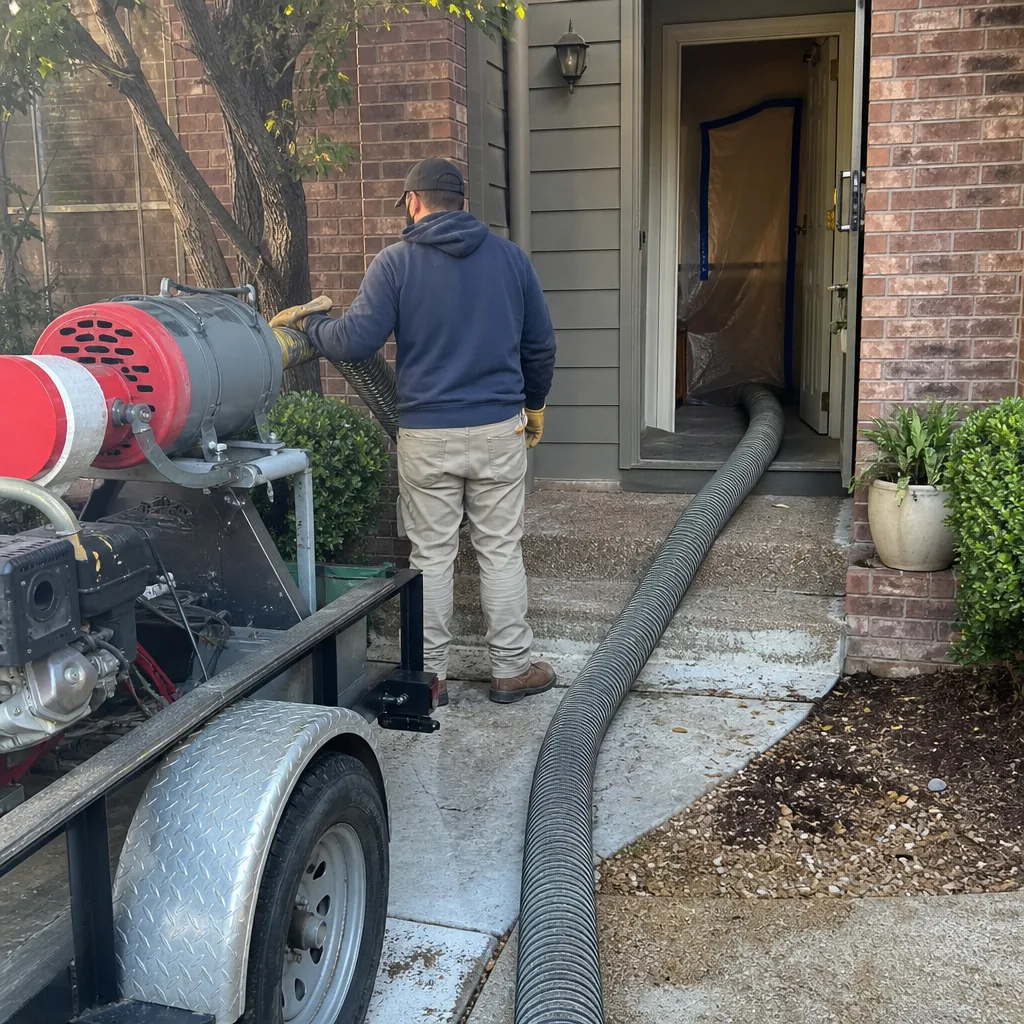
These symptoms indicate conditions that can damage your HVAC system, degrade indoor air quality significantly, or pose safety risks. They require assessment within 24 hours.
Visible Microbial Growth
Green, black, or white growth on register grilles, in the duct opening, or visible through a removed filter slot indicates active biological colonization. In Lewisville’s climate, where summer humidity regularly exceeds 75% and attic temperatures create condensation on cool duct surfaces, we’ve documented mold-adjacent growth in hundreds of homes.
The critical distinction: surface mold on a grille is cleanable. Growth extending more than 12 inches into the ductwork, or growth on porous duct board, typically requires remediation beyond standard cleaning. The EPA guidelines and Texas Department of State Health Services protocols distinguish between small-scale cleanup and professional remediation based on the contaminated area’s square footage and the material type.
What to photograph before calling:
- The growth color and texture (fuzzy, slimy, powdery)
- How far into the duct opening it extends, using a ruler or known object for scale
- The surrounding area for moisture staining or rust
- Your HVAC filter condition and installation date
Any contractor who offers to “treat” visible mold with a spray product without physical removal is not following industry standards. The source of moisture must also be identified and resolved.
Pest Evidence: Droppings, Nesting Material, or Odor
Rodent activity in ductwork produces distinctive signs: elongated dark droppings (roughly 1/4 inch for mice, 3/4 inch for rats), shredded paper or insulation nesting material, and a sharp, ammonia-like odor that persists when the system is off.
In Lewisville’s established neighborhoods with mature trees, particularly near Lewisville Lake’s greenbelt corridors, roof rats access attics through tree branches and can enter flex duct systems at damaged or unsealed connections. We’ve found active nests in the return plenums of homes in The Highlands and Timber Creek.
This is urgent for two reasons: rodent-borne pathogens can become airborne when dried droppings are disturbed by airflow, and nesting material is highly flammable if positioned near heat sources.
Professional response requires both pest control for elimination and duct inspection for contamination extent. CleanRun’s protocol under these circumstances includes full HEPA containment during cleaning, not standard negative-pressure extraction, to prevent cross-contamination.
Burning or Electrical Smell from Vents
Any acrid, electrical, or smoke-like odor from your vents demands immediate system shutdown and professional assessment. Causes we’ve encountered in Lewisville homes include:
- Failing blower motor bearings overheating in the air handler cabinet
- Electrical connection degradation at the heat kit or contactor
- Foreign object contact with heat strips (toys, construction debris, rodent nesting material)
- Excessive dust accumulation on heat exchanger surfaces burning off at temperatures above normal design
Shut off your system at the thermostat and the breaker. Do not restart it. Call your HVAC contractor or, if the odor is strong or you see smoke, the fire department. Duct cleaning does not address this category; the source is in the air handler or electrical components.
Oily or Sticky Black Residue
Black residue that smears when touched, distinct from dry dust, indicates combustion byproduct deposition or filter bypass of grease particulate from kitchen sources. In homes with gas furnaces, this can signal heat exchanger compromise, allowing combustion gases including carbon monoxide to mix with conditioned air.
This symptom requires immediate HVAC contractor assessment, not duct cleaning. A combustion analysis and heat exchanger inspection are the correct first steps.
What the Debris Looks Like: A Visual Reference
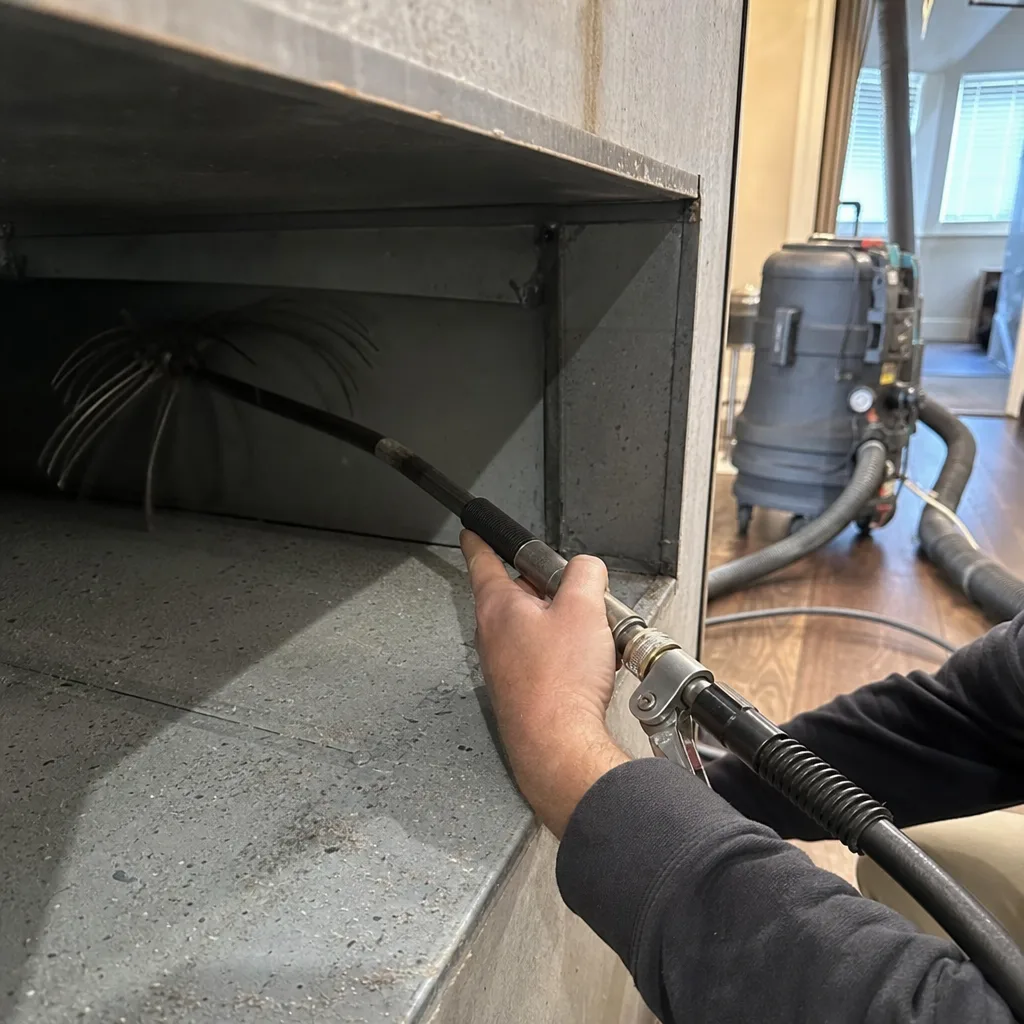
Our photo records from 52,000 homes have established clear patterns in debris type, source, and the symptoms each produces. Here’s what we typically find in Lewisville duct systems, described so you can compare your situation to known references. For more guides & resources, visit our blog.
Dander and Skin Cell Accumulation
Appearance: Fine, gray-tan, fluffy material that compresses into a felt-like mat. Often contains visible hair and fiber.
Where it accumulates: Return ductwork, especially the first 10 feet from the air handler where velocity drops and particles settle.
Symptoms it produces: Gradual airflow reduction, filter loading acceleration, mild allergy symptoms that persist indoors.
Lewisville context: Homes with multiple pets or high occupancy show this pattern most prominently. In our work near Vista Ridge Mall’s surrounding residential areas, we’ve measured 2-4 inch deposits in 15-year-old systems with no prior cleaning.
Construction Silica and Drywall Dust
Appearance: Very fine, white to off-white, gritty when rubbed between fingers. Does not compress or mat.
Where it accumulates: Throughout the system, evenly distributed, often heaviest in supply ducts (the ducts pushing conditioned air to rooms).
Symptoms it produces: Rapid filter clogging with white powder, fine dust on horizontal surfaces within 24 hours of cleaning, no odor.
Lewisville context: New construction in surrounding areas, particularly the ongoing development north of 121 and east of the Dallas North Tollway, produces significant silica load in nearby established homes during the construction period. We’ve documented this in Highland Village and Flower Mound proximity work. The debris clears within 2-3 filter changes after construction completes; full duct cleaning is rarely necessary unless the system was operated during active construction without filtration.
Mold-Adjacent Growth and Bacterial Slime
Appearance: Green, black, or white fuzzy growth on metal surfaces; clear or brownish slime in drain pans and low-velocity areas; musty odor that intensifies with humidity.
Where it accumulates: Evaporator coil drain pan, supply plenum surfaces below 60°F during cooling, flex duct with internal moisture accumulation.
Symptoms it produces: Persistent musty odor, allergy symptoms that worsen in air-conditioned spaces, visible growth at register openings.
The photo record distinction: Active growth has dimension and texture; dust that has absorbed moisture appears flat and stains the surface beneath it. Our borescope cameras document this clearly for homeowners before any work proposal.
Insulation Fragmentation
Appearance: Pink, yellow, or white fibrous chunks, often with a slight chemical odor from the binder adhesive.
Where it accumulates: Return ducts with attic breaches, supply ducts with external damage from trades work.
Symptoms it produces: Visible fibers at registers, itching or irritation after system operation, filter loading with non-dust material.
Lewisville context: Attic work for solar installation, roofing repair, or pest control in Lewisville’s 1980s-2000s neighborhoods often damages flex duct that was installed with minimal clearance to framing. We’ve found insulation pull-through in the return systems of homes in Lewisville Valley and Creekside after attic trades work.
When the Problem Is Beyond Cleaning Scope
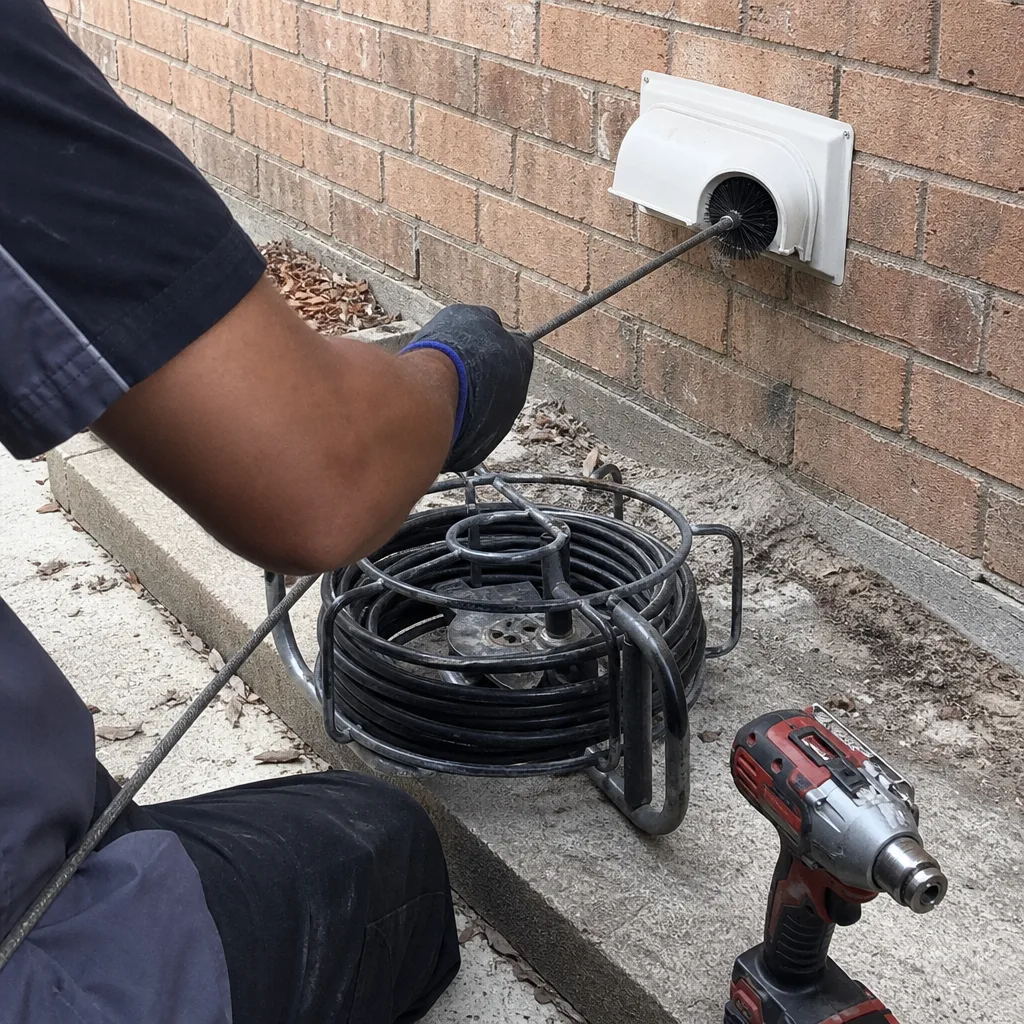
Some warning signs persist after thorough cleaning because their source is structural, not contaminant-based. Recognizing these saves you from paying for ineffective service and points you toward the correct solution.
Persistent Odor After Documented Cleaning
If a qualified contractor has performed full contact cleaning with photo documentation showing clean duct surfaces, and odor persists, the source is likely:
- Contaminated evaporator coil or blower wheel, which requires HVAC service access, not duct cleaning tools
- Duct breach pulling odor from wall cavities, crawl space, or attic (we’ve found disconnected returns pulling garage air in Lewisville’s attached-garage homes)
- Dead animal in inaccessible duct section or wall cavity
- Off-gassing from building materials heated by duct proximity
The next diagnostic step is pressure testing and smoke-tracer analysis to identify duct leakage points, followed by targeted repair or sealing.
Recurrent Debris After Cleaning
Debris that returns within 30-60 days after cleaning indicates an active source. Check:
- Filter bypass: Is your filter properly sized and seated? Is the filter slot damaged?
- Return duct leakage: Are your return ducts pulling unfiltered air from attic, garage, or wall cavities?
- Construction activity: Is there active renovation nearby generating particulate?
- HVAC system issue: Is your blower motor running backward, or is the evaporator shedding degraded coating?
CleanRun’s Air Duct Cleaning in Lewisville includes post-cleaning photo documentation precisely so we and the homeowner can verify whether recurrence is occurring and identify its source.
Structural Duct Damage
Crushed flex duct, separated duct board joints, or corroded metal ductwork require repair or replacement, not cleaning. Cleaning damaged ductwork can worsen the problem by dislodging debris into areas that can’t be extracted.
Our technicians are trained to halt cleaning and document damage when encountered, then present repair options under Haven Standard Clause 1’s written pricing requirement. We’ve replaced entire flex duct runs in Lewisville’s Vista Ridge and Castle Hills areas where age and attic heat had degraded the material beyond serviceability.
Lewisville-Specific False Positives
Local environmental and construction conditions produce symptoms that mimic duct contamination. Misidentifying these leads to unnecessary expense.
Cedar Pollen Season (December-February)
Mountain cedar pollen is among the most allergenic tree pollens in North America, and Lewisville sits directly in its drift pattern from the Hill Country. From mid-December through February, pollen counts regularly exceed 10,000 grains per cubic meter.
The symptoms, cedar fever, include runny nose, itchy eyes, fatigue, and sore throat, all of which improve indoors but don’t fully resolve. Homeowners often attribute this to “dirty ducts” when the actual cause is pollen infiltration through doors, windows, and fresh air intakes.
The distinguishing factor: cedar pollen symptoms are seasonal and correlate with outdoor counts reported by local allergen monitoring. Duct contamination symptoms are year-round and don’t spike with outdoor pollen reports.
Practical check: Change to a MERV 13 filter during cedar season and monitor whether symptoms improve. If they do, your ducts aren’t the primary issue; your filtration and air sealing are.
New Slab Construction Silica
The fine silica dust generated by concrete cutting, foundation work, and masonry grinding in new construction is nearly invisible and highly mobile. In Lewisville’s expanding northern and eastern development areas, established homes within a quarter-mile of active construction can experience filter loading rates 3-4x normal.
The debris is white, extremely fine, and doesn’t produce odor or allergy symptoms. It clears from the system within 60-90 days after construction activity ends.
Before scheduling cleaning, verify whether active construction exists nearby and whether your accelerated dust accumulation correlates with construction phases. A few extra filter changes during the construction period typically resolve this without professional intervention.
Post-Renovation Dust Load
Interior renovation, particularly drywall work and flooring removal, generates massive particulate load. If your HVAC system operated during renovation without sealed returns and upgraded filtration, the dust load in your ducts is real but may be addressed with extended filter changes rather than immediate cleaning.
Our recommendation: Install MERV 11-13 filters, change them every 2 weeks for 2-3 cycles, and evaluate whether visible dust and airflow symptoms persist. If they do, then professional cleaning with photo documentation is warranted.
The Homeowner Documentation Protocol
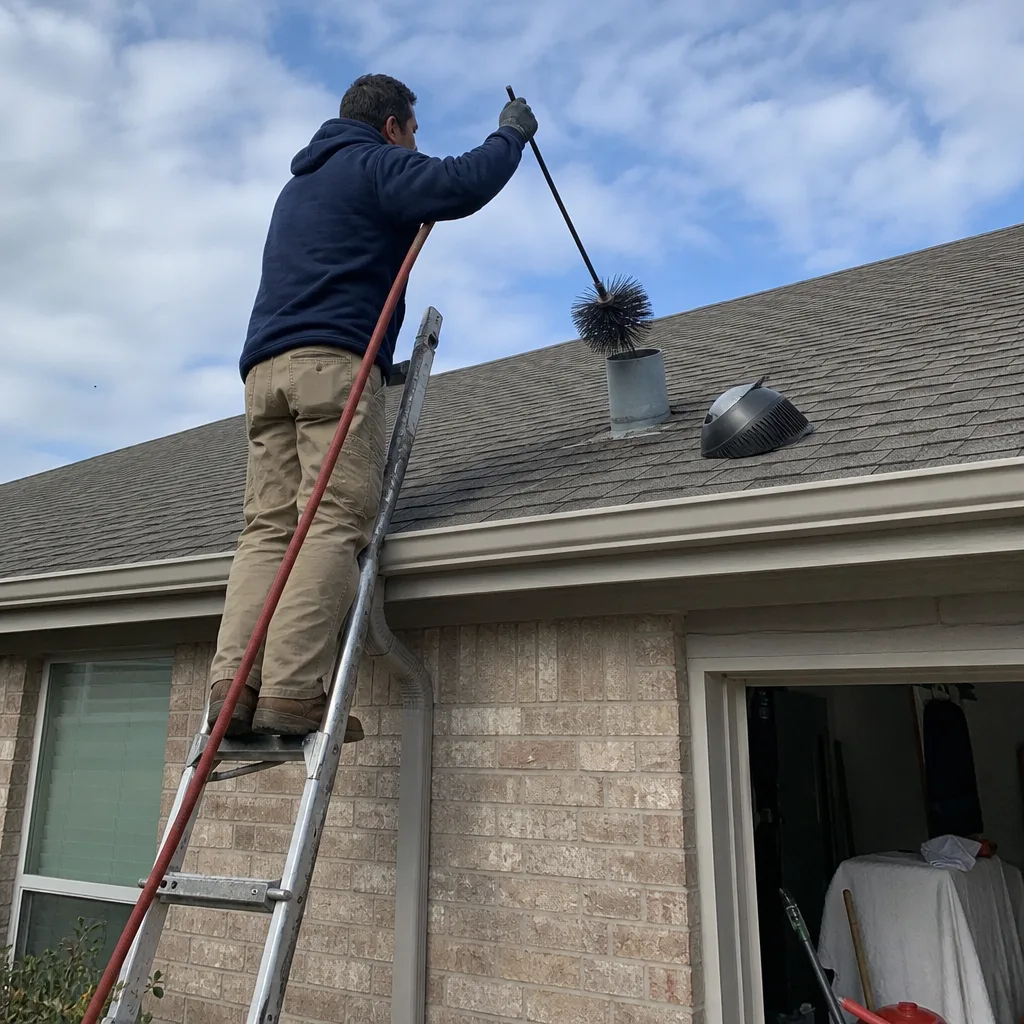
The single most effective protection against inadequate or fraudulent duct cleaning is a timestamped record created before any contractor arrives. This documentation establishes baseline conditions and creates accountability for results.
What to Photograph
- Your HVAC filter: Remove it and photograph both sides with the installation date visible if written on the frame. This establishes filtration history.
- Each register grille: Photograph the grille face and, with the grille removed, the duct opening 12 inches inside. Use your phone’s flash or a flashlight for interior shots.
- The air handler: Photograph the filter slot area, the cabinet exterior, and any visible duct connections. Note any gaps, rust, or staining.
- Your thermostat reading: In rooms with suspected airflow issues, photograph the thermostat and a separate thermometer reading after 30 minutes of system operation.
- Any visible growth, debris, or damage: Include a ruler or coin for scale.
What to Write Down
- Date you first noticed the symptom
- Whether it’s constant, cyclical with system operation, or seasonal
- Any recent changes: filter type, home renovation, nearby construction, pest control activity, HVAC service
- Previous duct cleaning date and company, if any
Why This Matters for Accountability
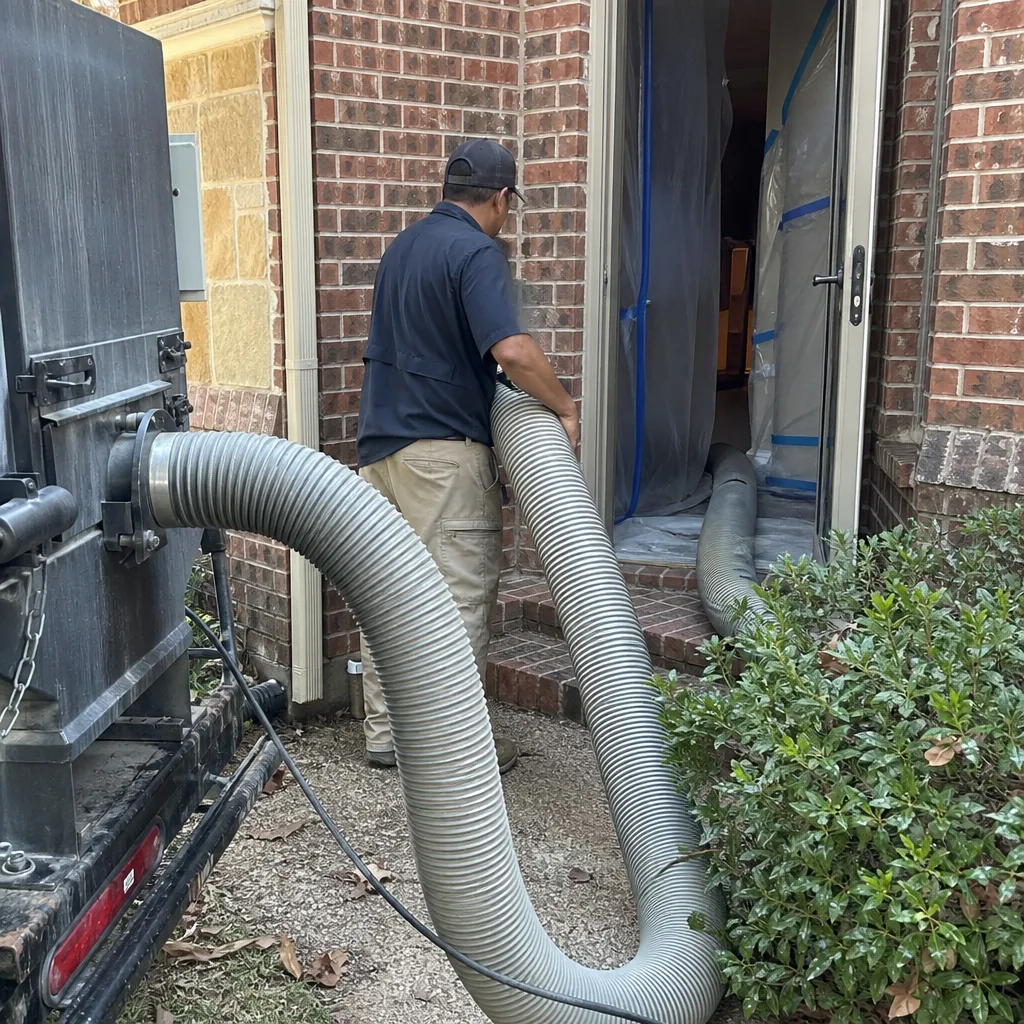
When CleanRun arrives for a Lewisville duct cleaning appointment, we photograph the same points before beginning work. Our delivered photo record includes your “before” images alongside our “after” images, with timestamps. If another company promises results they don’t document, you have no recourse if the work is ineffective.
The documentation protocol also protects you from unnecessary service. We’ve reviewed homeowner photos during phone consultations and identified filter bypass, construction dust, and cedar pollen as the actual causes, saving the homeowner a service call. CleanRun Air Duct Cleaning Lewisville home offers this review at no charge; call (940) 240-8552 to discuss what you’re seeing.
Common Mistakes to Avoid
- Scheduling cleaning based solely on time elapsed. “Every 3-5 years” is a marketing construct, not a technical standard. Clean when symptoms warrant it, or when a documented inspection shows accumulation.
- Accepting per-vent pricing. This model incentivizes superficial work. Reputable providers quote per system, with the price based on square footage, duct configuration, and contamination level, not a multiplied rate.
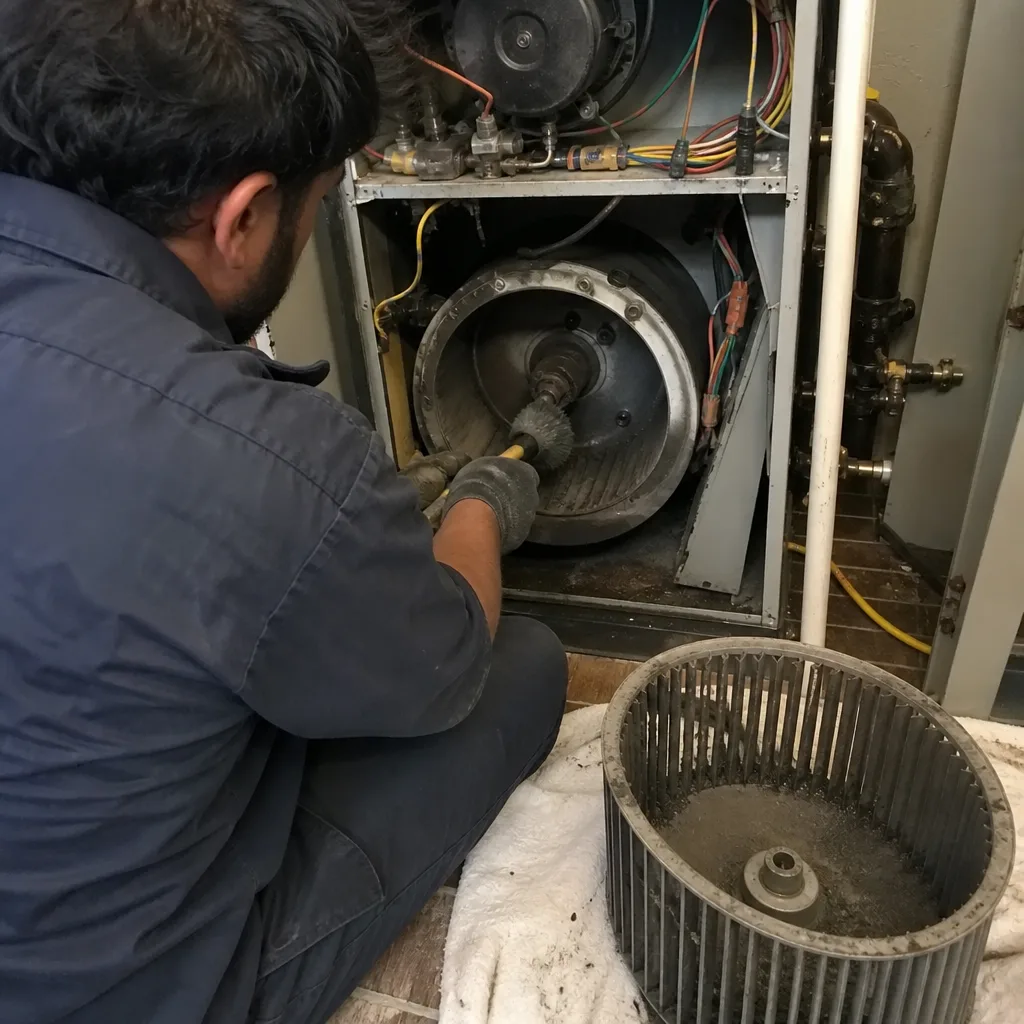
- Ignoring the air handler. The blower wheel and evaporator coil are integral to system airflow and air quality. Cleaning ducts without addressing these components leaves the primary contamination sources untouched.
- Hiring based on coupon price alone. The $79 duct cleaning special in Lewisville typically covers a brief vacuuming of accessible registers, not full system cleaning with photo documentation. The average whole-system cleaning in our market, performed to NADCA standards with equipment from manufacturers like Rotobrush and Abatement Technologies, runs $400-$800 for a typical 2,000 square foot home.
- Failing to verify equipment. A shop vacuum and a rotary brush system produce different results. Ask what equipment will be used and verify the manufacturer independently.
- Not requesting the photo record before payment. If documentation is promised, receive and review it before finalizing payment. This is standard practice at CleanRun; it should be standard everywhere.
- Overlooking dryer vent contamination. A clogged dryer vent produces symptoms similar to duct issues: longer cycle times, heat buildup, and lint debris. Dryer Vent Cleaning in Lewisville is often the correct first step when symptoms are laundry-room adjacent.
When to Call a Professional
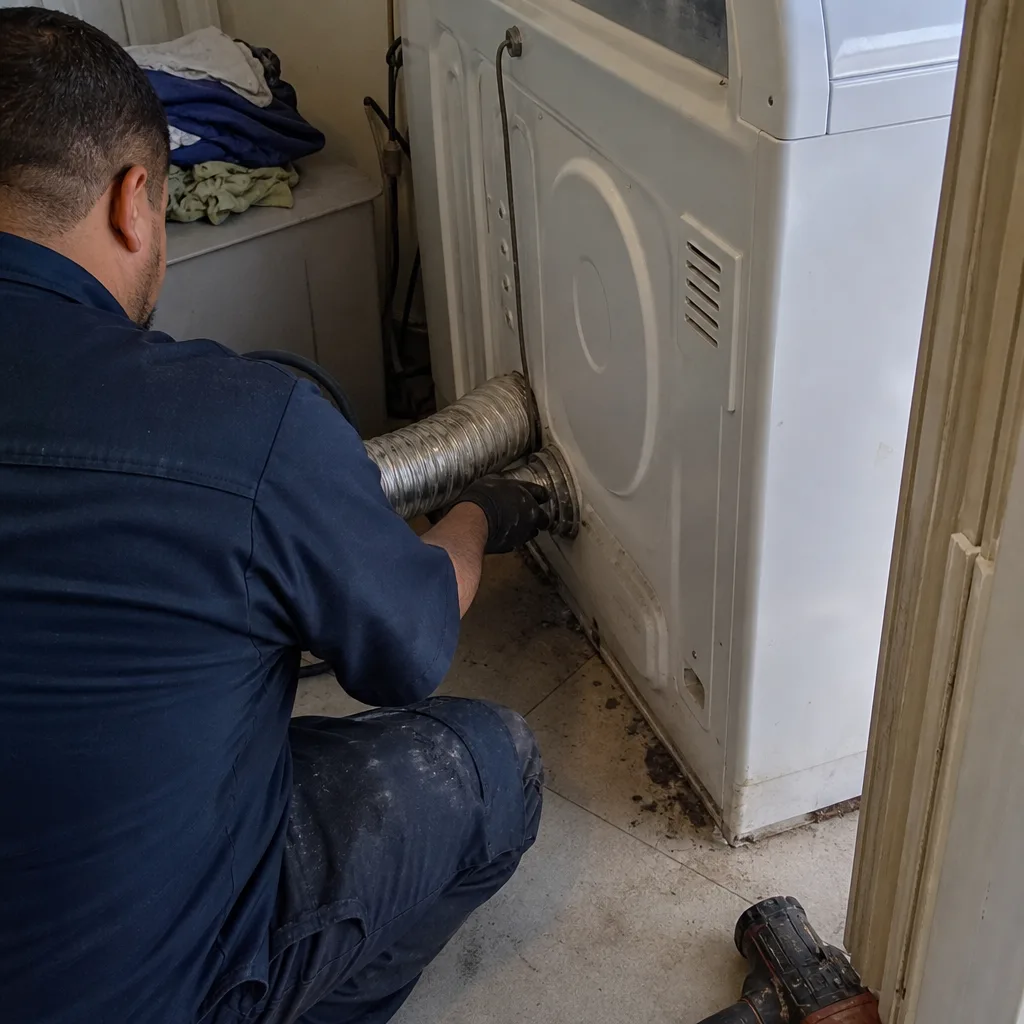
Call for professional assessment when you observe Tier 2 functional symptoms that persist after filter changes and basic checks, or any Tier 3 urgent indicator. The inspection should include borescope photography, static pressure measurement, and a written scope of work with pricing before any cleaning begins.
CleanRun Air Duct Cleaning Lewisville offers free estimates in Lewisville with no obligation. Every estimate includes a preliminary photo assessment where accessible, a written price under Haven Standard Clause 1, and a clear statement of whether cleaning, repair, or HVAC service is the appropriate response. Call (940) 240-8552 to schedule.
For symptoms that may involve the full HVAC system rather than ductwork alone, our HVAC Cleaning in Lewisville service addresses coils, blowers, and cabinet components with the same documentation standard.
Frequently Asked Questions
Whole-system air duct cleaning in Lewisville typically ranges from $400 to $800 for a standard 2,000 square foot home with one HVAC system, depending on duct accessibility, contamination level, and whether the air handler components are included. Prices below $300 generally indicate limited-scope work without full system access or documentation. CleanRun provides a written price before any work starts, with no per-vent add-ons or post-arrival upsells. Call (940) 240-8552 for an exact quote; estimates are free.
Low quotes typically cover register vacuuming only, without accessing the main trunk lines, plenum, or air handler. The equipment used also varies significantly: a shop vacuum with a 10-foot hose cannot reach or extract debris from a complete duct system, while professional negative-pressure systems from Nikro or Abatement Technologies with rotary brush agitation and HEPA filtration can. The cheaper quote often produces no measurable improvement, leaving you to pay again for proper service. Always ask for equipment specifics and photo documentation commitment before comparing prices.
Require before-and-after photography of every duct run, delivered as part of the standard job record, not available “on request.” The photos should show identifiable duct features (elbows, junctions, damper locations) in both before and after states, with timestamps. CleanRun has delivered this documentation on every job since 2013; it’s the single most effective protection against superficial or fraudulent work.
There’s no fixed interval that applies to all homes. Systems in homes with pets, high occupancy, or poor filtration may need attention every 3-4 years. Systems with excellent filtration, proper sealing, and standard occupancy may show minimal accumulation at 7-10 years. The correct approach is periodic visual inspection of accessible ductwork and filter monitoring, with cleaning triggered by documented accumulation rather than calendar time.
Improperly performed cleaning can temporarily elevate airborne particulate if the contractor doesn’t maintain negative pressure containment during agitation. Properly performed cleaning with HEPA-filtered extraction and sealed access points should not worsen allergies. If you have severe respiratory sensitivity, request that the contractor use additional containment protocols and schedule the work when you can leave the home for 2-4 hours afterward.
Hard water doesn’t directly affect ductwork, but it impacts the evaporator coil and condensate drainage in your air handler. Mineral scale on the coil reduces heat transfer efficiency and can harbor biological growth that produces odor and distributes through the duct system. HVAC Cleaning in Lewisville addresses coil descaling as part of comprehensive system maintenance.
The Bottom Line
Not every warning sign demands immediate professional attention, and not every professional who responds will address the actual problem. The key is matching your symptom to its structural cause, recognizing Lewisville’s environmental false positives, and demanding documentation that creates accountability.
Start with filter checks and visual inspection for Tier 1 symptoms. Schedule professional assessment with pressure testing and borescope photography for Tier 2 functional issues. Treat Tier 3 urgent indicators as the safety and system risks they are, with immediate shutdown and qualified assessment.
Whatever your situation, establish your own photo and written record before inviting any contractor into your home. The estimate process should include equipment verification, written pricing, and clear documentation commitments. Anything less leaves you vulnerable to the industry’s worst practices.
Written by Tomas Reyes, Owner at CleanRun Air Duct Cleaning Lewisville, serving Lewisville since 2013.