
Last updated September 23, 2026
Whole-system duct and dryer vent check with before-and-after photos - you see exactly what came out of your vents
That "$99 whole-house special" is a bait ad - the real number appears once they are in your hallway, or the "clean" is a shop-vac at the register. We photograph the inside of your ducts before and after instead.
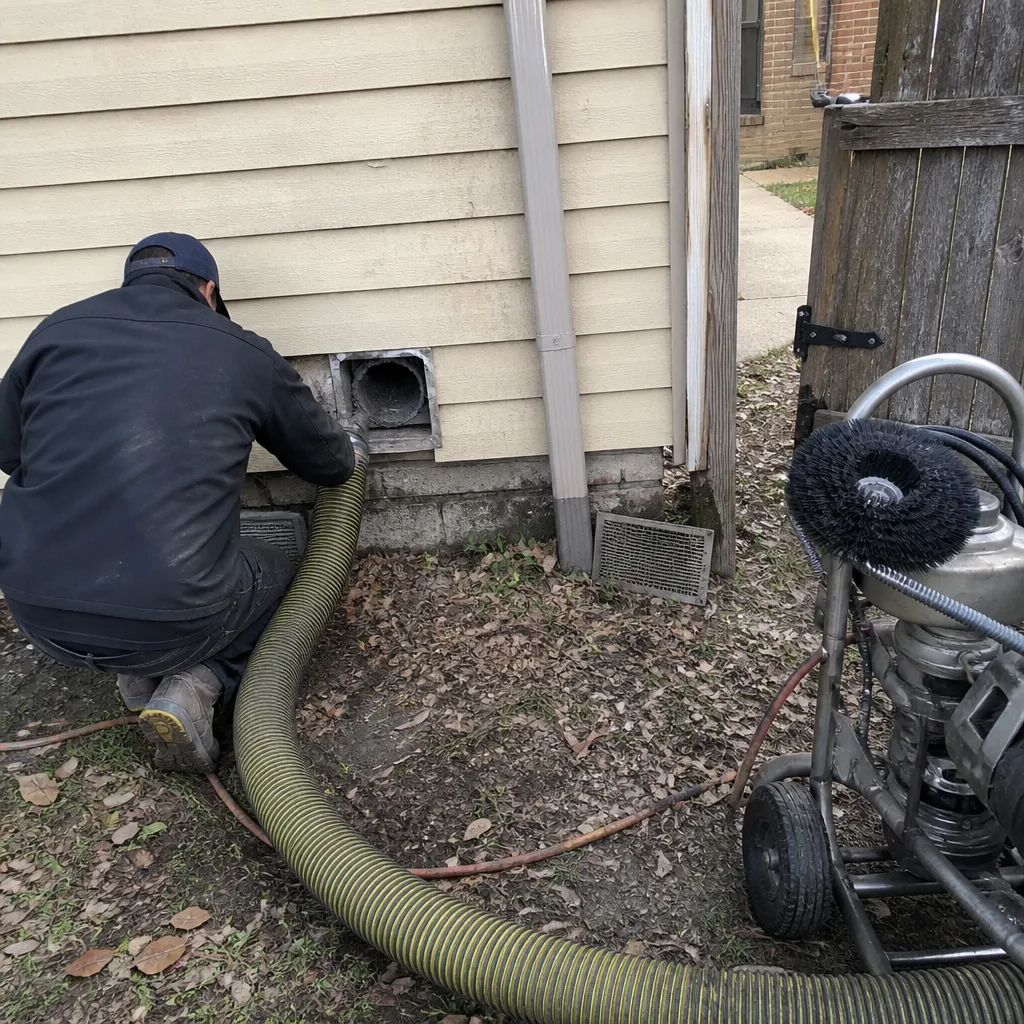 Before
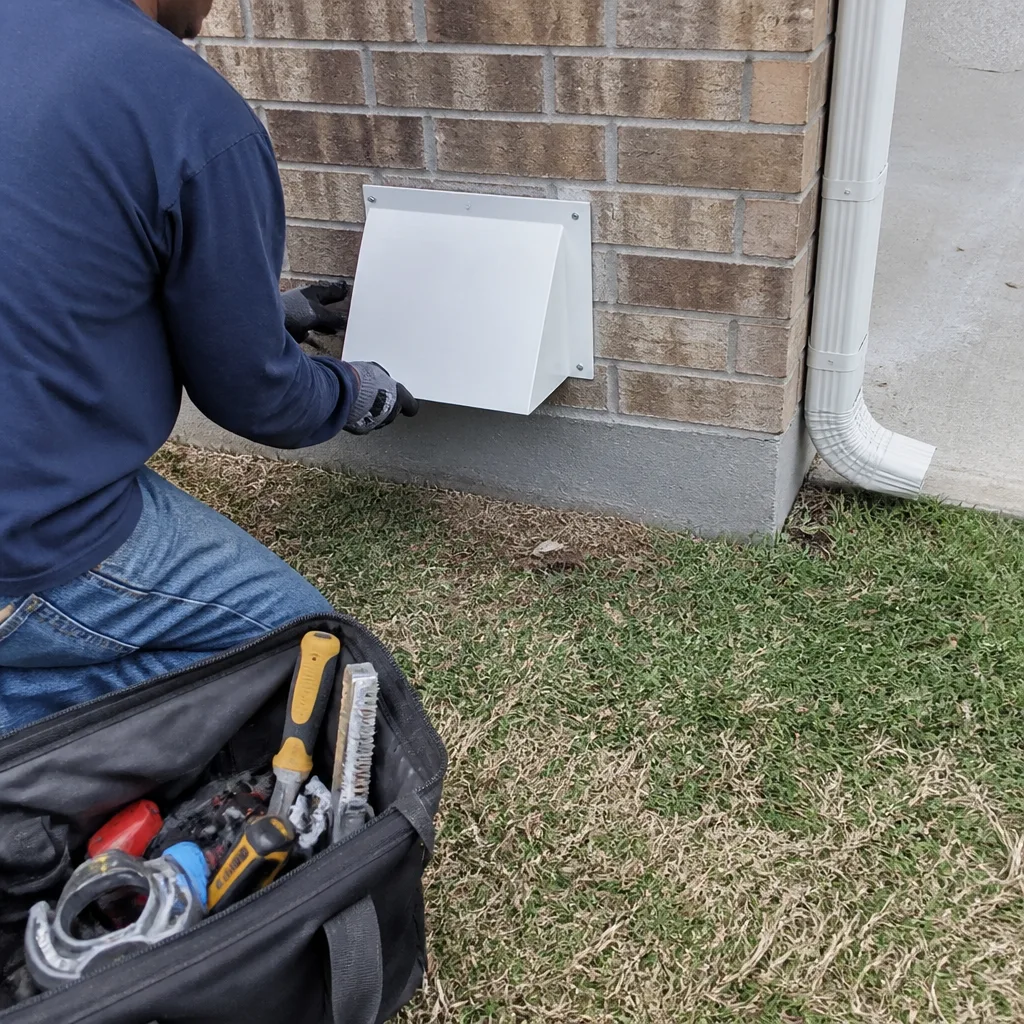 After
After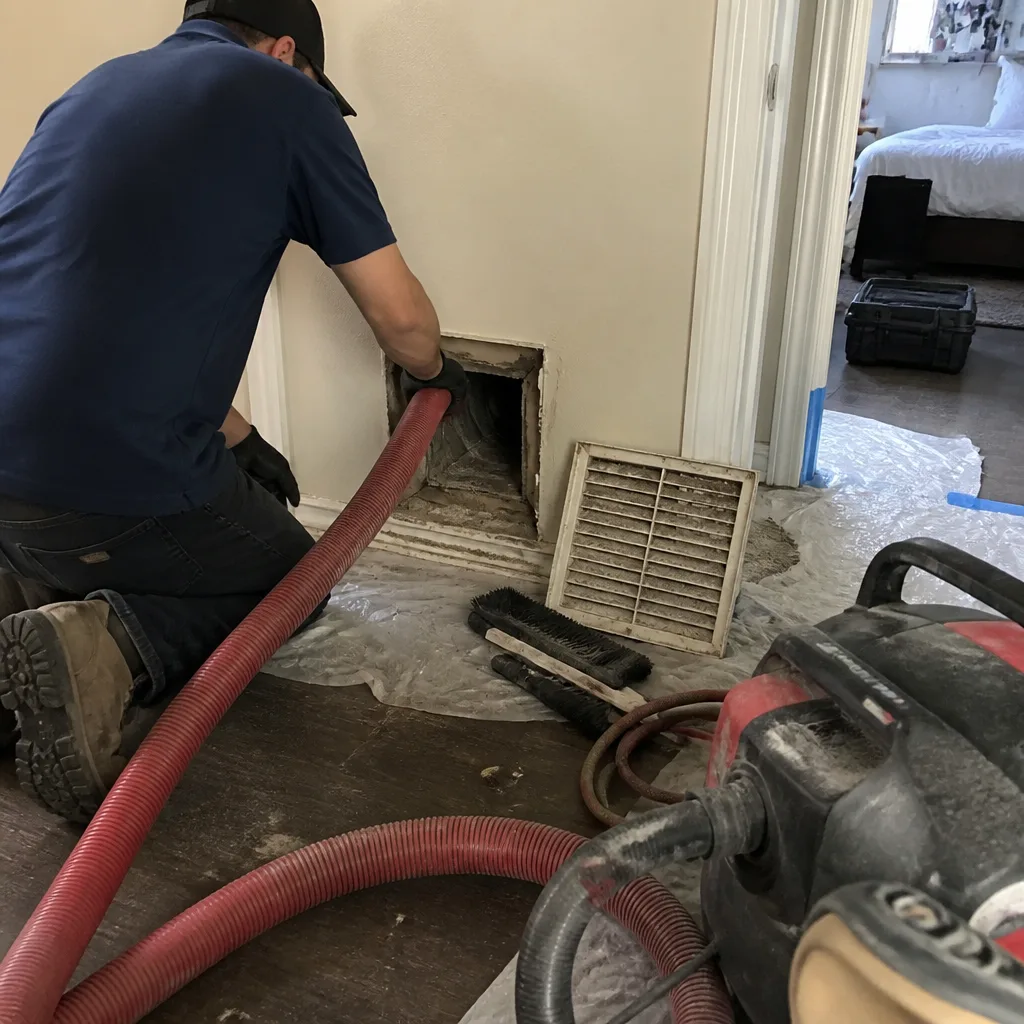 Before
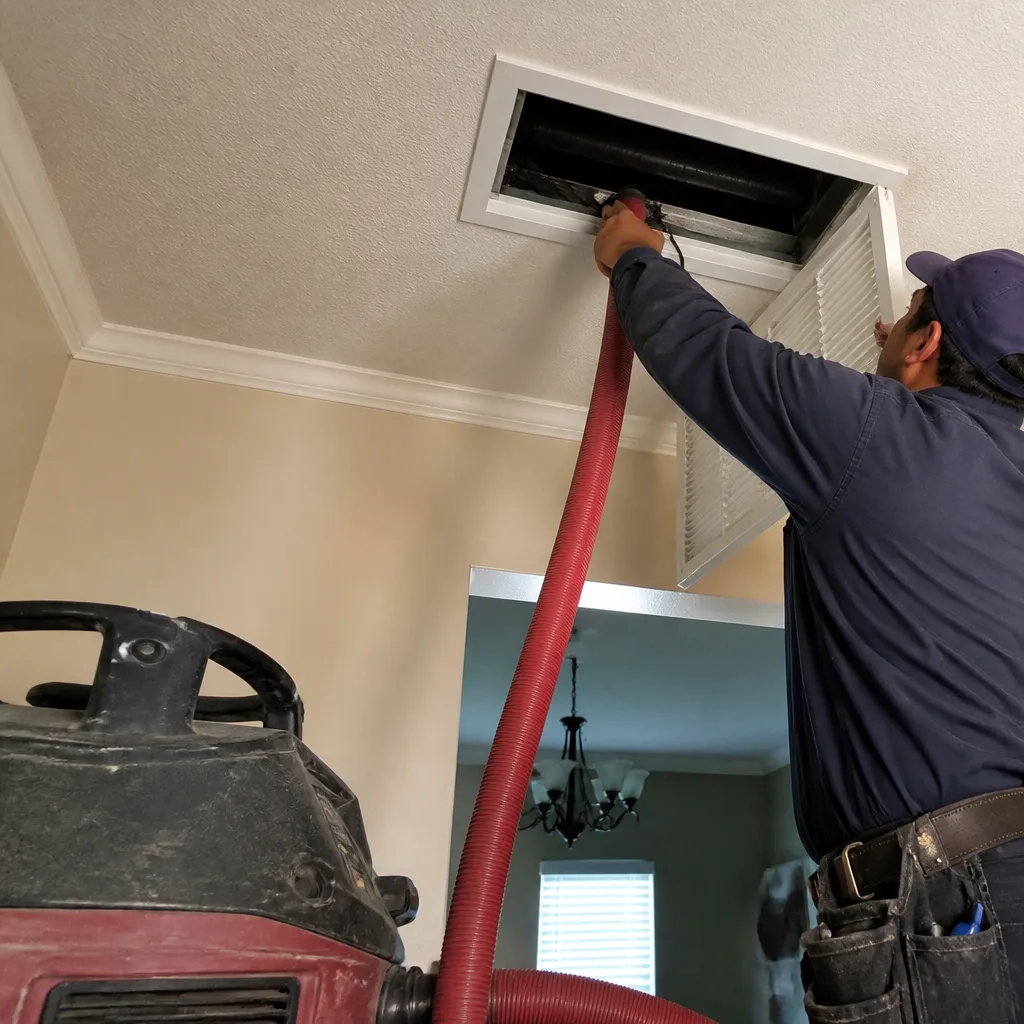 After
After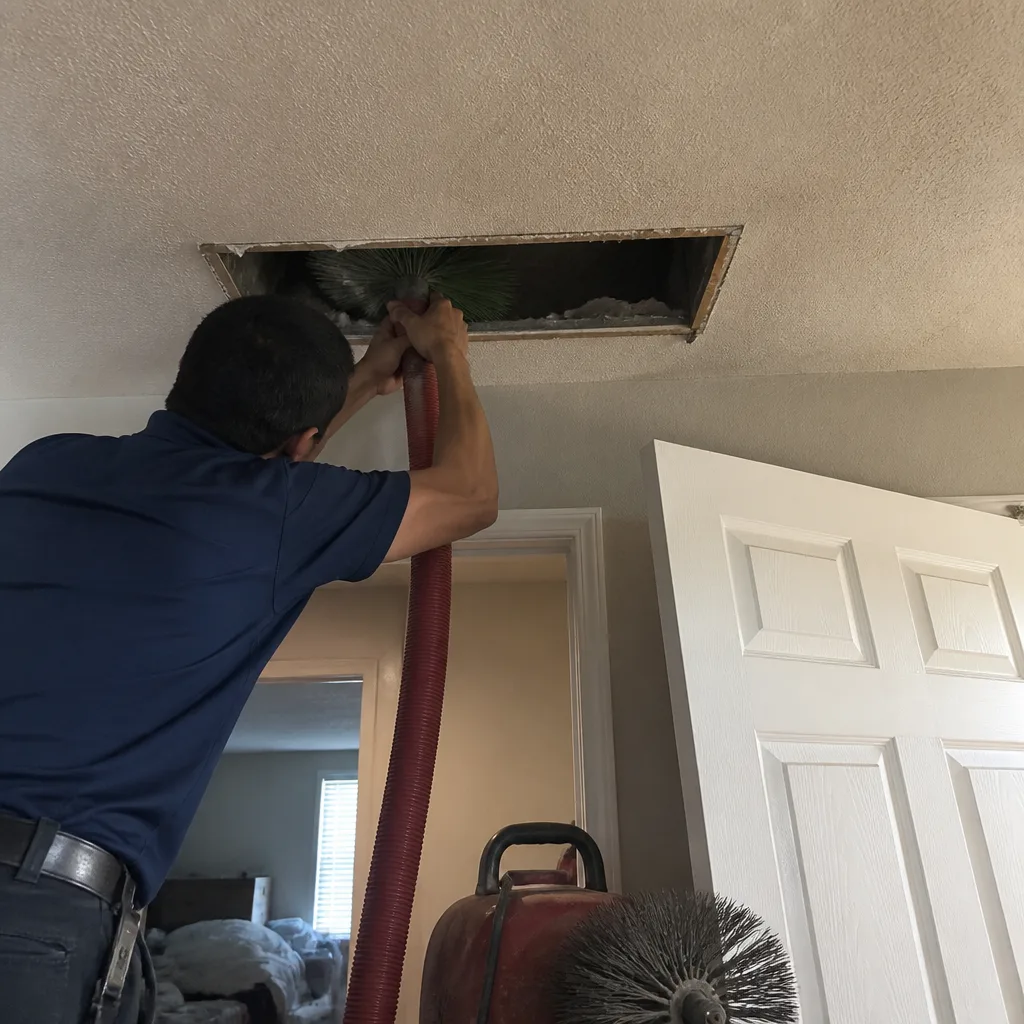 Before
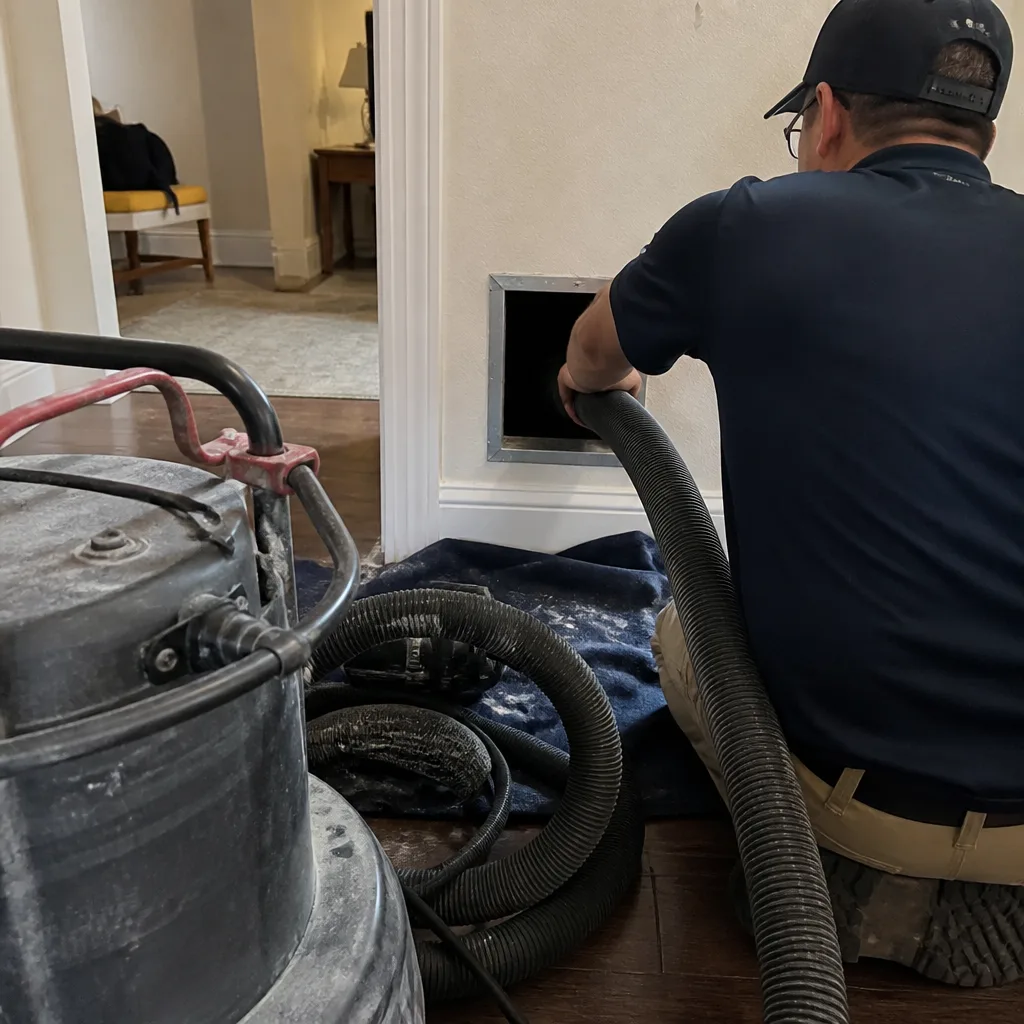 After
AfterAir Duct Cleaning Permits, Codes & Inspections in TX: What You Need to Know
A technician who finds a disconnected duct run and reconnects it without a permit in Lewisville has just done unpermitted HVAC work - even if the invoice says “duct cleaning.” Most homeowners never learn this distinction until a home sale inspection fails, a warranty claim is denied, or a city compliance officer flags the work. In The Complete Guide to Air Duct Cleaning in Lewisville, we’ll map exactly where Texas law draws the line between unregulated duct cleaning and licensed mechanical work, how Lewisville’s amendments to the International Mechanical Code affect your project, and what to verify on any contractor’s paperwork before a single panel comes off your system.
Quick Answer
Our Air Duct Cleaning services - vacuuming debris from existing ductwork and applying EPA-registered sanitizers - require no permit in Texas or Lewisville. But duct repair, reconnection, replacement, or any modification to the HVAC distribution system typically requires a licensed HVAC contractor and may trigger city permitting, especially when the work alters airflow capacity, penetrates fire-rated assemblies, or involves combustion appliance venting.
Table of Contents
- Where Texas Law Draws the Line: Cleaning vs. Mechanical Work
- Lewisville Code Amendments: What Changes at the City Level
- How to Verify a Texas HVAC License in Under Two Minutes
- Permit Requirements by Service Type: A Homeowner’s Reference Table
- When Unpermitted Work Surfaces: Home Sales, Insurance, and Liability
- What to Demand From Any Contractor Before Work Starts
- Common Mistakes to Avoid
- When to Call a Professional
- Frequently Asked Questions
- The Bottom Line
BeforeAfterWhere Texas Law Draws the Line: Cleaning vs. Mechanical Work
Texas regulates HVAC work through the Texas Department of Licensing and Regulation (TDLR), which issues two relevant license classes: the Environmental Air License (for cooling and air distribution) and the Commercial Refrigeration License. The critical distinction for homeowners is not what the service is called on a coupon, but what physically happens to the ductwork.
Cleaning and treatment activities - no license or permit required:
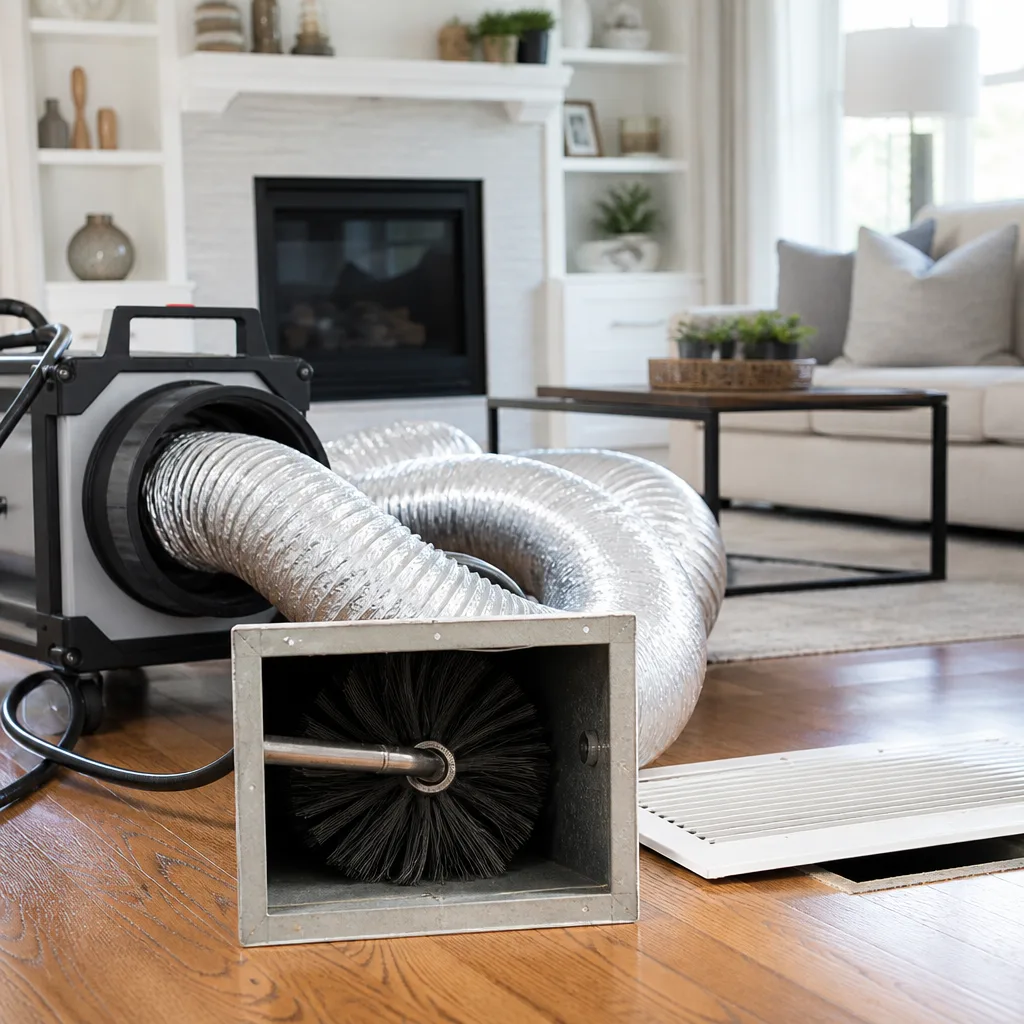
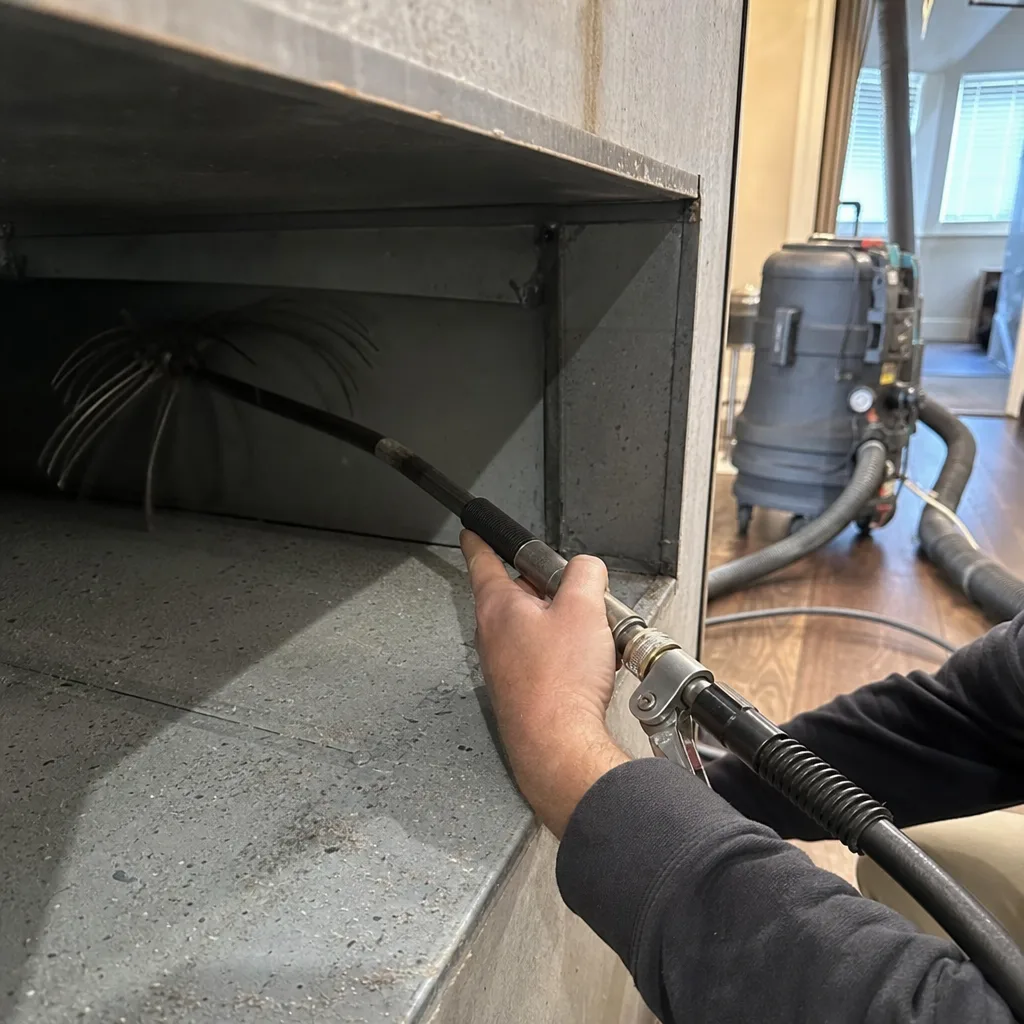
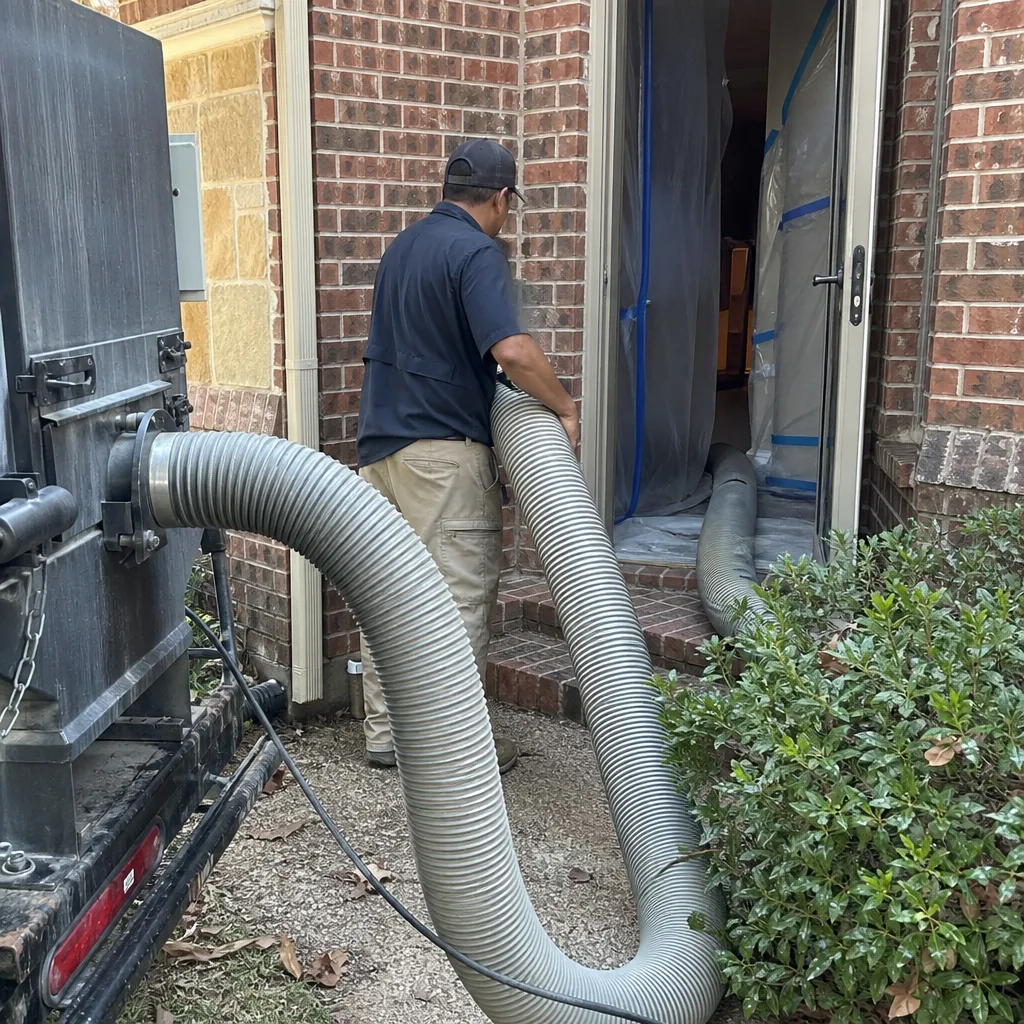
- Negative-pressure extraction of dust, debris, and biological growth from existing duct runs (the metal or flex passages that carry conditioned air)
- Mechanical agitation with brushes or compressed air tools to dislodge buildup
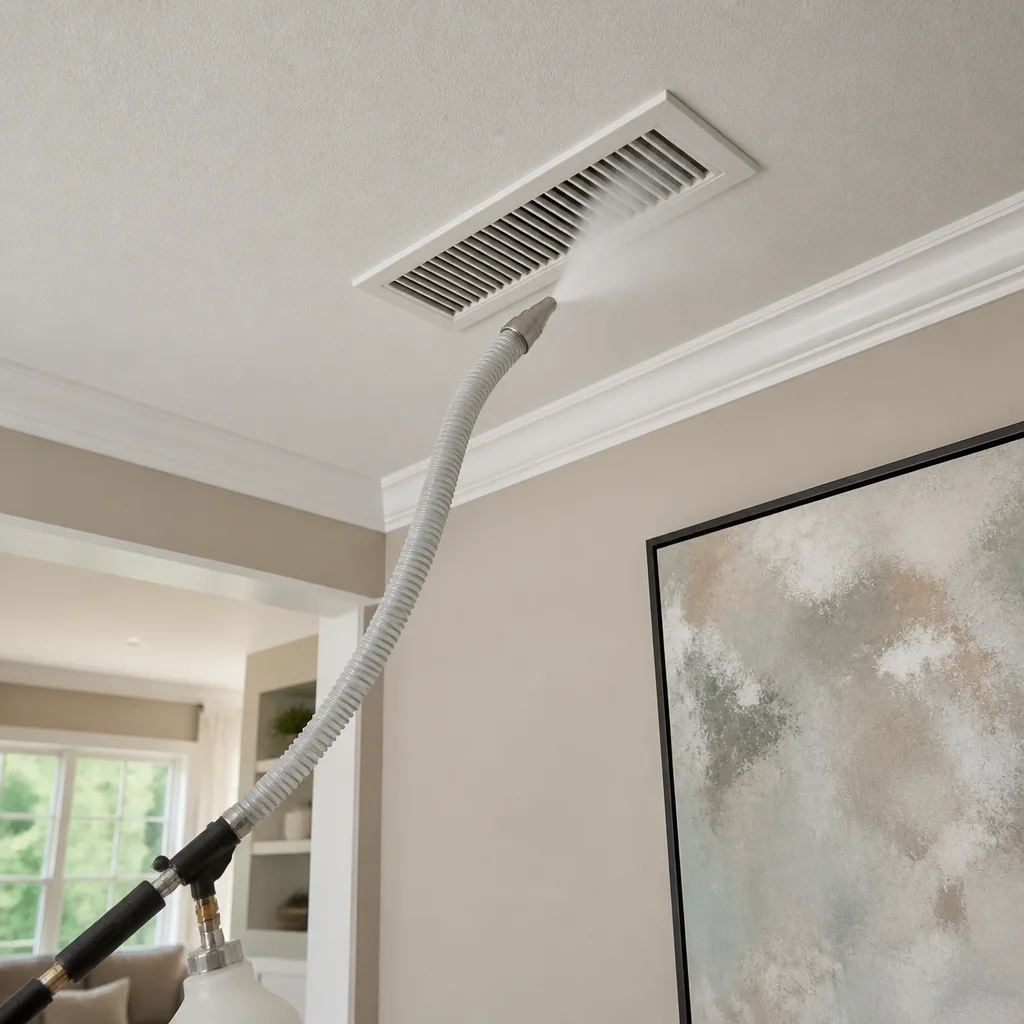
- Application of EPA-registered sanitizers or sealants that do not alter duct structure
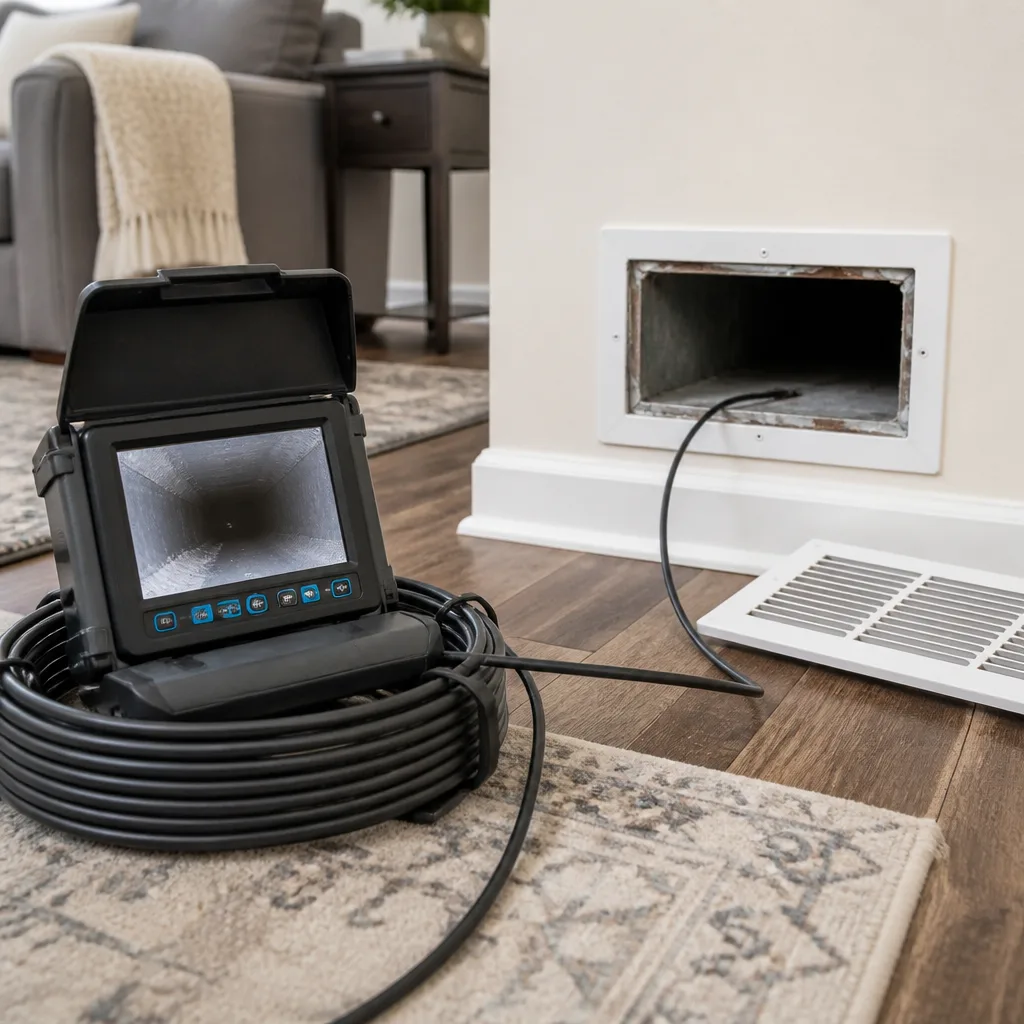
- Photographic or video inspection of interior duct conditions
Activities that cross into regulated mechanical work:
- Reconnection of disconnected duct runs, even if discovered during a cleaning
- Replacement of damaged flex duct, metal duct, or duct board sections
- Application of mastic sealant to joints that were previously unsealed or have failed
- Modification of duct sizing, routing, or register locations
- Any work involving combustion appliance venting (gas furnaces, water heaters)
- Installation of new ductwork in additions or finished spaces
We’ve documented this distinction on thousands of jobs in Lewisville since 2013. In the Castle Hills and Valley Vista neighborhoods, where many homes were built during the 1990s duct board era, our camera inspections regularly reveal separated joints at plenum connections - the large central box where the furnace meets the distribution system. The debris cleaning is unregulated. Reattaching that plenum with proper mechanical fasteners and mastic is not.
The Air Duct Cleaning in Lewisville page details our standard scope, which stops at the cleaning boundary unless the homeowner requests a separate written quote for repair work performed under our TDLR-licensed HVAC operation.
Lewisville Code Amendments: What Changes at the City Level
Lewisville operates under the 2021 International Mechanical Code (IMC) with city-specific amendments adopted by the Lewisville Building Inspections Division. While Texas state law governs who can perform HVAC work, Lewisville’s amendments affect when that work requires a city permit and inspection.
Lewisville-specific provisions homeowners should understand:
- Permit threshold for duct modification: Any alteration to existing ductwork that changes the original design airflow by more than 10 percent requires a mechanical permit. This includes upsizing or downsizing duct runs, adding registers to a zone, or relocating return air pathways.
- Fire-rated assembly penetration: Lewisville enforces amended IMC Section 607 strictly. Ductwork penetrating garage-to-house walls, between attached dwelling units, or through one-hour fire-rated floor assemblies must maintain listed fire dampers or shaft enclosures. Repair or replacement of such ducts without permit and inspection violates code.
- Combustion air and venting: Lewisville’s amendment to IMC Chapter 7 requires direct-vent or power-vented gas appliances in all new construction and replacement applications. If duct cleaning reveals deteriorated B-vent or improper vent termination, the repair falls under mechanical permit requirements.
- Energy compliance documentation: For homes in Lewisville’s 75056 and 75067 ZIP codes built after 2015, duct sealing and testing documentation may be required for resale or major renovation permits. Unpermitted duct modifications can complicate this compliance path.
Denton County, which encompasses Lewisville, does not impose additional mechanical code requirements beyond the city amendments. However, unincorporated areas of Denton County near Lewisville’s extraterritorial jurisdiction may fall under county building standards that differ slightly. Homeowners in the Creek Haven or Timber Creek areas should verify whether their address is city or county jurisdiction before work begins.
The climate context matters too. Lewisville’s position in the Cross Timbers ecological region means significant seasonal humidity swings - 70+ percent relative humidity in spring, dry north winds in winter. This expansion and contraction cycle accelerates duct tape adhesive failure and flex duct inner liner degradation. The repair needs that follow are mechanical, not cosmetic, and trigger regulatory requirements that simple cleaning does not.
How to Verify a Texas HVAC License in Under Two Minutes
Any company that repairs, replaces, or modifies ductwork in Texas must hold a TDLR-issued license. Duct cleaning companies that stay strictly within the cleaning boundary do not. The problem for homeowners: many companies advertise “duct cleaning” while their technicians perform repairs with tools from a van that carries no licensed contractor.
Step-by-step verification:
- Navigate to tdlr.texas.gov and select “License Search” from the main menu.
- Choose “Environmental Air Conditioning” from the license type dropdown. This is the category covering residential HVAC and ductwork.
- Enter the contractor’s business name or individual technician name. For businesses, search under “Entity Name” rather than individual.
- Verify three fields on the license detail page:
- Status: must read “Active”
- Expiration date: must be current
- Class: “Environmental Air Conditioning” (not solely “Commercial Refrigeration,” which does not cover residential ductwork)
- Cross-check the license holder name against the person signing your contract. TDLR licenses are issued to individuals or registered businesses, not to unlicensed technicians working under informal arrangements.
CleanRun operates under TDLR-licensed HVAC contractors for all repair and modification work. Our cleaning technicians are trained to identify conditions that cross the regulatory boundary and to stop work for a separate scope and quote when they do. This is Haven Standard Clause 1 in practice: written price before any work starts, with the scope clearly delineated between cleaning and mechanical services.
The HVAC Cleaning in Lewisville page explains how we coordinate licensed mechanical work when our inspection reveals needs beyond standard cleaning scope.
Permit Requirements by Service Type: A Homeowner’s Reference Table
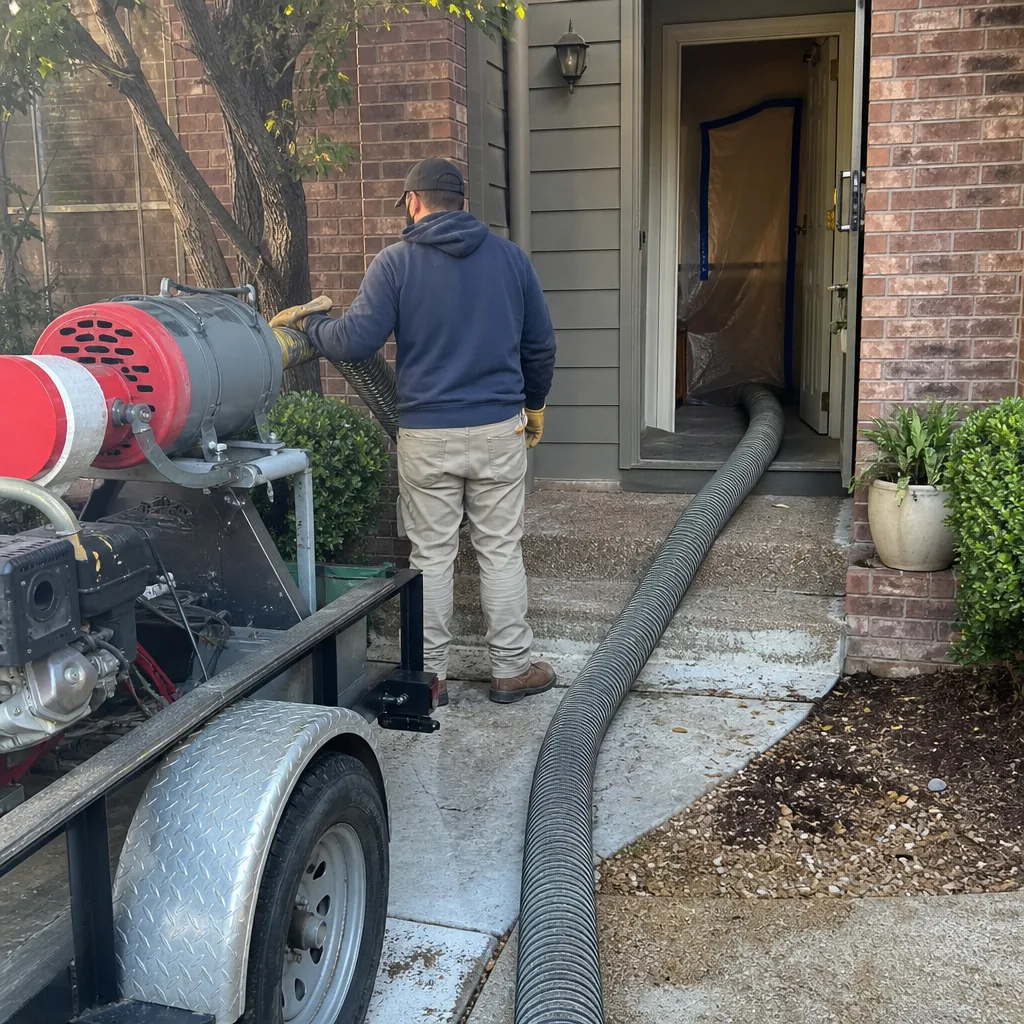
Use this table to evaluate any invoice or estimate before signing. If the scope described includes activities marked “Yes” for permit required, but the contractor has not mentioned permitting, that is a red flag.
| Service Activity | Permit Required in Lewisville | License Required | Inspection Required | Liability if Work Fails |
|---|---|---|---|---|
| Negative-pressure duct cleaning (vacuum extraction) | No | None specific | No | Contractor’s general liability insurance |
| EPA-registered sanitizer application | No | None specific | No | Contractor’s general liability; product warranty |
| Camera/video inspection of duct interior | No | None specific | No | Contractor’s general liability |
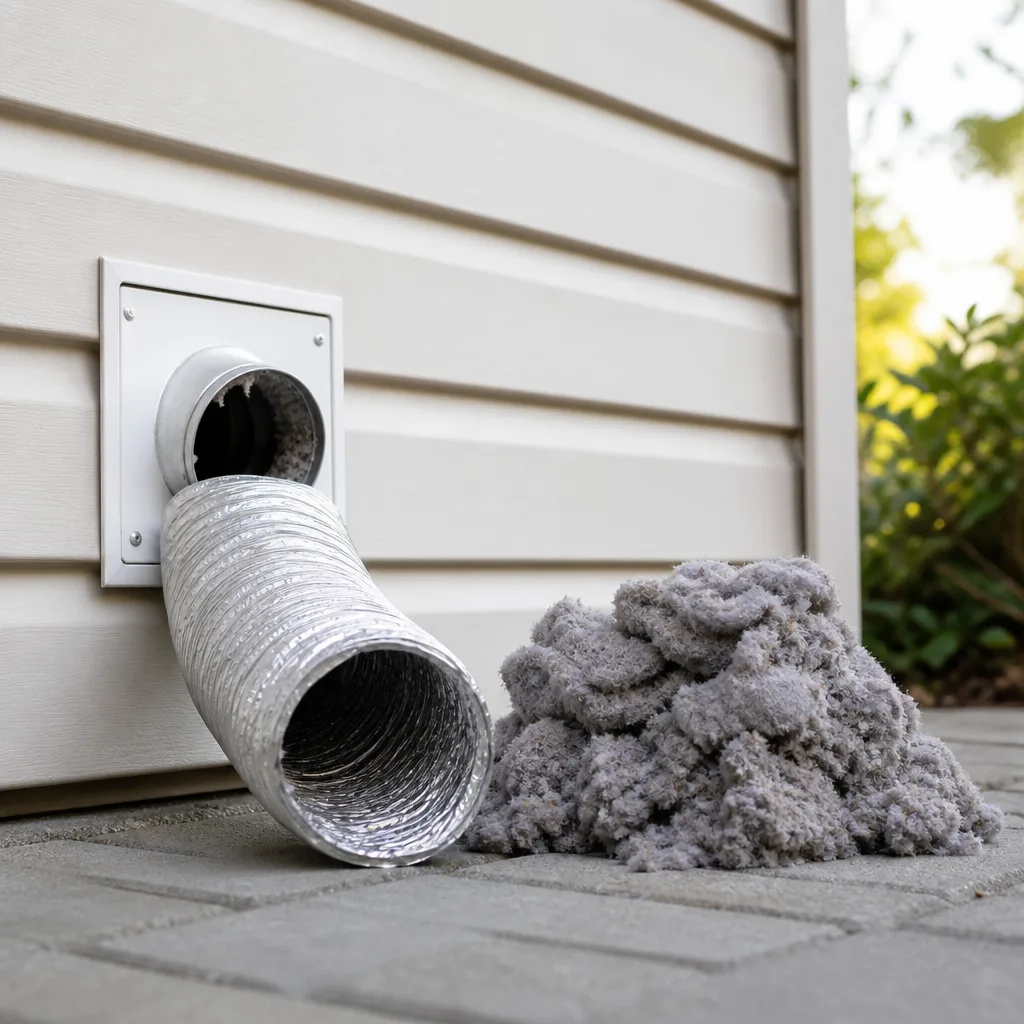
| Dryer vent cleaning (through-wall termination only) | No | None specific | No | Contractor’s general liability |
| Reconnection of separated duct joints | Yes, if mechanical fasteners or mastic applied | TDLR Environmental Air | Yes, if permit issued | Licensed contractor; permit bond; homeowner if unpermitted |
| Flex duct or metal duct replacement | Yes | TDLR Environmental Air | Yes | Licensed contractor; permit bond; homeowner if unpermitted |
| Duct sealing with aerosolized sealant (Aeroseal-type) | Yes, if IMC 607 fire assembly affected | TDLR Environmental Air | Yes, if permit issued | Licensed contractor; permit bond; homeowner if unpermitted |
| Plenum repair or replacement | Yes | TDLR Environmental Air | Yes | Licensed contractor; permit bond; homeowner if unpermitted |
| Register/grille relocation or addition | Yes, if airflow design altered >10% | TDLR Environmental Air | Yes | Licensed contractor; permit bond; homeowner if unpermitted |
| Combustion appliance venting repair | Yes | TDLR Environmental Air | Yes | Licensed contractor; permit bond; homeowner if unpermitted; potential insurance denial |
The liability column deserves attention. When permitted, licensed work carries multiple protections: the contractor’s license bond, the city’s permit inspection process, and the contractor’s insurance. When work is performed without required permitting, the homeowner assumes liability for code compliance, and standard homeowner’s insurance may deny claims related to the unpermitted work. We’ve seen this in Lewisville’s Old Town area, where historic home renovations frequently uncover decades of unpermitted HVAC modifications during pre-sale inspections.
When Unpermitted Work Surfaces: Home Sales, Insurance, and Liability
Unpermitted duct modifications typically surface in three scenarios, each with distinct consequences for Lewisville homeowners.
Scenario 1: Pre-sale home inspection
Texas does not mandate seller disclosure of unpermitted work, but the standard TREC (Texas Real Estate Commission) seller’s disclosure asks directly about “work performed without required permits.” A buyer’s inspector who observes new ductwork, modified register locations, or non-original plenum connections will flag the discrepancy. In Lewisville’s competitive market, where homes in The Highlands and Chapel Hill listings often attract multiple offers, a permit gap can delay closing by 2-6 weeks while the seller retroactively permits the work or negotiates a price reduction.
The cost burden falls entirely on the seller in most Lewisville transactions. Retroactive permitting requires opening walls or ceilings for inspector access, paying double permit fees (original plus penalty), and potentially redoing work that fails current code. A $400 duct reconnection performed without a permit in 2019 can become a $3,000+ remediation in 2025.
Scenario 2: Insurance claim denial
Homeowner’s insurance policies contain standard exclusions for damage arising from “work performed in violation of building codes.” If an unpermitted duct modification contributes to a water damage event (condensation from improper sealing), fire (combustion venting failure), or structural issue (compromised fire-rated assembly), the insurer may deny the claim and cancel the policy. We’ve reviewed competitor work in Lewisville where flex duct was routed through garage attic space without fire-rated enclosure - a clear IMC 607 violation that would void coverage if a garage fire spread through the duct.
Scenario 3: Warranty and service disputes
Manufacturer warranties for HVAC equipment frequently require installation “in accordance with all applicable codes.” Unpermitted duct modifications that affect system airflow can void compressor warranties, leaving homeowners with full replacement costs for equipment that should have been covered. The 10-year parts warranty on a variable-speed furnace becomes worthless if the installing contractor’s duct modifications were unpermitted and caused the failure.
CleanRun’s documented photo record, included on every visit since 2013, provides homeowners with dated evidence of pre-existing conditions. If our inspection reveals unpermitted work performed by a previous contractor, we photograph it, note it in our written job record, and advise the homeowner of their options - including our Free Second Opinion on any written estimate for corrective work.
What to Demand From Any Contractor Before Work Starts
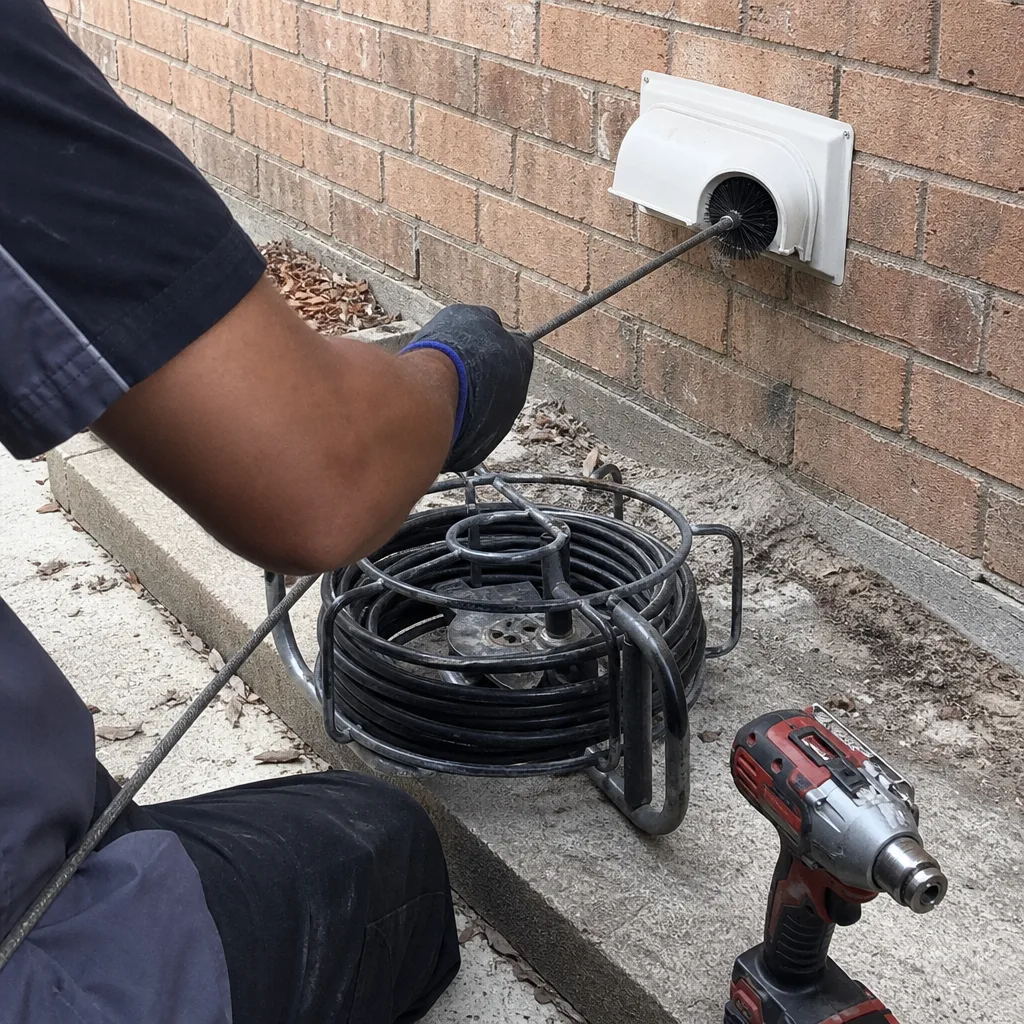
The duct cleaning industry’s reputation for bait-and-switch pricing and scope ambiguity makes documentation essential. Before any contractor touches your system, request these deliverables in writing.
1. Scope boundary statement
The written estimate must explicitly state whether the work is cleaning-only or includes mechanical modification. Vague language like “duct service” or “complete ductwork” is insufficient. CleanRun’s written scope uses trade-specific terminology: “negative-pressure extraction of supply and return duct runs,” “camera inspection of all accessible duct interior,” or “replacement of 12-inch flex duct run from plenum to register R-4 with mechanical fastening and mastic seal.” Each term has a defined meaning; there is no room for interpretation.
2. License verification for any mechanical work
If the scope includes repair, replacement, or modification, the contractor must provide their TDLR license number and confirm that permits will be pulled. CleanRun publishes its license number on every proposal and, under Haven Standard Clause 3: Verified Crews, identifies each technician by name and credential before arrival.
3. Equipment specification
Professional-grade equipment matters for both cleaning quality and mechanical work integrity. CleanRun’s roster includes Rotobrush brush-and-vac systems for agitation cleaning, Nikro and Abatement Technologies negative-pressure collectors for debris extraction, and Honeywell and Aprilaire media for filtration upgrades. For mechanical work, we specify Guardsman-grade fastening and sealing products. Homeowners can verify these brands independently; we do not expect trust without verification.
4. Photo documentation commitment
Every duct run, before and after. This is not a marketing promise; it is a standard deliverable. Our photo record has resolved disputes, documented pre-existing conditions for insurance, and provided homeowners with evidence of work quality they can reference years later. The 365-Day Done Right Promise is backed by this documentation - if a repair fails, we have the photographic baseline to determine whether the failure is our responsibility.
5. Price certainty
Haven Standard Clause 1: one flat price per system, agreed in writing before work starts. No per-vent pricing. No “additional charges may apply” clauses. The price on the proposal is the price on the invoice. For mechanical work that requires permit fees, those fees are itemized in the original quote, not added after the fact.
The Dryer Vent Cleaning in Lewisville page applies these same documentation standards to a related service that frequently involves concealed fire-safety issues.
Common Mistakes to Avoid
- Assuming “duct cleaning” covers everything. A $79 coupon special does not include reconnection of separated ducts, no matter what the technician implies once inside your home. If the scope changes after arrival, stop work and request a new written quote.
- Verifying the business name instead of the individual licensee. TDLR licenses attach to people, not brands. A company may advertise decades of experience while sending an unlicensed technician. Verify the specific person performing mechanical work.
- Ignoring permit requirements for “minor” repairs. In Lewisville, reconnecting a single duct run with mastic triggers permit requirements if the work affects system airflow. The size of the repair does not determine permit status; the nature of the work does.
- Accepting verbal assurances about insurance coverage. Request a certificate of insurance naming you as additional insured for mechanical work. General liability for cleaning does not automatically cover HVAC modification.
- Failing to document pre-existing conditions. Before any contractor works on your system, photograph accessible ductwork yourself. If a dispute arises about whether damage was pre-existing or caused by the contractor, your documentation matters.
- Neglecting to check Lewisville’s specific amendments. State-level advice from national websites often misses city-specific requirements. Lewisville’s 10 percent airflow alteration threshold and fire-assembly provisions are stricter than some neighboring municipalities.
- Signing estimates with open-ended scope language. “As needed” repairs, “additional work at standard rates,” and similar clauses invite invoice inflation. CleanRun’s proposals contain no such language; every activity is specified and priced before signature.
When to Call a Professional
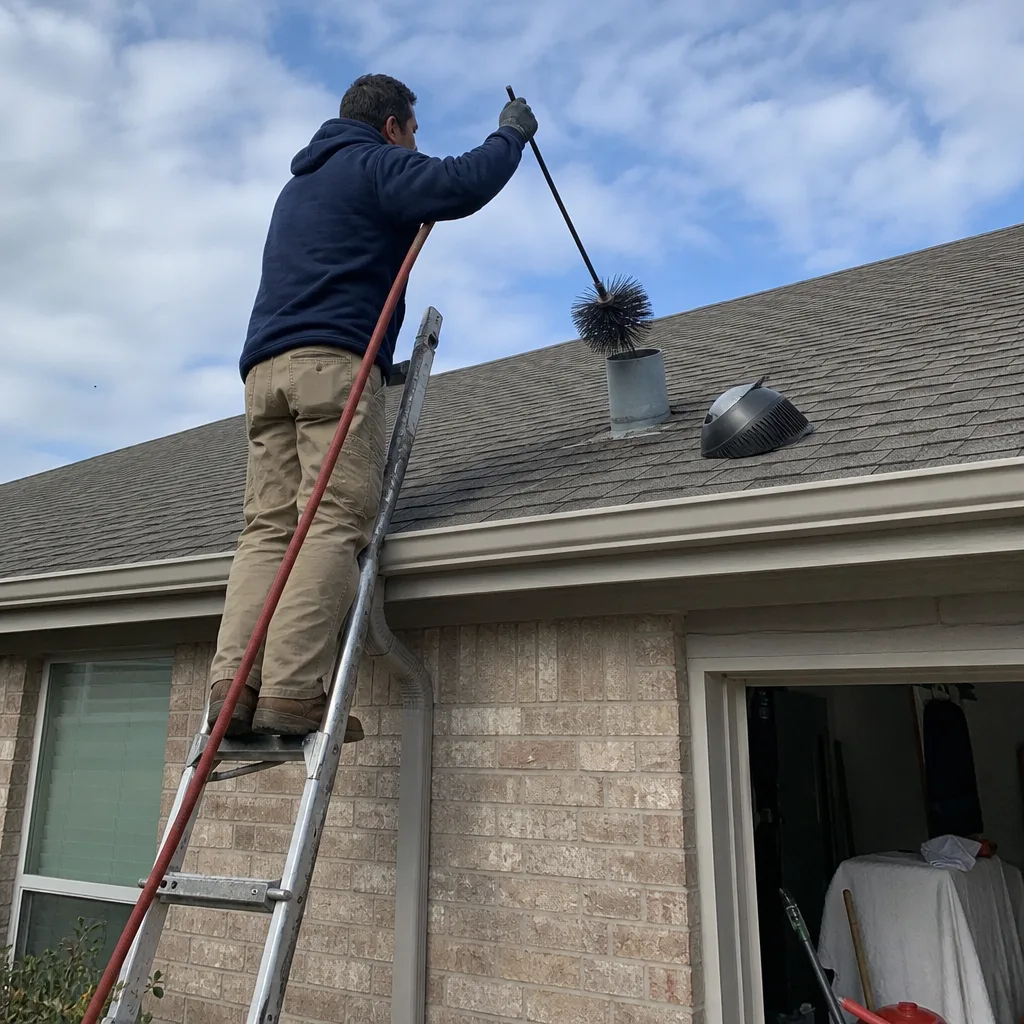
Call a licensed professional when your ductwork needs extend beyond debris removal. Specific indicators: visible mold growth on duct interior surfaces, persistent musty odors after cleaning, rooms that remain significantly warmer or cooler than thermostat settings (suggesting duct separation or blockage), rattling or whistling from ductwork indicating loose connections, or any work involving gas furnace venting. In Lewisville’s climate, where summer attic temperatures exceed 140°F, deteriorated flex duct and failed mastic joints are common findings in homes built before 2010.
CleanRun Air Duct Cleaning Lewisville offers free estimates in Lewisville - call (940) 240-8552. Every estimate includes a written scope, a flat system price, and documentation of what our inspection reveals. If mechanical work is needed, we specify the TDLR-licensed path and permit requirements before you decide.
Frequently Asked Questions
No. Negative-pressure extraction, mechanical agitation, and EPA-registered sanitizer application are unregulated activities in Texas and require no city permit in Lewisville. Call (940) 240-8552 for a written estimate on cleaning scope.
Low quotes typically reflect limited scope - a brief vacuum of accessible registers without full system extraction, no camera inspection, and no photo documentation. The $79 coupon model relies on upselling “discovered” repairs once inside the home. CleanRun’s written price covers the complete system with no per-vent add-ons, documented with before-and-after photos of every run.
Check the Lewisville Building Inspections Division permit history by address at cityoflewisville.com. Any permitted HVAC work should appear in the online record within 10 business days of inspection. Absence of a permit for duct modification work is evidence of non-compliance.
Yes. Buyer’s inspectors regularly flag non-original duct configurations, and the TREC disclosure form asks directly about unpermitted work. In Lewisville’s 75056 and 75067 markets, where median home prices exceed $400,000, buyers and their lenders are particularly sensitive to code compliance gaps that could affect insurability.
A TDLR Environmental Air Conditioning license, verified as active at tdlr.texas.gov. The license class must match the work scope; a Commercial Refrigeration license alone does not authorize residential duct modification. Always verify the specific individual performing the work, not just the company name.
Yes. When our inspection reveals needs beyond cleaning scope and the homeowner requests repair, we specify permit requirements in the written quote, pull permits through Lewisville Building Inspections, and schedule inspection before final invoicing. The permit cost is itemized in the original quote, never added after work begins.
The Bottom Line
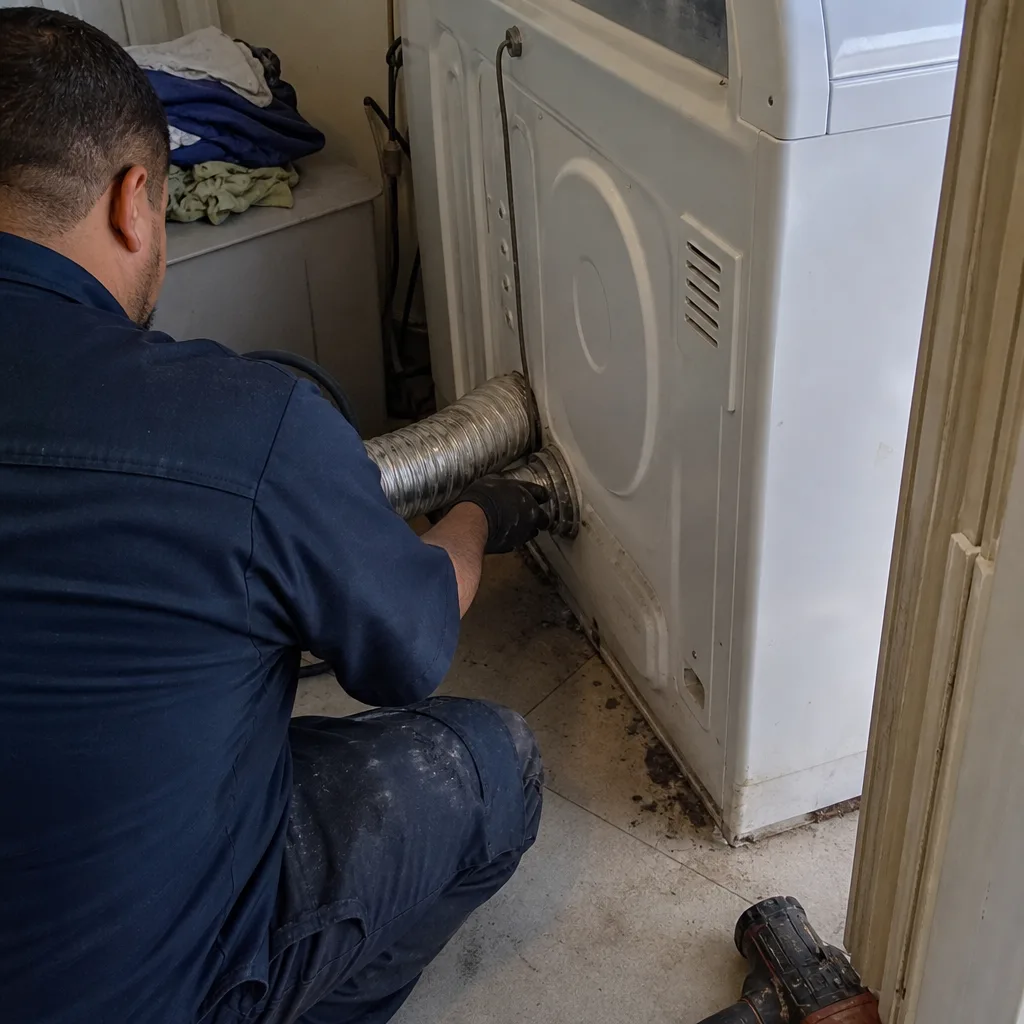
Air duct cleaning stands apart from duct repair and modification in Texas law, and Lewisville’s code amendments create specific obligations that national advice often misses. The homeowner’s protection lies in demanding written scope boundaries, verifying TDLR licenses for any mechanical work, and confirming permit compliance before work begins. CleanRun’s practice since 2013 - written price first, documented photo record always, licensed mechanical work when needed - eliminates the ambiguity that exposes homeowners to code violations, failed inspections, and denied claims. Explore more guides & resources for protecting your home and budget.
Written by Tomas Reyes, Owner at CleanRun Air Duct Cleaning Lewisville, serving Lewisville since 2013.