
Last updated September 23, 2026
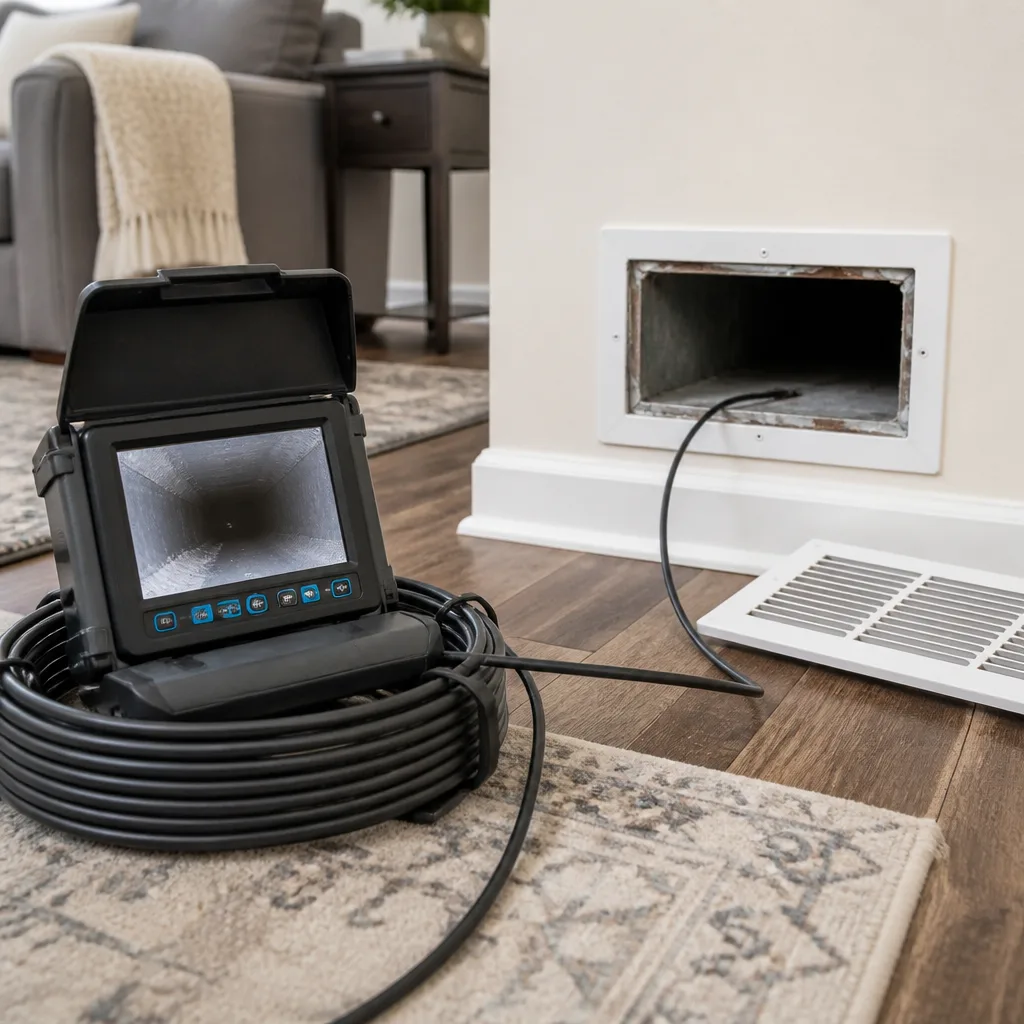
Whole-system duct and dryer vent check with before-and-after photos - you see exactly what came out of your vents
That "$99 whole-house special" is a bait ad - the real number appears once they are in your hallway, or the "clean" is a shop-vac at the register. We photograph the inside of your ducts before and after instead.
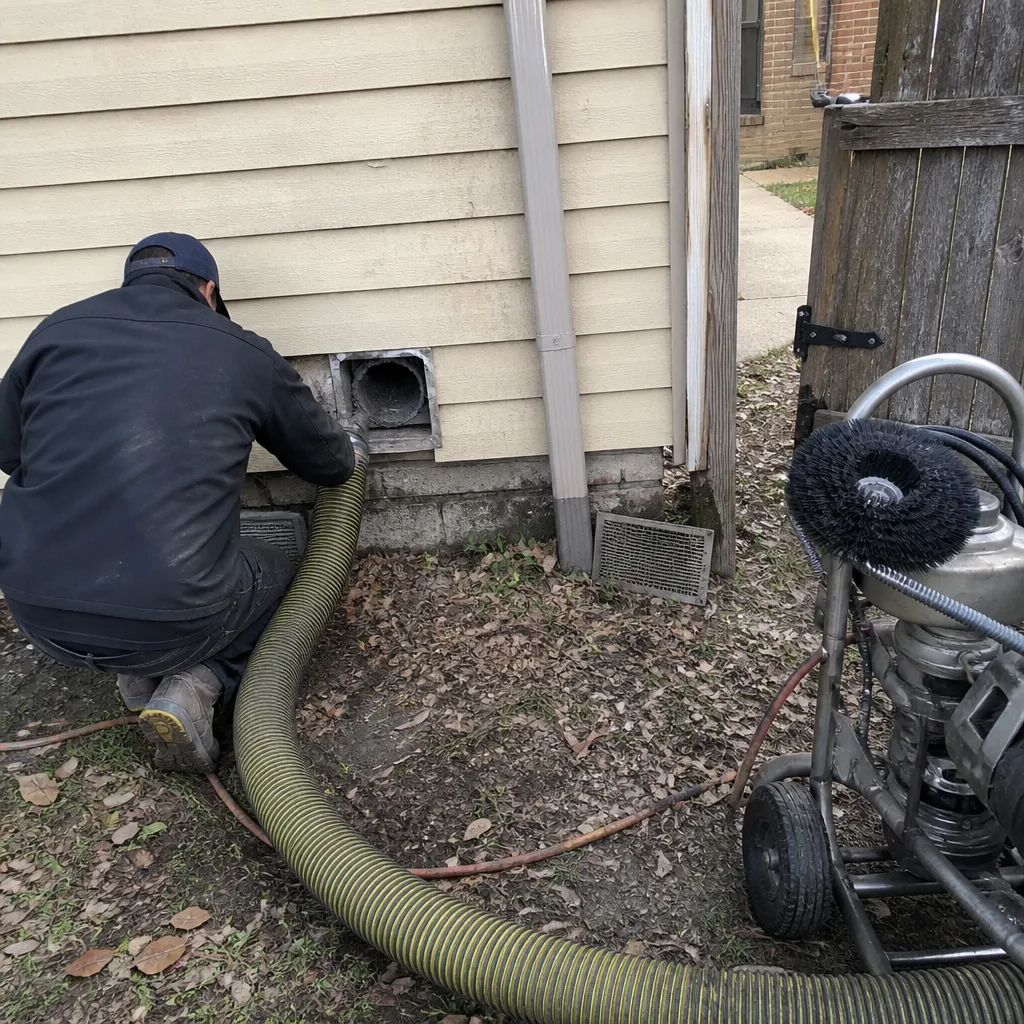 Before
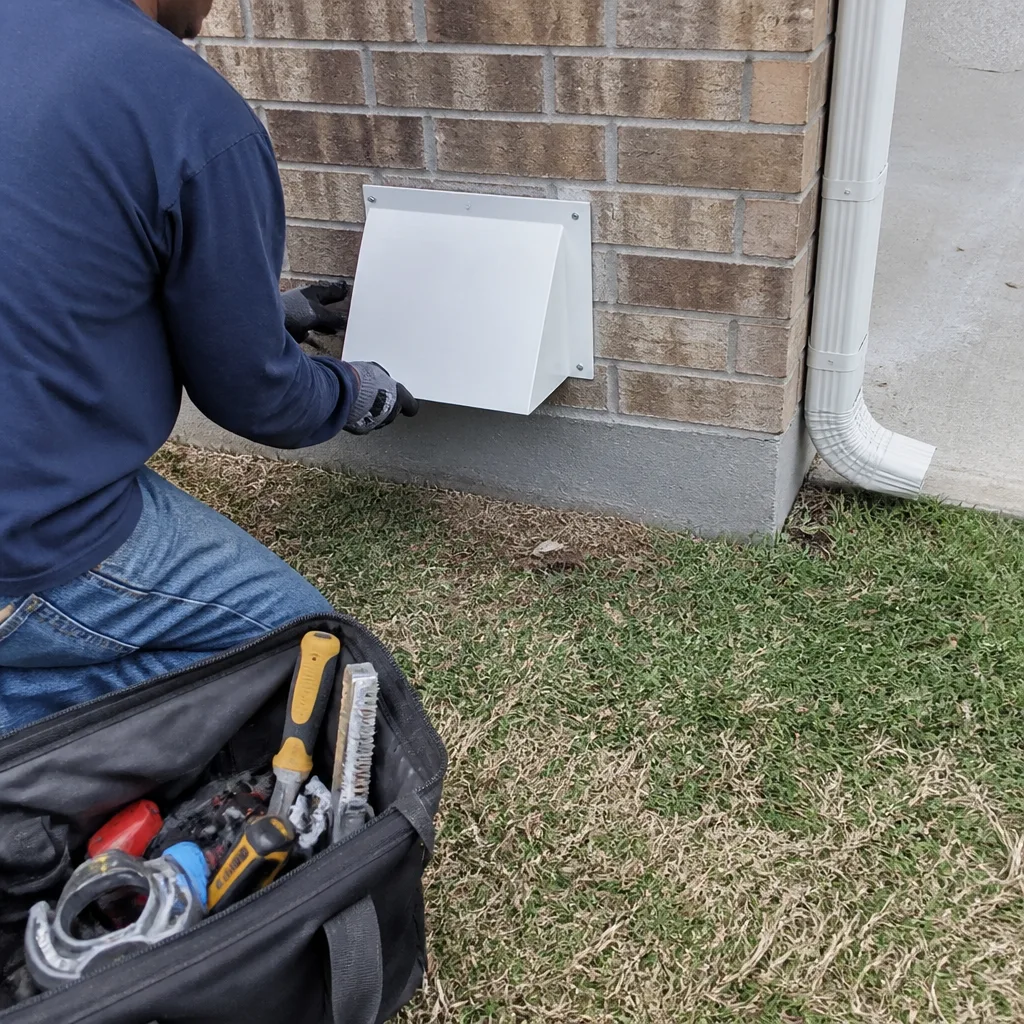 After
After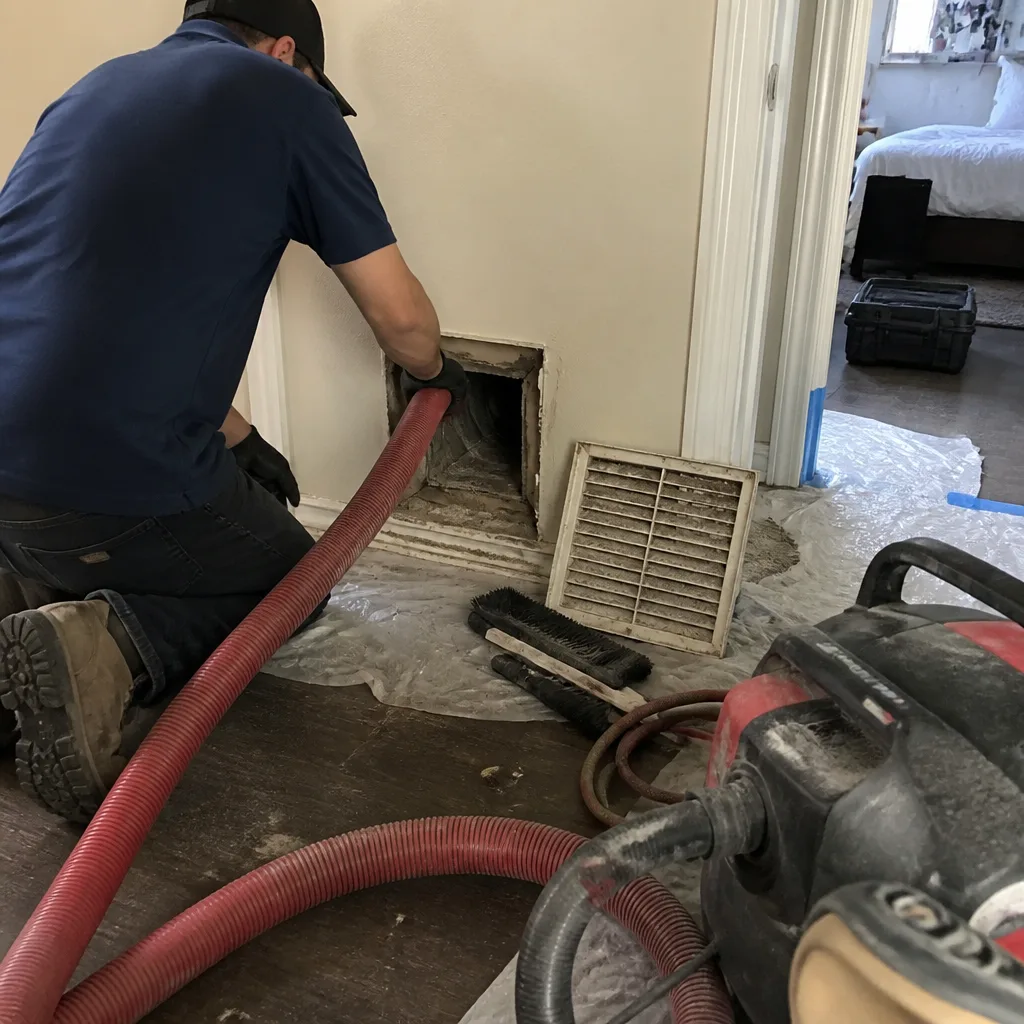 Before
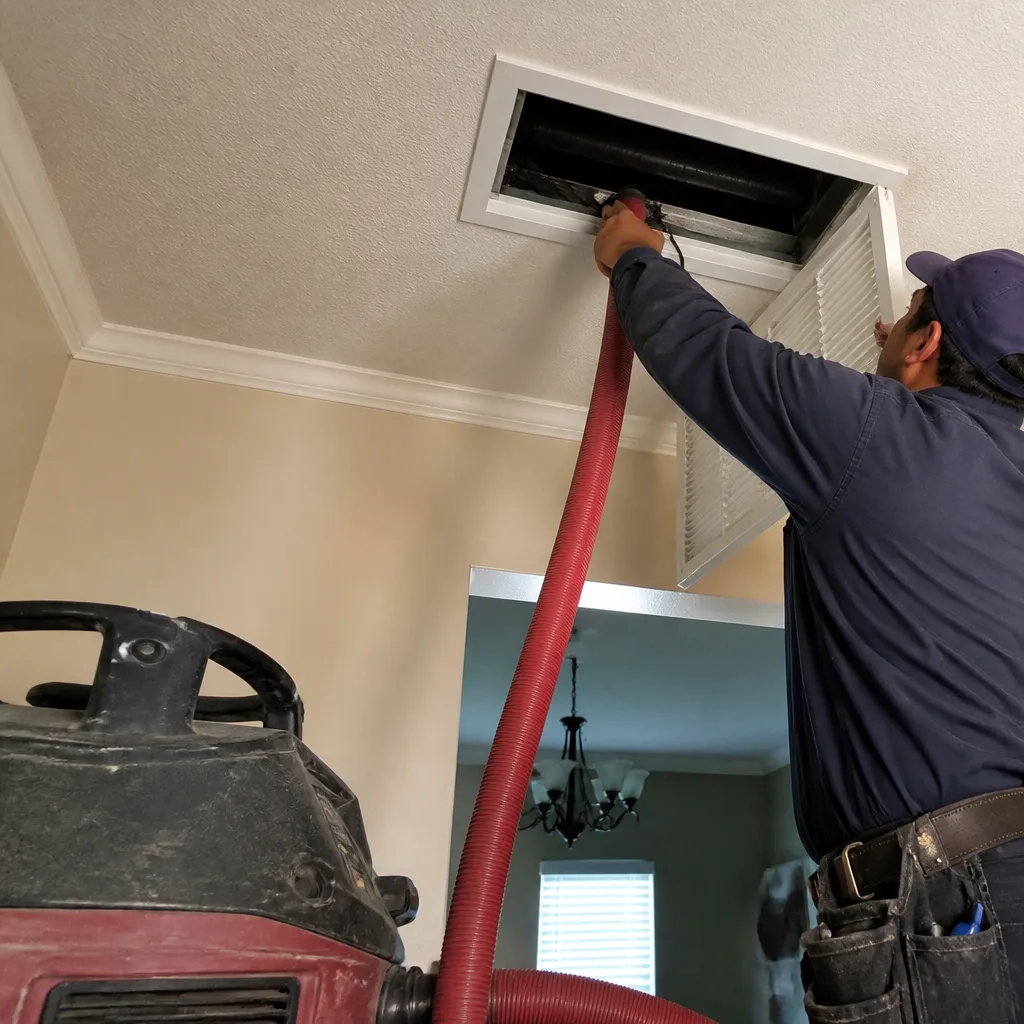 After
After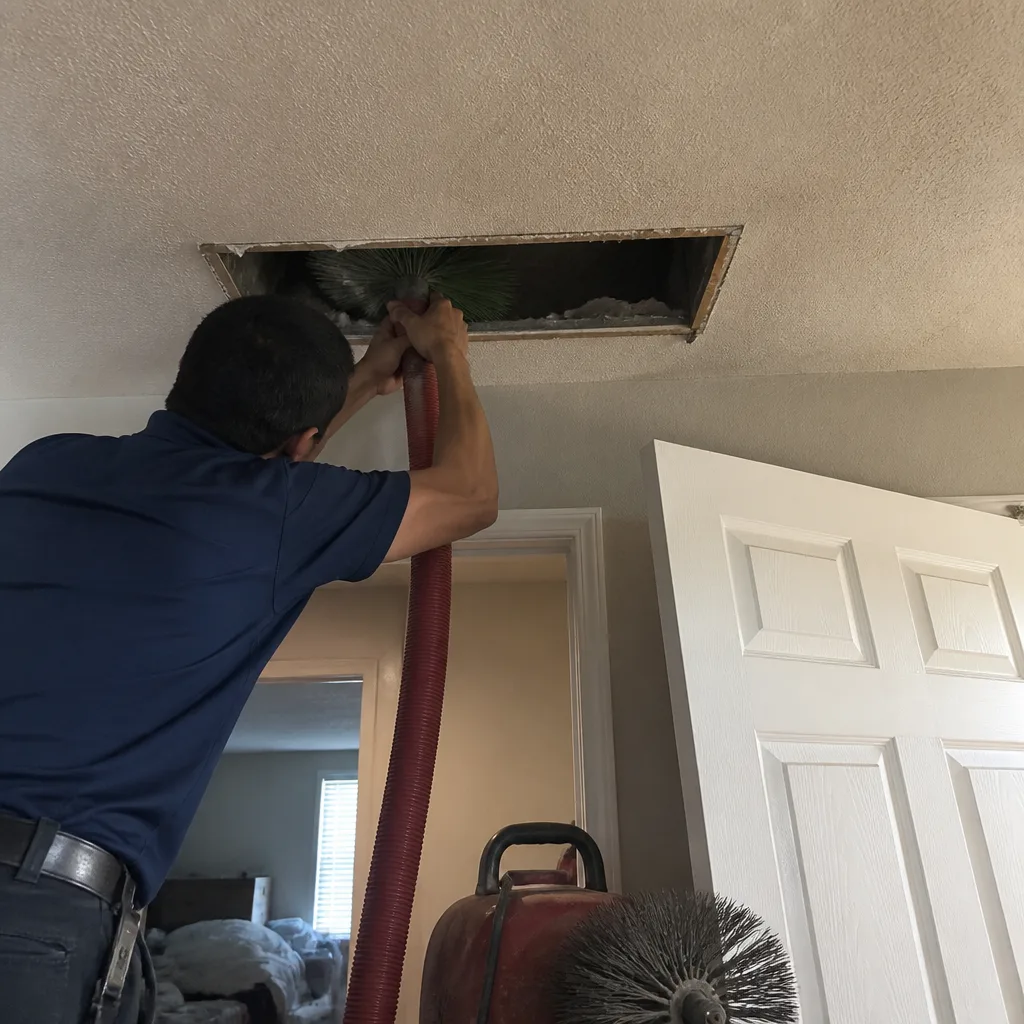 Before
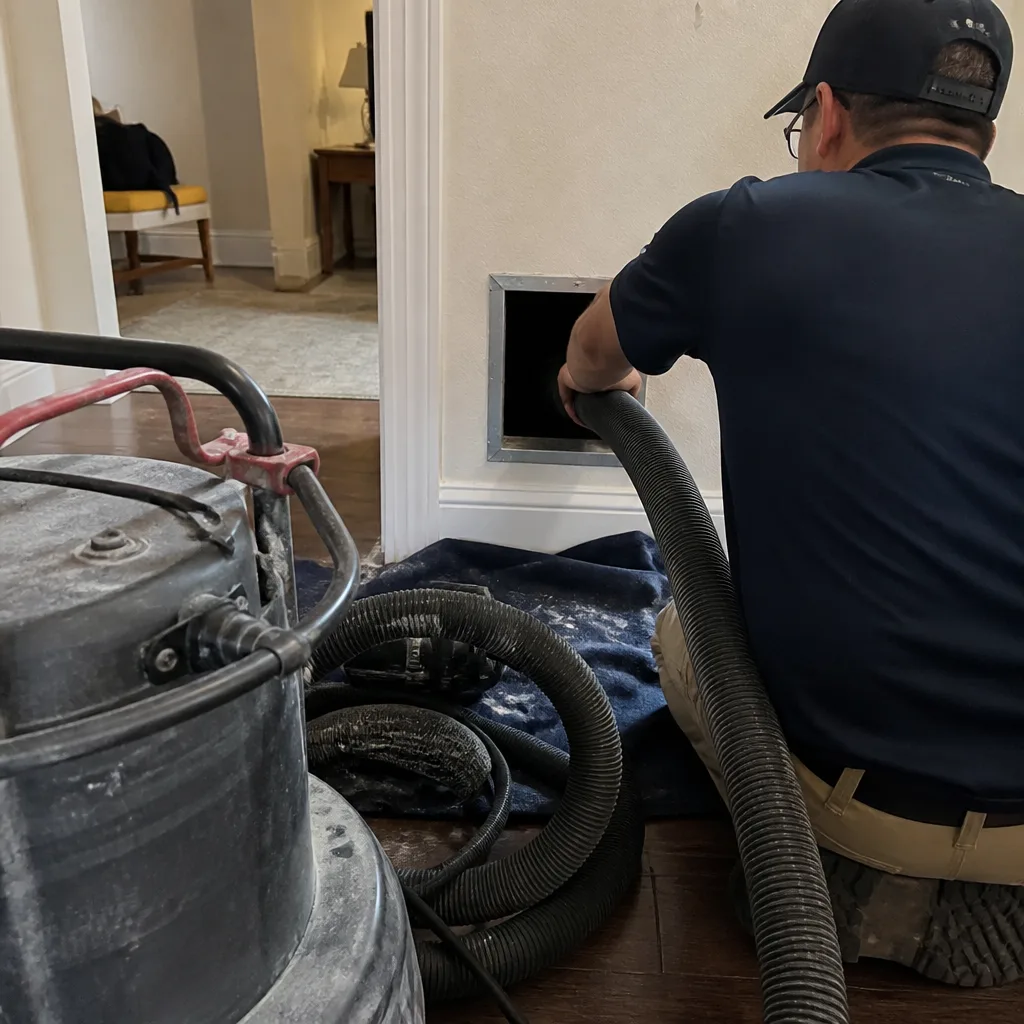 After
AfterAir Duct Cleaning Cost Breakdown: The Lewisville Homeowner’s Reference for 2026
The average Lewisville home built between 2005 and 2015 has between 18 and 26 duct runs. A $79 coupon price, offered flat regardless of that count, was never calculated from your specific system. It was calculated to get a truck in your driveway, where the actual invoice typically lands between $400 and $900 after “discovered” conditions and required add-ons. This guide breaks down what professional Air Duct Cleaning actually costs in North Texas in 2026, line by line, so you can audit any quote against the work being proposed and spot the difference between a priced job and a priced visit.
Quick Answer
In Lewisville, professional air duct cleaning for a typical 2,000-2,500 square foot home with 18-24 duct runs costs between $450 and $750 in 2026; see our more guides & resources for related topics. This covers full negative-pressure extraction of every supply and return run, register removal and cleaning, and a documented photo record of each duct interior. Prices below $300 generally indicate a vacuum-only service without proper containment or per-run documentation; prices above $900 typically include legitimate add-ons like air handler cleaning, sanitizer application, or accessibility challenges in older Lewisville homes with attic ductwork.
Table of Contents
- What a Duct Run Is (And Why It Determines Your Price)
- Line-Item Breakdown: What a Legitimate Quote Includes
- What Drives Cost Variation in Lewisville Homes
- Real Lewisville Home Example: The Math on a 2,200 Sq Ft Build
- The Upsells That Appear After the Low Bid
- What the 365-Day Done Right Promise Means in Dollars
- Common Mistakes to Avoid
- When to Call a Professional
- Frequently Asked Questions
BeforeAfterWhat a Duct Run Is (And Why It Determines Your Price)
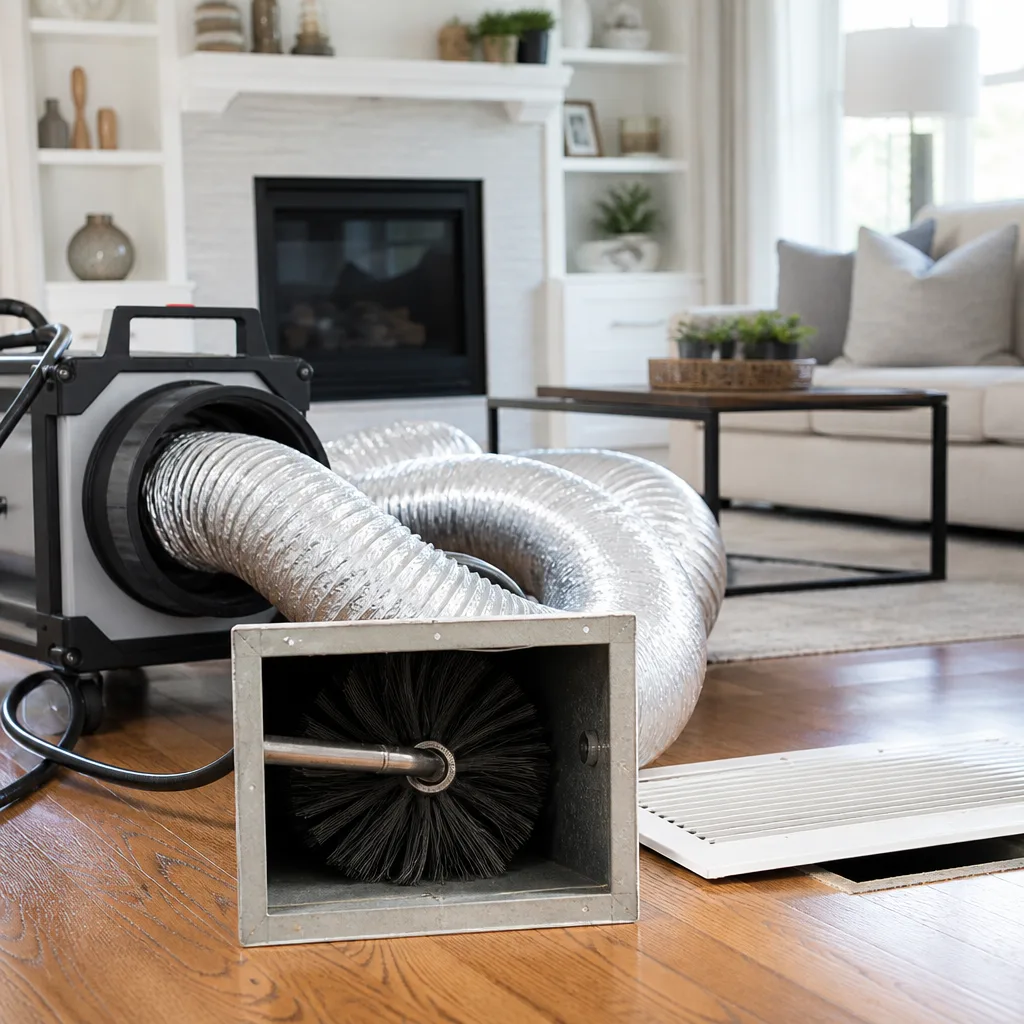
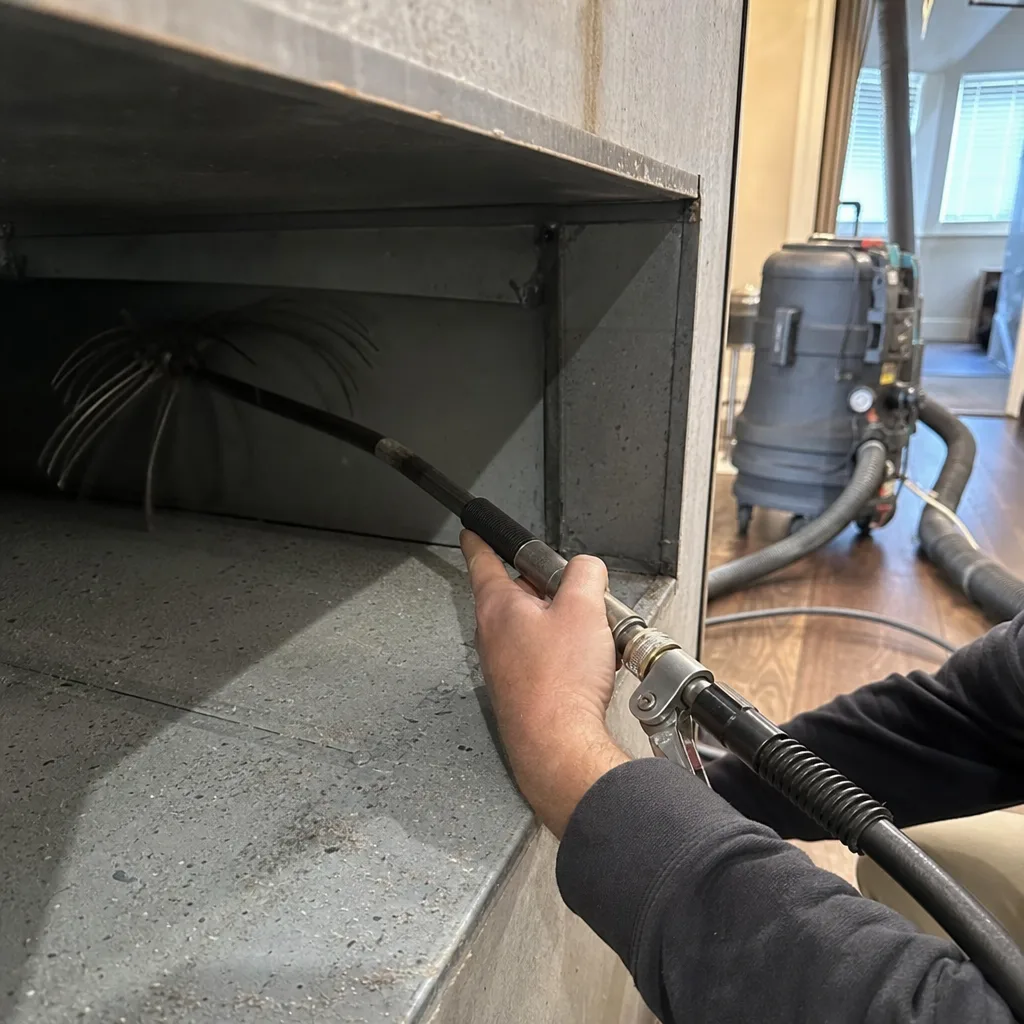
A duct run is a single continuous path from your air handler (the central blower unit) to a register (the vent cover in your wall, floor, or ceiling). Your home has supply runs, which deliver conditioned air into rooms, and return runs, which pull air back to the unit for reconditioning. Each run is a separate piece of work: the technician must access it, attach negative-pressure extraction equipment, agitate debris loose with a mechanical brush or compressed air whip, and verify cleanliness with a camera or mirror inspection.
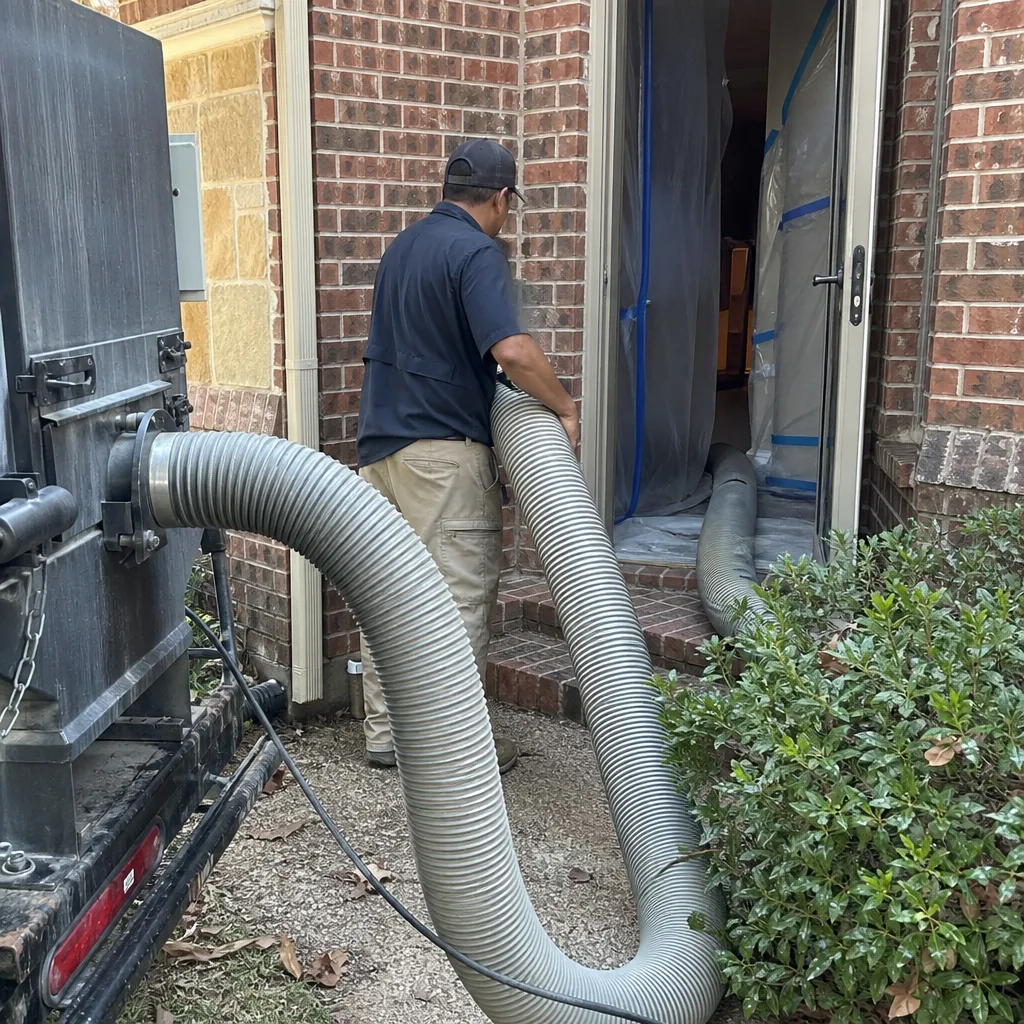
Here’s why the run count matters for pricing. A technician working under proper negative pressure, with a HEPA-filtered vacuum source and mechanical agitation, spends 10 to 15 minutes per run on average. A home with 22 supply runs and 4 return runs represents roughly 4 to 5 hours of contained, documented work. The $79 coupon model cannot sustain this labor at that price. The math does not work unless corners are cut: no containment, no agitation, no per-run verification, or the job becomes a platform for upsells once inside the home.
In Lewisville’s Castle Hills, Vista Ridge, and Old Town neighborhoods, we’ve documented run counts on hundreds of homes. A 1,800 square foot single-story built in 2010 typically has 16 to 20 supply runs and 3 to 4 returns. A 3,200 square foot two-story in The Highlands, with zoning dampers and multiple trunk lines, can exceed 30 supply runs. No legitimate quote can be accurate without knowing this count, which is why CleanRun measures every run during the initial walkthrough and builds the written price from that inventory.
The register itself is also part of the run. Removing the register, cleaning it separately, and reinstalling it adds 3 to 5 minutes per location. Some competitors leave registers in place and vacuum around them, which leaves the first 12 to 18 inches of duct, where debris concentrates, untouched. Our Air Duct Cleaning in Lewisville service includes full register removal and cleaning as standard scope, not an add-on.
Line-Item Breakdown: What a Legitimate Quote Includes
A written quote you can audit should itemize each scope component. Below is the 2026 North Texas market range for each line item, based on our pricing and verified competitor quotes we’ve reviewed during free second opinions. These are whole-system prices, not per-vent teasers.
| Line Item | Description | 2026 Lewisville Market Range |
|---|---|---|
| Base system cleaning (supply runs) | Negative-pressure extraction with mechanical agitation for all supply duct runs; register removal, cleaning, and replacement; trunk line cleaning as accessible | $320 - $480 |
| Return run cleaning | Separate extraction of all return duct runs, including return plenum access where design permits; often priced separately due to heavier debris load | $80 - $140 |
| Air handler / furnace cabinet cleaning | Cleaning of blower assembly, evaporator coil face (non-chemical), and cabinet interior; requires electrical lockout and reassembly | $120 - $180 |
| Return plenum access (if required) | Cutting and patching access to sealed return plenum when no existing port exists; includes metal patch and seal | $75 - $150 |
| Sanitizer application (opt-in) | EPA-registered sanitizer fogged into cleaned duct system; customer approves before application | $85 - $125 |
| Documented photo record | Before-and-after imaging inside every duct run, delivered as standard job record | Included in professional scope |
The base supply cleaning range assumes standard accessibility: ducts in attic, crawl, or interior chase with 24-inch minimum access. The return plenum access charge applies to roughly 30% of Lewisville homes built before 2000, where the return plenum was sealed without service ports during original construction. In these cases, cutting access is necessary for legitimate cleaning and is restored with a gasketed metal patch, not tape or foam board.
Air handler cleaning is frequently omitted from low bids and presented as a “discovered necessity” once work begins. It is a legitimate scope item with legitimate cost, but it should be priced in writing before work starts, not after the panel is open. Haven Standard Clause 1 requires this: written price before any work starts, every time, no exceptions. The blower assembly and coil face collect debris that recirculates into cleaned ducts if not addressed; skipping it leaves the job incomplete. However, presenting it as a surprise $189 charge mid-job is a margin recovery tactic, not a scope discovery.
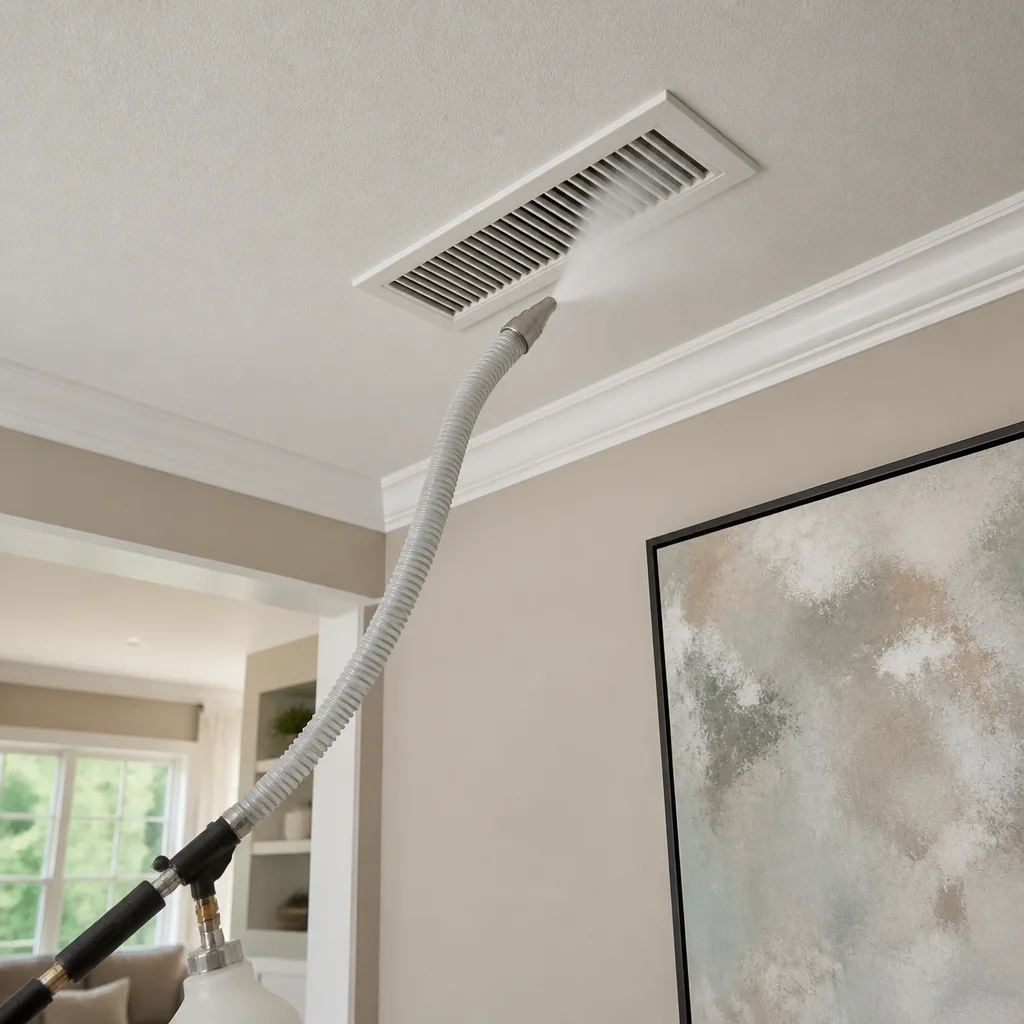
Sanitizer application is the most commonly legitimate opt-in add-on. It is also the most commonly misrepresented. A proper sanitizer is EPA-registered for HVAC use, applied as a fogged mist into a cleaned system, and has a dwell time requirement. It is not a “mold treatment” unless microbial growth has been verified by testing, which is a separate scope entirely. The $85-$125 range covers standard sanitizer application; claims of $300+ for “medical-grade biocide” in residential ductwork should be questioned.
What Drives Cost Variation in Lewisville Homes
Six factors move a quote within or above the base ranges. Understanding them lets you evaluate whether a high quote reflects real conditions or inflated margins, and whether a low quote has accounted for the work at all.
Duct count. This is the primary driver. Each additional run adds labor and equipment time. A 2,400 square foot home with 26 runs costs more than an identically sized home with 18 runs because the physical work is greater. Competitors who price by square footage alone are averaging across this variable; some homes pay too much, others receive inadequate time.
System age and construction era. Lewisville homes built before 1995 often have galvanized steel ductwork with internal fibrous lining, which requires gentler agitation and longer extraction time. Homes from the 2005-2015 building boom typically use flex duct (insulated flexible tubing), which is faster to clean but more easily damaged by aggressive brushes. The technician must adjust method and equipment; this affects time and risk, which affects price.
Accessibility configuration. Attic ductwork in Lewisville’s summer heat adds working conditions that extend labor time. Crawl space ducts require additional protective equipment and confined-space protocols. Slab homes with interior soffits may have ducts that are technically accessible only through extensive register work or minor drywall access. We price these conditions in writing during the walkthrough, not upon discovery.
Debris load and type. The camera tells the story. A system with routine dust accumulation cleans faster than one with construction debris from a recent renovation, pet hair matting, or heavy pollen deposits from North Texas spring seasons. In Lewisville, we’ve found that homes near the Elm Fork corridor, with higher airborne particulate from agricultural activity, can show 40% heavier accumulation than interior subdivisions. This affects time; legitimate pricing accounts for it in the initial scope or with a written range, not a mid-job renegotiation.
HVAC unit condition. A blower assembly caked with debris, or an evaporator coil with face-loading that restricts airflow, requires separate cleaning scope. This is not “duct cleaning” technically; it is HVAC component cleaning. It is legitimately additional work, but it must be identified and priced before the unit is opened.
Documentation standard. A photo record of every run, delivered to the customer, adds 30 to 45 minutes of technician time per job. It also requires equipment: inspection cameras or borescope systems, image storage, and delivery infrastructure. Companies that skip this step save that time and cost. CleanRun has included it on every job since 2013 because without it, neither we nor the customer can verify what occurred inside the ductwork.
Real Lewisville Home Example: The Math on a 2,200 Sq Ft Build
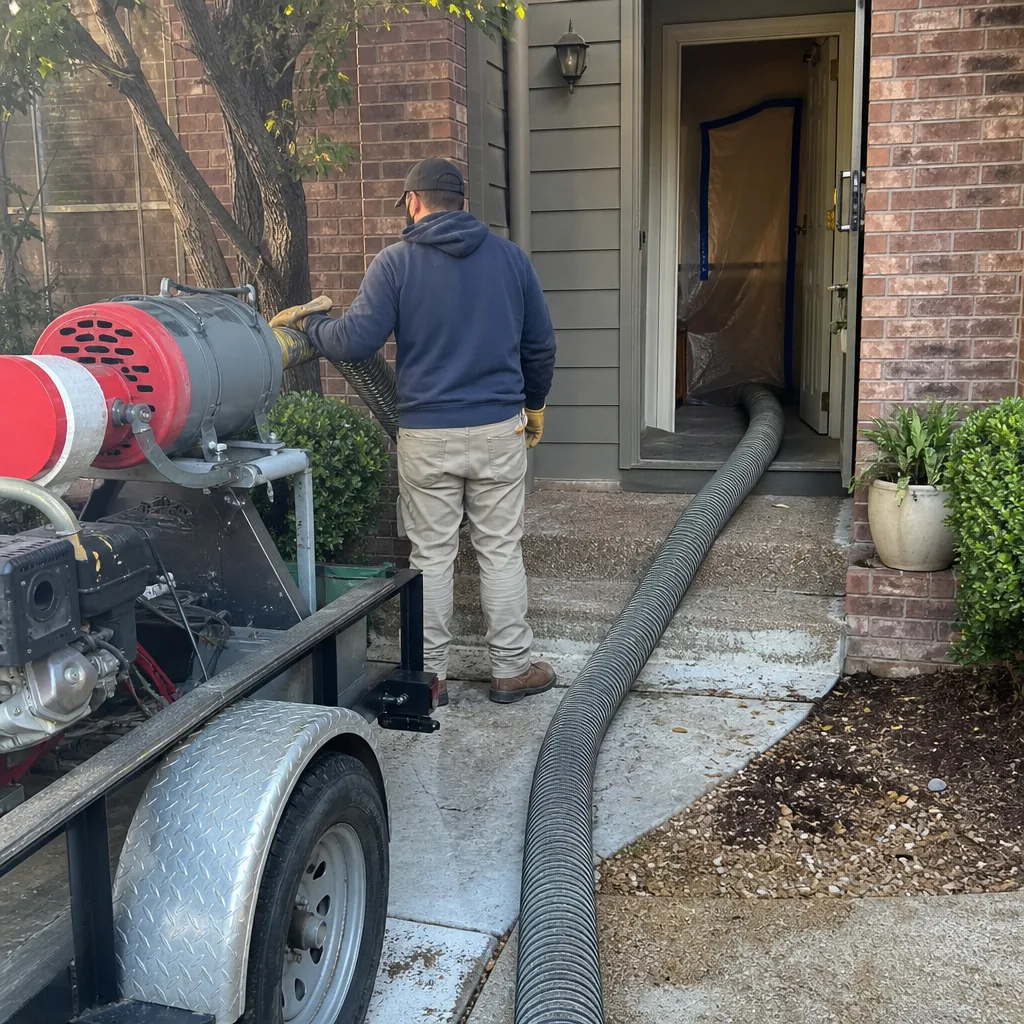
Consider a home in Lewisville’s Valley Vista neighborhood: 2,200 square feet, built in 2005, single-story with attic ductwork and a slab foundation. The system has 22 supply runs and 4 returns, standard flex duct construction, with registers in ceilings and walls. No access issues. No visible microbial growth observed during walkthrough. Blower assembly shows moderate dust accumulation; coil face is clean.
Here’s how a fully documented, properly scoped professional cleaning is priced:
- Base supply run cleaning (22 runs): $440. This covers negative-pressure extraction with Rotobrush mechanical agitation, register removal and cleaning, and trunk line cleaning to accessible points.
- Return run cleaning (4 runs): $95. Return runs typically carry heavier debris load from unfiltered air intake; they are scoped and timed separately.
- Air handler / blower cleaning: $145. Moderate accumulation requires full blower removal, cleaning, and reassembly with electrical lockout protocols.
- Documented photo record: Included. Before and after imaging inside all 26 runs, delivered via customer portal.
Total: $680. This assumes standard accessibility and no required plenum access. A sanitizer application, if requested, would add $95, bringing the total to $775.
Compare this to typical competitor approaches. The $79 coupon service, applied to this home, would cover approximately 30 minutes of vacuum time with no register removal, no containment, no agitation, and no documentation. The $399 “whole house special” often includes supply runs only, with returns as a $150 add-on, air handler as a $189 “recommended” upgrade, and sanitizer as a $199 “health protection” package. The final invoice frequently reaches $650-$850, but without the line-item transparency, the customer cannot verify what was actually performed.
The $680 CleanRun price is built from the actual home, itemized in writing before work begins, and produces a deliverable record. The difference is not merely price; it is pricing methodology. One is calculated from your job. The other is calculated to acquire your job.
The Upsells That Appear After the Low Bid
Certain charges appear with predictable frequency once a low-bid technician is inside the home. Some represent legitimate services misused as margin recovery. Others are entirely spurious. Here’s how to distinguish them.
“Biocide treatment” or “antimicrobial fogging” ($150-$400). A legitimate sanitizer is EPA-registered for HVAC systems, applied to a cleaned duct network, and has specific dwell time and ventilation requirements. The upsell version is often a generic disinfectant with no EPA registration for duct application, applied to a dirty system where it cannot contact surfaces effectively. Ask for the EPA registration number and the product name. If the technician cannot provide it, decline. A proper sanitizer application, when wanted, costs $85-$125 in the Lewisville market.
“Mold remediation” ($500-$2,000+). Actual mold growth in ductwork is rare and requires laboratory verification, not a flashlight and a worried expression. The Texas Department of Licensing and Regulation requires specific mold remediation licensing for projects exceeding 25 contiguous square feet. If mold is claimed, ask for the license number, the testing laboratory, and the species identification. Without these, “mold remediation” in a duct system is typically an upsell for HEPA vacuuming and sanitizer that should already be standard scope. CleanRun has referred fewer than ten homes for actual mold remediation in 52,000+ service visits.
“Duct coating” or “sealant application” ($300-$800). This involves spraying an aerosolized sealant into ductwork, marketed as improving efficiency or preventing future contamination. The EPA has not endorsed duct coating as a routine maintenance procedure. In flex duct systems common in Lewisville, coating can add weight to already-sagging runs and restrict airflow. It is rarely appropriate and never an emergency discovery.
“Deep cleaning” or “advanced extraction” ($100-$250). This charge appears when the initial “basic” cleaning proves insufficient. It is an admission that the quoted price did not cover actual cleaning. Professional negative-pressure extraction with mechanical agitation is the standard; there is no “basic” version that leaves debris behind by design.
“Access panel creation” ($75-$200). Legitimate when required, as noted above. Illegitimate when charged for removing a standard register or accessing an existing service port. Ask what specific access was created and request a photo of the patched location in your documentation.
The common thread: these charges appear after the technician is in your home, after you’ve invested time and disruption, and after the low bid has established a psychological anchor. The remedy is a written, itemized price before work starts, with no category labeled “additional services as needed.” Haven Standard Clause 1 exists precisely to eliminate this dynamic.
What the 365-Day Done Right Promise Means in Dollars
A contractor who guarantees documented results for a full year is pricing differently than one whose obligation ends when the truck leaves. The 365-Day Done Right Promise, backed in writing on every CleanRun job, creates a liability that must be accounted for in the initial price. This is not a marketing phrase; it is a financial commitment.
Here’s what it covers and why it affects pricing structure. If debris returns to visible levels within 12 months, or if any component of the documented scope proves incomplete upon re-inspection, we return and correct it. This requires: maintaining crew capacity for callback scheduling, retaining job records and photo documentation for verification, and pricing initial work with sufficient margin to absorb occasional rework. A contractor operating on minimal margins, with no documentation system, cannot sustain this guarantee. They do not offer it because they cannot afford to fulfill it.
The calculable value to the homeowner is risk transfer. A $550 job with a 365-day written guarantee and photo documentation has a different expected cost than a $350 job with no guarantee and no verification. If the $350 job requires partial redo or produces no evidence of completion, the effective cost may equal or exceed the documented price. The guarantee is not a premium service; it is a pricing signal that the contractor has built accountability into the model.
Since 2013, CleanRun’s callback rate under this promise has remained below 3%. The photo record is the primary reason: when both we and the customer can see the before and after, disputes rarely arise. The guarantee exists for the exceptions, not the routine, and that is how it can be offered without inflating base prices to unsustainable levels.
Common Mistakes to Avoid
- Comparing prices without comparing scopes. A $299 quote and a $599 quote are not comparable until you know what each includes. Request line-item written scopes from both.
- Accepting “per vent” pricing. This obscures the actual run count and allows register-only cleaning to be presented as full duct service. Insist on per-run pricing with register removal included.
- Ignoring accessibility conditions. Lewisville homes with attic ducts in July, or crawl space runs in older subdivisions, require additional labor. A quote that doesn’t mention these conditions hasn’t accounted for them.
- Approving mid-job add-ons without written revision. Any scope change should generate a new written price, signed or acknowledged, before work continues. Verbal approvals create disputes.
- Neglecting the photo record. Without images, you have no verification that work occurred inside the ductwork. Request this deliverable explicitly; its absence is a red flag.
- Assuming newer homes need no cleaning. Lewisville’s 2015-2020 builds often show construction debris, drywall dust, and sealant particulate in ducts from original build. Age is not the only indicator.
- Scheduling without verifying equipment. Professional-grade negative-pressure extraction uses HEPA-filtered vacuums and mechanical agitation. Ask what equipment will be used; “a powerful vacuum” is not an adequate answer.
When to Call a Professional
Schedule an evaluation if you observe visible debris at registers, reduced airflow from specific vents, musty odors when the system cycles, or if your home has undergone recent renovation. In Lewisville’s climate, with high spring pollen and summer humidity, ducts that have never been cleaned since construction often contain substantial accumulation that affects system efficiency and indoor air quality.
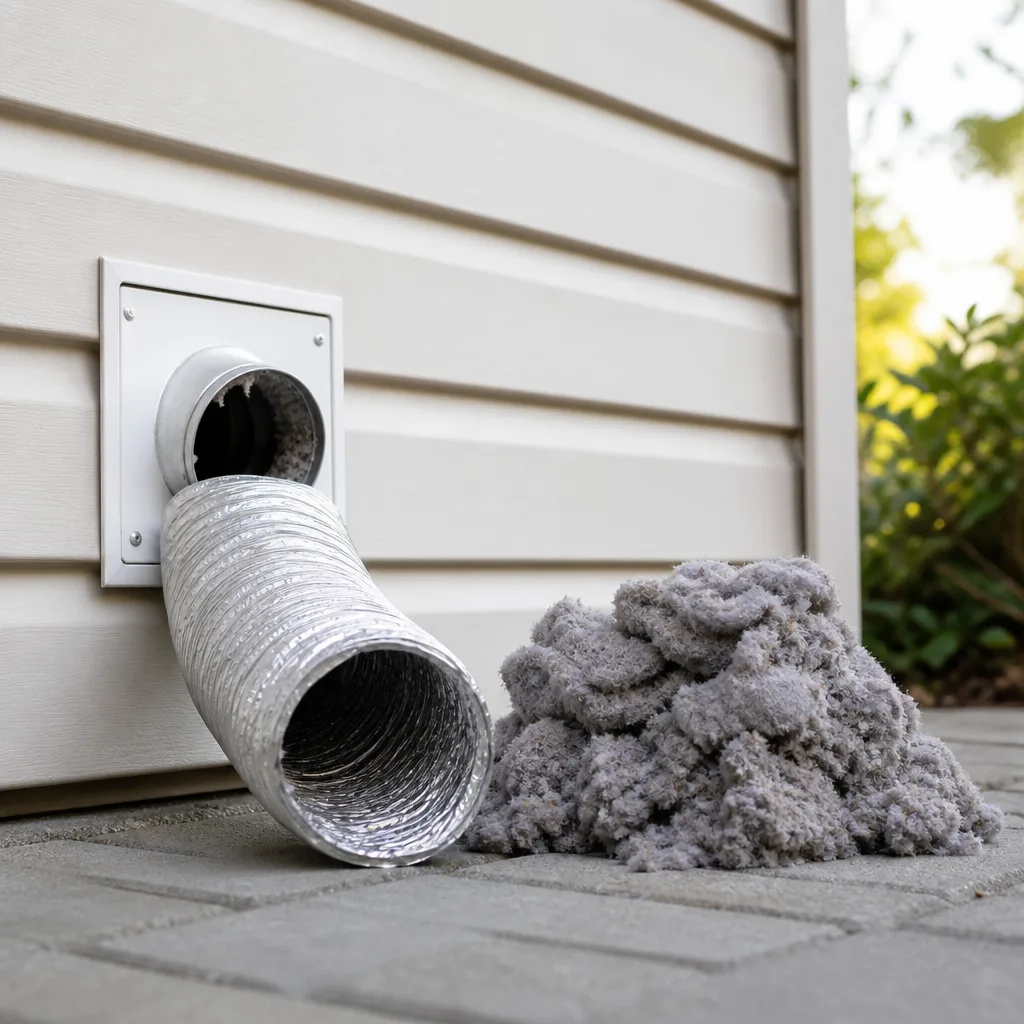
CleanRun Air Duct Cleaning Lewisville offers free estimates in Lewisville. Every estimate includes a full run count, accessibility assessment, and written itemized price before any commitment. Call (940) 240-8552 to schedule. Our Dryer Vent Cleaning in Lewisville and HVAC Cleaning in Lewisville services can be scoped during the same visit for homes needing comprehensive system maintenance.
Frequently Asked Questions
Professional air duct cleaning in Lewisville costs between $450 and $750 for a typical home with 18-24 duct runs in 2026. This covers full negative-pressure extraction with mechanical agitation, register cleaning, and documented photo verification. Prices below $300 generally indicate limited scope without proper containment or per-run documentation.
Low quotes typically use flat-rate pricing that doesn’t account for actual duct count, omit return runs or air handler cleaning from the base scope, or rely on vacuum-only methods without mechanical agitation or HEPA containment. The final invoice after “discovered” add-ons often meets or exceeds legitimate upfront pricing, but without the transparency.
Request a documented photo record showing the interior of every duct run before and after cleaning. Professional services using inspection cameras or borescopes can provide this as a standard deliverable. Without images, you have no verification that debris was removed from inside the ductwork rather than just around the register.
Most Lewisville homes benefit from cleaning every 4 to 6 years under normal occupancy. Homes with pets, recent construction, allergy-sensitive residents, or locations near high-particulate areas like the Elm Fork corridor may need more frequent service. The camera inspection during your first cleaning establishes a baseline for future scheduling.
Sanitizer is an optional add-on, not a required component of mechanical cleaning. It is appropriate when a customer wants additional treatment of a cleaned system, but it does not replace debris removal. It should never be presented as mandatory or as a “mold treatment” without verified microbial growth and proper testing documentation.
Every CleanRun job is backed by the 365-Day Done Right Promise, in writing. If any component of the documented scope proves incomplete or if debris returns to visible levels within 12 months, we return and correct it at no charge. This guarantee has been standard practice since our first job in 2013.
The Bottom Line
Air duct cleaning pricing in Lewisville becomes intelligible when you understand the components: runs, returns, air handler, accessibility, and documentation. A legitimate quote is built from your specific system, itemized in writing, and deliverable with evidence. The $79 coupon and the $800 professional service are not the same job at different prices; they are different jobs with different definitions of completion. The homeowner’s task is not to find the lowest number, but to find the price that accurately describes the work being purchased and the accountability that follows it.
Written by Tomas Reyes, Owner at CleanRun Air Duct Cleaning Lewisville, serving Lewisville since 2013.