
Last updated September 23, 2026
Whole-system duct and dryer vent check with before-and-after photos - you see exactly what came out of your vents
That "$99 whole-house special" is a bait ad - the real number appears once they are in your hallway, or the "clean" is a shop-vac at the register. We photograph the inside of your ducts before and after instead.
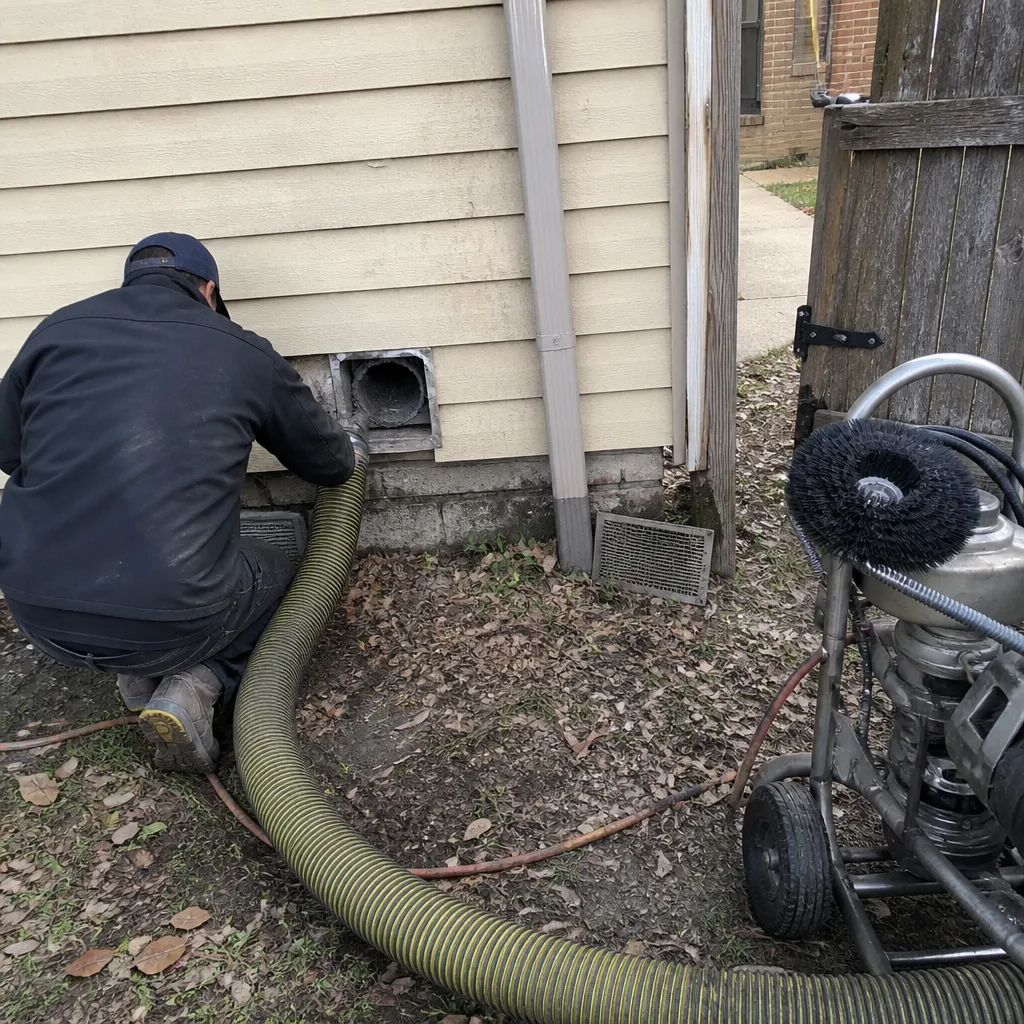 Before
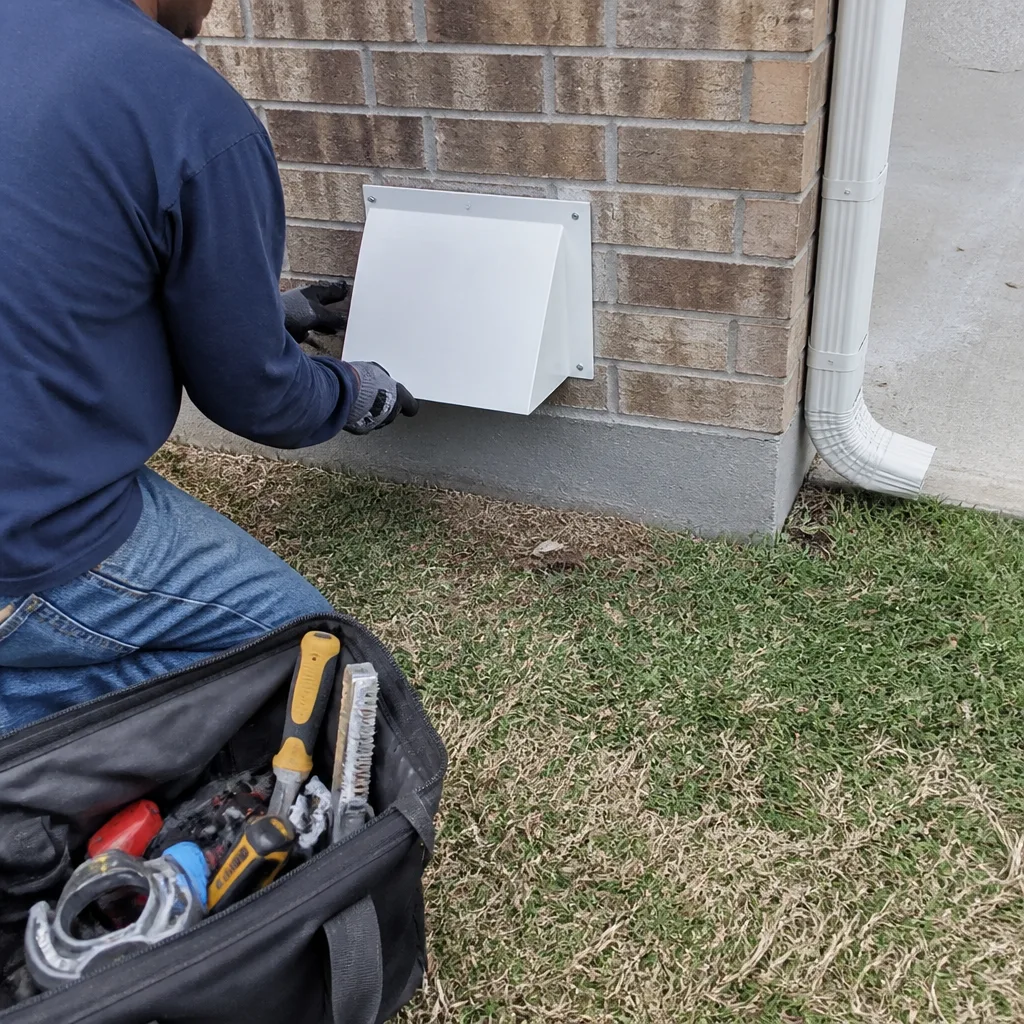 After
After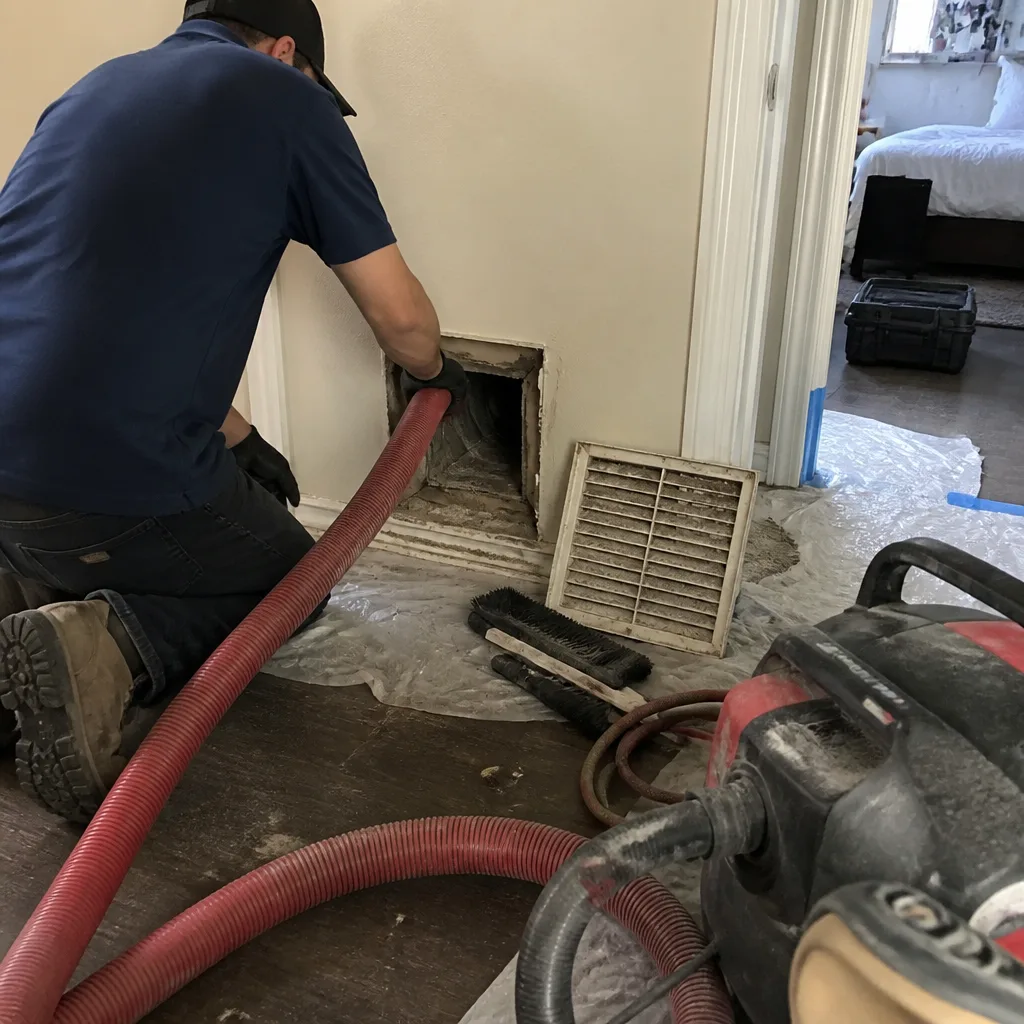 Before
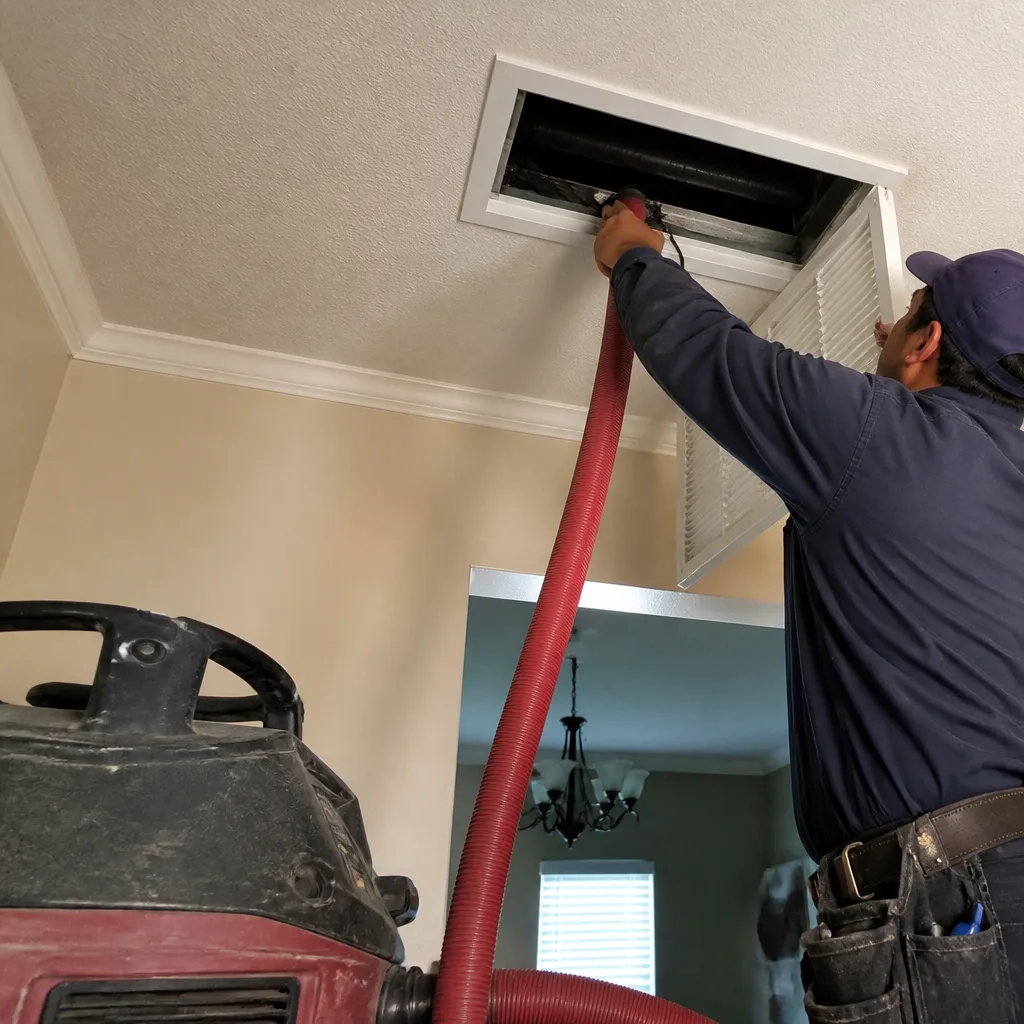 After
After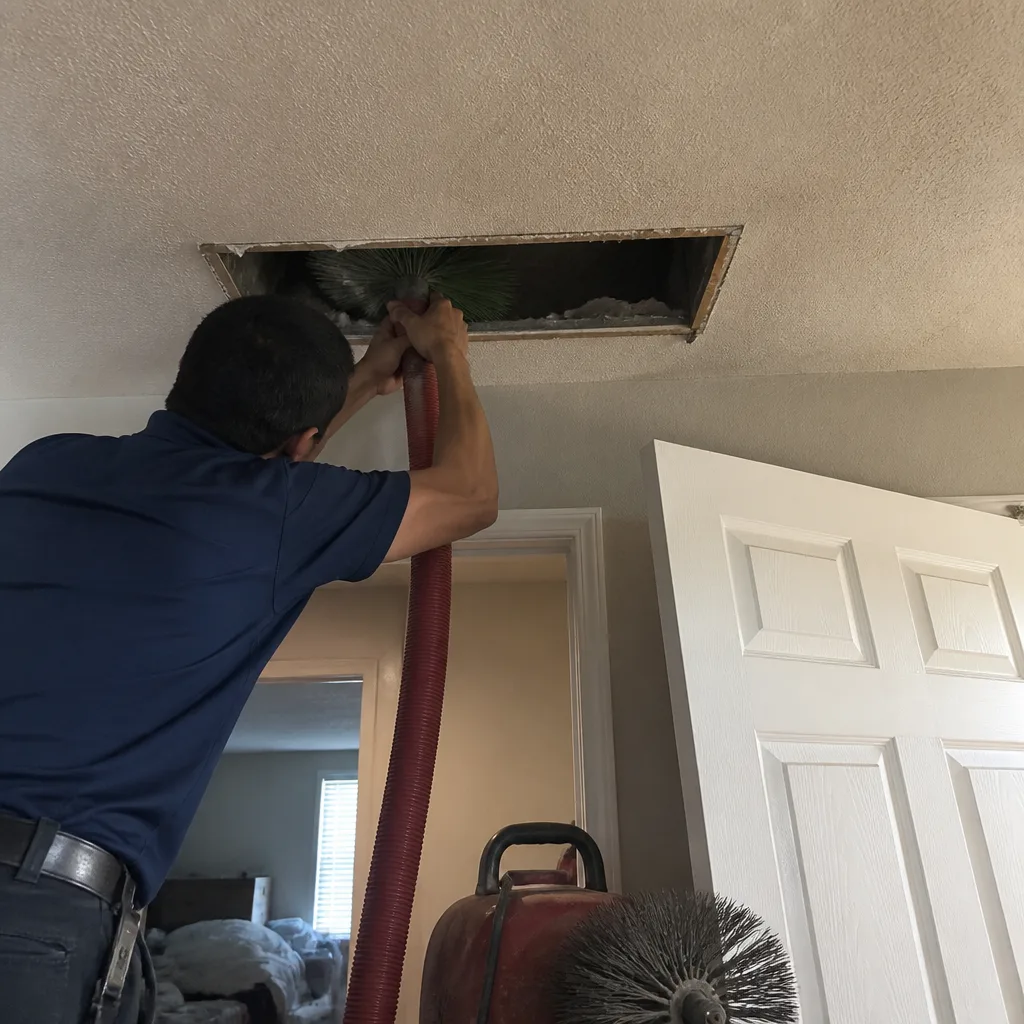 Before
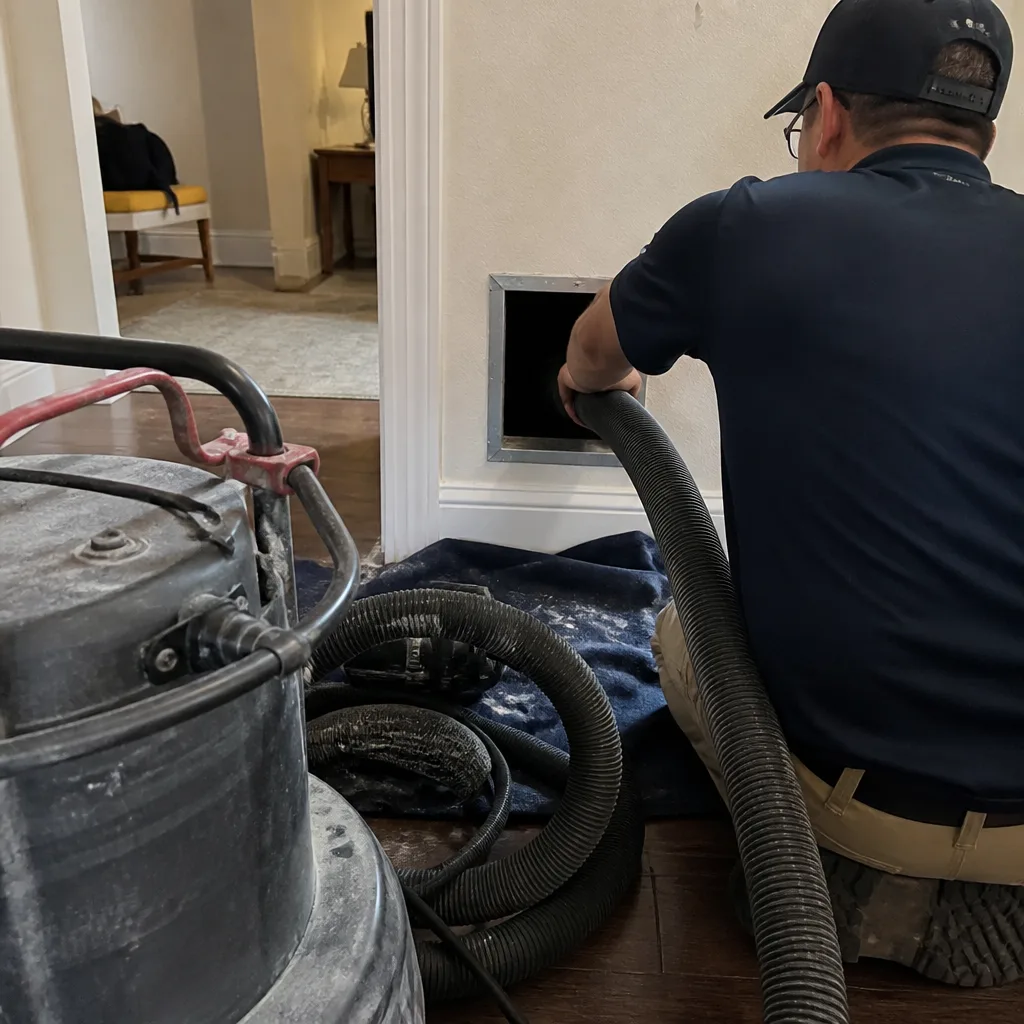 After
AfterAir Duct Cleaning Maintenance Checklist for Lewisville Homeowners
The NADCA standard says ducts should be cleaned “when contaminated.” That is technically correct and practically useless unless someone tells you what contamination looks like at your return grille at eye level. After photographing the inside of more than 52,000 duct runs since 2013, we’ve learned that most Lewisville homeowners either overspend on professional cleanings they don’t need or defer them until the damage is done. For Air Duct Cleaning Warning Signs: A Lewisville Homeowner’s Reference Guide, see our dedicated post. This checklist draws a precise line between what you can observe yourself and what requires duct access, with pass-fail conditions on every item. You’ll learn a register-by-register inspection protocol, the Lewisville-specific triggers that accelerate contamination, and how to maintain a written log that protects your investment when you sell or file a claim.
Quick Answer
A proper air duct cleaning maintenance checklist for Lewisville homeowners combines monthly visual inspections at registers, quarterly filter audits, and annual professional evaluations. Homeowners can assess grille contamination, filter bypass, and the first 12 inches of visible ductwork; anything beyond that requires negative-pressure extraction equipment and a written scope from a licensed contractor. In Lewisville’s climate, cottonwood season (May-June), post-construction dust from ongoing development, and July-August humidity spikes are the three triggers that most often accelerate maintenance needs.
Table of Contents
- The Register-by-Register Visual Inspection Protocol
- Filter Maintenance: The Variable That Makes or Breaks Everything
- Lewisville-Specific Maintenance Triggers
- Homeowner-Observable vs. Contractor-Required: A Clear Table
- The Written Log Template for Documentation
- What Professional Equipment Actually Does (and What It Costs to Skip It)
- Common Mistakes to Avoid
- When to Call a Professional
- Frequently Asked Questions
BeforeAfterThe Register-by-Register Visual Inspection Protocol
Every register in your Lewisville home tells a different story depending on its location, duct run length, and whether it’s on the supply or return side. The inspection protocol below is designed to be repeatable, photographable, and comparable over time. We developed this after seeing too many homeowners rely on a single glance at one ceiling vent.
What You’ll Need
- A flashlight with focused beam (phone flashlight works; a dedicated light is better)
- A microfiber cloth or white paper towel
- Your phone camera, with date stamp enabled
- A step stool for ceiling registers
Step-by-Step Inspection for Each Register
- Grille face check: Look for gray or black accumulation in the slots, especially on the upstream edge where air enters. A clean grille shows only dust that wipes away with light pressure. Pass condition: no visible buildup in slots; cloth comes away with minimal gray residue. Fail condition: buildup is visible from 3 feet away, or cloth shows heavy gray/black streaking.
- Grille removal and edge inspection: Unscrew or unclip the grille. Examine the sheet metal rim where the grille seats. Pass condition: rim is clean metal with at most a light film. Fail condition: fuzzy or caked accumulation, especially if it extends past the rim into the duct throat.
- Flashlight check of first 12 inches: Shine your light straight into the duct. What you see depends on duct type. Flexible duct (common in Lewisville homes built 2015-2020) shows its ribbed interior; sheet metal shows smooth walls. Pass condition: walls are visible and show only a thin, even film. Fail condition: debris mounds, standing dust, or visible restrictions at elbows or connections. Photograph what you see. The photo is your baseline.
- Photograph consistently: Same angle, same lighting, same distance. Name the file by room and date: “MasterBed_Supply_2025-01-15.” This documentation becomes evidence if you later dispute a contractor’s scope or need to prove maintenance history to a buyer or insurer.
In our work across Lewisville neighborhoods from Old Town to Valley Vista, we’ve found that return registers - especially those near floors - fail this protocol 2-3 times more often than supply registers. The reason is simple: return ducts pull unfiltered air from your rooms, and that air carries everything your filter hasn’t caught yet.
One more point on the first 12 inches. What you see there is not necessarily representative of the full duct run. A clean throat can coexist with a debris-choked elbow 15 feet away. That’s why this protocol has a hard boundary: homeowner inspection stops at 12 inches. Beyond that, you’re guessing, and guessing is not maintenance.
Filter Maintenance: The Variable That Makes or Breaks Everything
If your filter is wrong, undersized, or bypassing air, every other item on this checklist becomes irrelevant faster. We’ve opened duct systems in Lewisville homes where the filter was technically present and technically new, yet 30% of air was flowing around it through a gap the homeowner never noticed.
The Three Filter Variables
MERV rating: MERV (Minimum Efficiency Reporting Value) measures particle capture. For most Lewisville homes, MERV 8-11 is the practical range. MERV 13 and above captures more particles but loads faster and can restrict airflow in systems not designed for the pressure drop. We’ve photographed filters in Lewisville’s Castle Hills area that were MERV 13, three weeks old, and already bowed from the load. The bowing created a gap. The gap rendered the filter useless.
Replacement interval: The 90-day rule is a starting point, not a law. During cottonwood season (May-June in Lewisville), a filter facing prevailing winds can load in 3-4 weeks. During mild shoulder seasons, the same filter might last 120 days. The correct interval is: replace when the filter media shows visible loading across 50% or more of surface area, or when the pressure drop across the filter (measured by a manometer, or inferred from reduced airflow at registers) exceeds manufacturer spec.
Fit quality: A filter must seat fully in its track with no visible light around the edges. We’ve found that “close enough” filters - 15.5 inches in a 16-inch track, or a 1-inch filter crammed into a 2-inch slot - create bypass that the homeowner cannot see but the ductwork collects. The debris doesn’t disappear; it just bypasses the filter and deposits in the return plenum.
Filter Inspection Protocol
- Remove the filter and hold it to a light source. Pass: uniform opacity, no bright spots indicating holes or thin areas. Fail: bright spots, collapsed pleats, or media separation from the frame.
- Inspect the filter track with flashlight. Pass: clean metal, no debris accumulation in the track itself. Fail: debris in the track, which indicates bypass or past filter failure.
- Check filter dimensions against track dimensions. Pass: filter fills the track with light pressure, no visible gaps. Fail: filter slides loosely, rocks in the track, or requires deformation to install.
- Document: photograph filter condition and track condition at each change. Note date, MERV rating, and brand on your log.
A note on filter brands: Honeywell and Aprilaire manufacture filters we see frequently in Lewisville homes with newer HVAC systems. Both publish pressure-drop curves that your HVAC technician can reference. If your contractor cannot discuss pressure drop in relation to your filter choice, that’s information worth noting.
Lewisville-Specific Maintenance Triggers
Generic duct maintenance advice ignores geography. Lewisville’s specific conditions - climate, development patterns, and vegetation - create maintenance triggers that don’t apply uniformly across Texas or even across the Dallas-Fort Worth metroplex.
Post-Construction Dust from Surrounding Development
Lewisville has seen continuous residential and commercial construction, particularly in the northern and western corridors. Even if your home was built in 2018, the lot next door may have broken ground in 2024. Construction particulate - drywall dust, silica, wood fiber - is fine enough to pass through standard filters at low velocity and coarse enough to accumulate in duct elbows and dampers. We’ve documented 2-4 inch debris mounds in return plenums of Lewisville homes within 500 feet of active construction, even when the homeowners reported “no unusual dust.”
If you live within a quarter-mile of active construction, shorten your filter replacement interval by 30-50% and perform the register inspection protocol monthly rather than quarterly until construction completes.
Cottonwood and Cedar Pollen Seasons
Lewisville sits in the crosswind of cottonwood dispersal from riparian corridors along the Elm Fork of the Trinity River and cedar pollen transport from the Hill Country during winter northers. Cottonwood seed (the “cotton”) is large and fibrous; it loads filters rapidly and can mat into ductwork if it bypasses filtration. Cedar pollen is smaller and more penetrating, but in peak season (December-February) the volume can overwhelm MERV 8 filters.
Our crews working in Lewisville’s Lakeland and The Highlands neighborhoods report visibly heavier loading during these seasons than in comparable Flower Mound or Highland Village homes at the same elevation. The difference is vegetation proximity and wind pattern, not homeowner behavior.
July-August Humidity Window
Lewisville’s summer design temperature is 99°F, but the design humidity is what matters for ducts. When outdoor dew points exceed 70°F for extended periods - common in Lewisville from mid-July through August - cold supply ducts in unconditioned attics can sweat. The moisture, combined with settled organic debris, creates conditions for microbial growth in return plenums that we document with our Rotobrush inspection cameras.
The maintenance implication: during this window, inspect your return plenum access (if visible) for moisture staining, and ensure your attic insulation is intact around ductwork. A sweating duct is not always a dirty duct, but a sweating duct with debris is a maintenance emergency.
Homeowner-Observable vs. Contractor-Required: A Clear Table
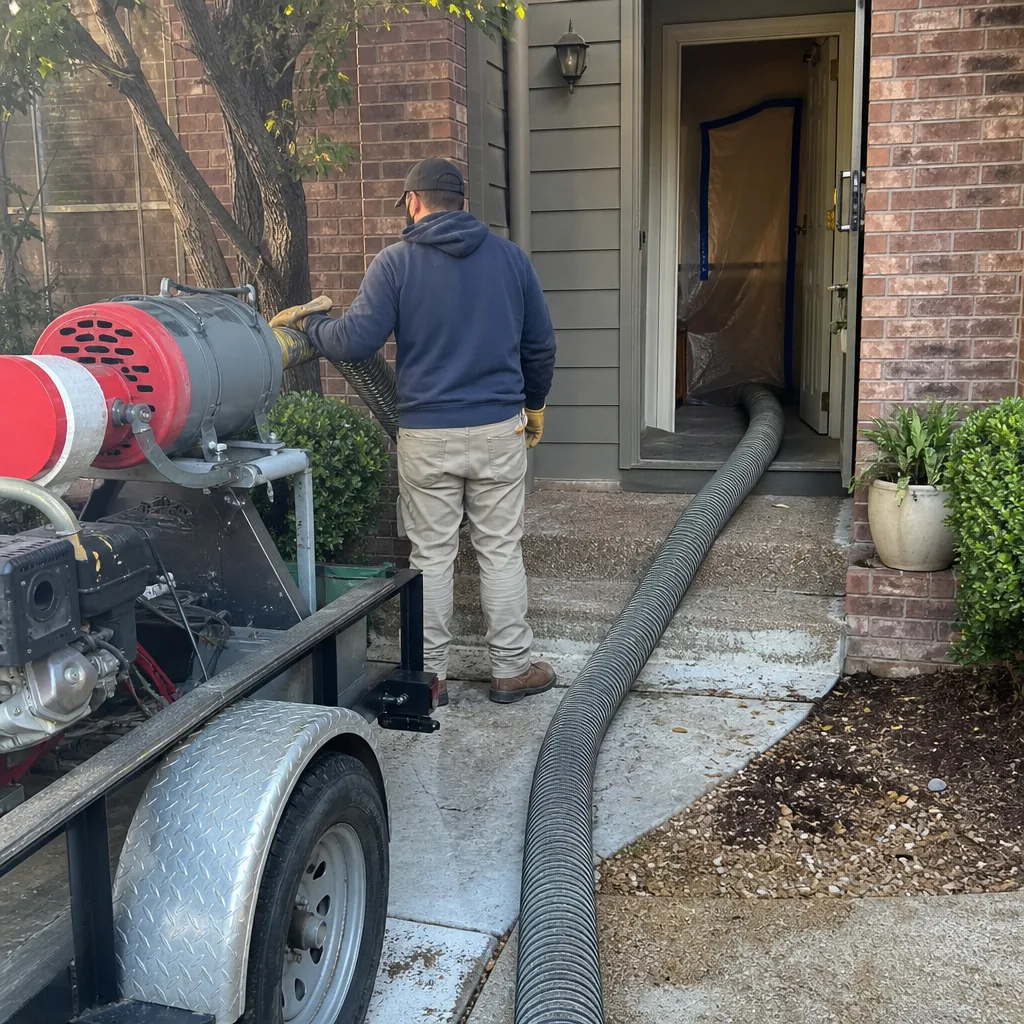
The core thesis of this guide: know your boundary. Below is a table dividing every maintenance item by who can perform it, what equipment is required, and what a “fail” condition typically costs to remediate in the Lewisville market.
| Item | Frequency | Who Performs | Equipment Required | Fail Condition Means | Typical Lewisville Cost Range |
|---|---|---|---|---|---|
| Register grille visual inspection | Monthly | Homeowner | Flashlight, cloth, camera | Surface contamination only; clean or replace grille | $0-$25 (grille replacement) |
| Filter removal and inspection | Monthly to quarterly | Homeowner | None | Filter loading, bypass, or incorrect sizing | $15-$45 (filter replacement) |
| First 12 inches of duct visual check | Quarterly | Homeowner | Flashlight, camera | Visible debris in throat; may indicate deeper issue | $0 (documentation only) or professional evaluation |
| Full duct run inspection with camera | Every 2-3 years, or on fail | Contractor | Rotobrush or Nikro video inspection system | Debris accumulation, restriction, or damage | $180-$340 (inspection and cleaning per system) |
| Negative-pressure extraction cleaning | As needed, per inspection | Contractor | Negative-pressure extraction unit (Nikro, Abatement Technologies, or equivalent) | Confirmed contamination beyond 12 inches | $400-$700 (whole-system cleaning, most Lewisville homes) |
| Return plenum and air handler inspection | Annually | Contractor | Inspection camera, manometer, blower door for pressure testing | Plenum debris, coil contamination, or pressure imbalance | $250-$450 (if bundled with cleaning) |
| Duct sealing and repair | As needed | Contractor | Mastic, metal tape, aerosol sealant (Guardsman-compatible systems) | Leakage exceeding 10% of fan flow; disconnected runs | $300-$800 (typical residential repair scope) |
Two notes on this table. First, the cost ranges are whole-system prices, not per-vent pricing. Per-vent pricing is a common bait-and-switch structure in this industry; we quote one flat price per system, agreed in writing before work starts, under Haven Standard Clause 1. Second, the “every 2-3 years” cleaning frequency assumes normal conditions. If you hit multiple Lewisville-specific triggers - construction dust plus cottonwood season plus an undersized filter - that interval compresses.
The Written Log Template for Documentation
A maintenance log is not obsessive; it’s evidence. When you sell your Lewisville home, buyers and inspectors increasingly ask for HVAC maintenance history. When you file an insurance claim for water damage that originated at a sweating duct, your log establishes that you performed reasonable maintenance. When you dispute a contractor who claims your ducts “haven’t been touched in years,” your log is your rebuttal.
Minimum Viable Log Entry
Each entry should include: date, location (room and register), what was checked, pass/fail condition, photograph filename, and any action taken. Below is a template you can replicate in any note-taking app or physical notebook.
Sample entry:
Date: 2025-01-15
Location: Master bedroom, ceiling supply register
Checked: Grille face, rim, first 12 inches of flex duct
Condition: Pass - light film on rim, throat visible and clear
Photo: MasterBed_Supply_2025-01-15.jpg
Action: None; next check scheduled 2025-04-15
Filter Log Entry
Date: 2025-01-15
Filter location: Return air handler, 20x25x1 track
Brand/MERV: Honeywell FC100A1037, MERV 11
Condition at removal: 60% surface loading, no bypass visible
Track condition: Clean, no debris
Action: Replaced with identical filter; next change 2025-04-15 or earlier if loading visible
Professional Service Log Entry
Date: 2024-08-10
Contractor: CleanRun Air Duct Cleaning Lewisville
Service: Full-system negative-pressure extraction, return plenum inspection
Scope: 12 supply runs, 3 return runs, air handler cabinet
Equipment noted: Rotobrush brush-and-vac system, Nikro negative-pressure unit
Deliverables: Written price before work (Haven Standard Clause 1), before/after photo record of every run, 365-Day Done Right Promise documentation
Findings: Moderate debris in master bedroom supply (documented), clean otherwise
Next service recommended: 2027 or on fail condition
Keep this log for the life of your home. Store digital copies in cloud backup. The 15 minutes per entry is trivial compared to the value of documented maintenance history.
What Professional Equipment Actually Does (and What It Costs to Skip It)
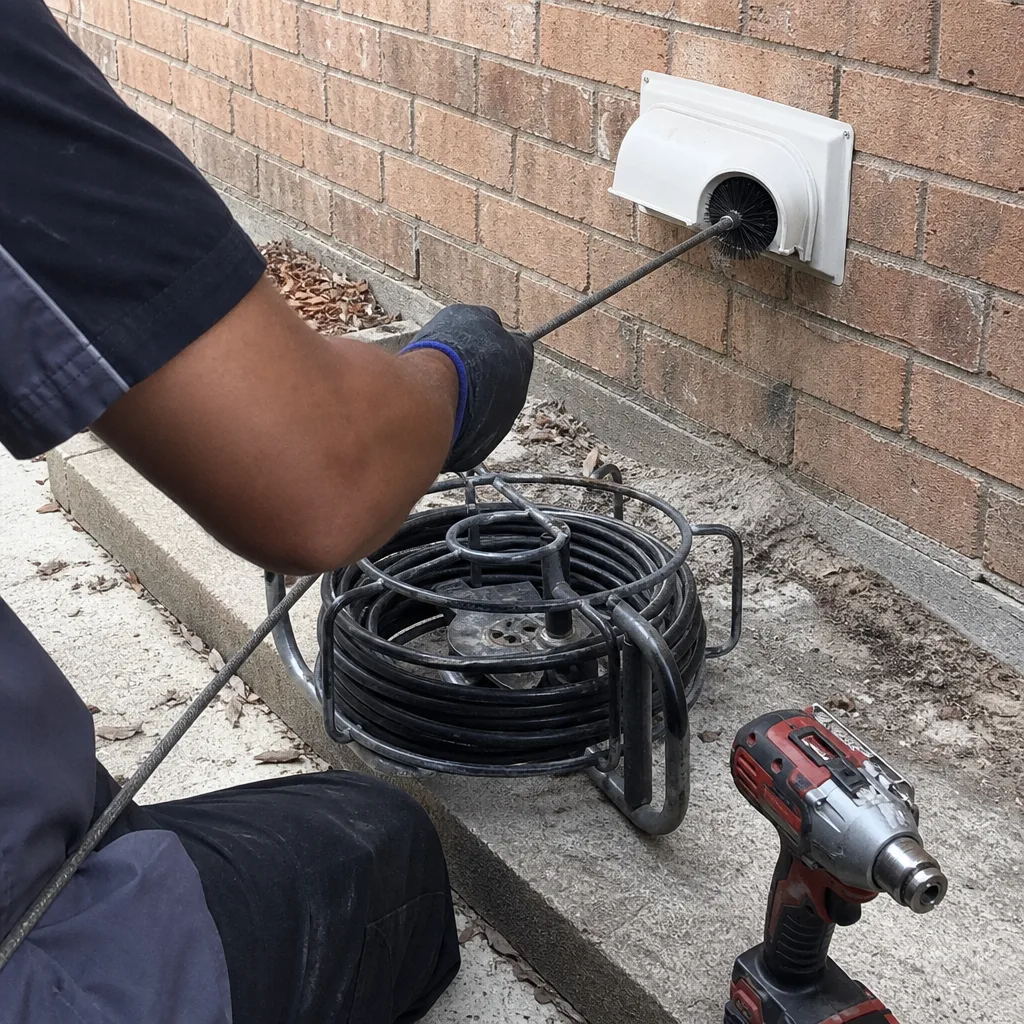
Homeowners cannot be expected to spec equipment, but you should know enough to distinguish professional-grade work from shop-vac theater. The equipment names below are not decorative; they represent functional differences that affect whether your ducts are actually cleaned or merely disturbed.
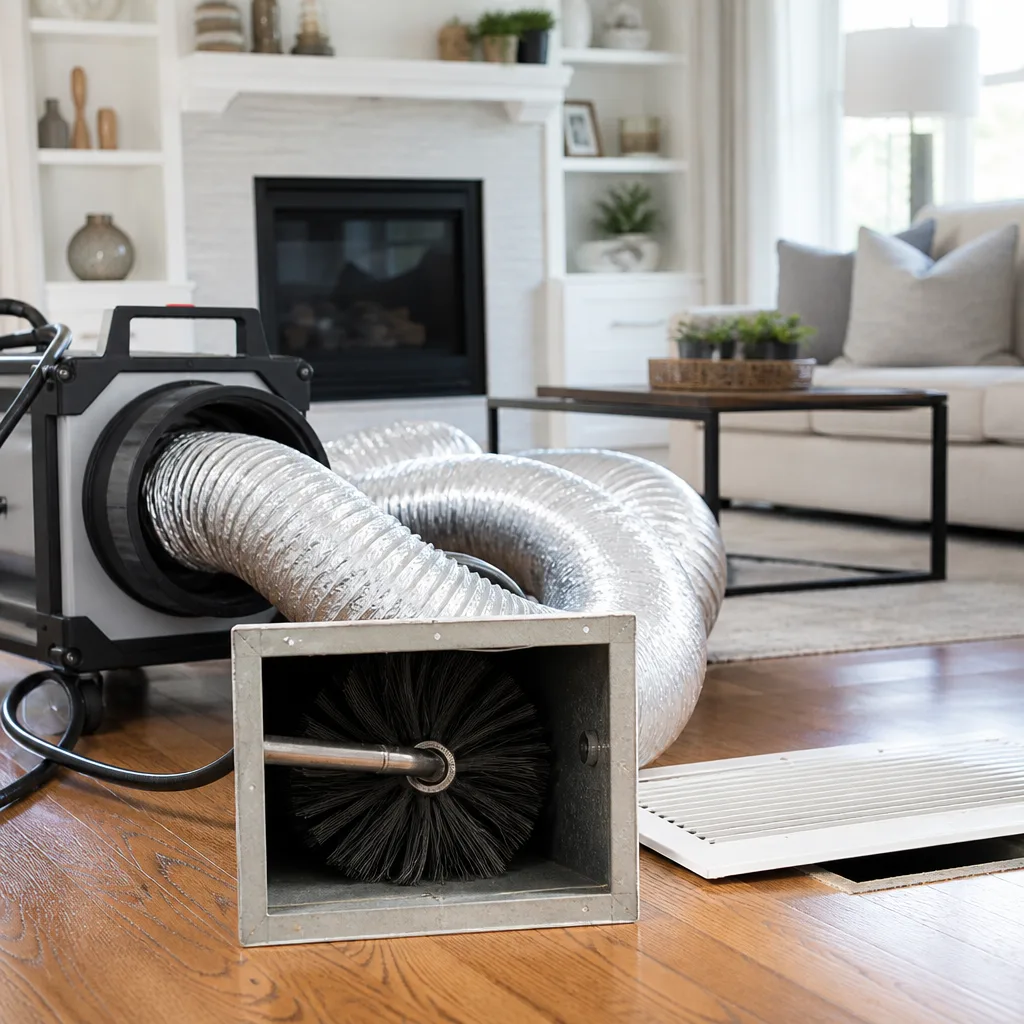
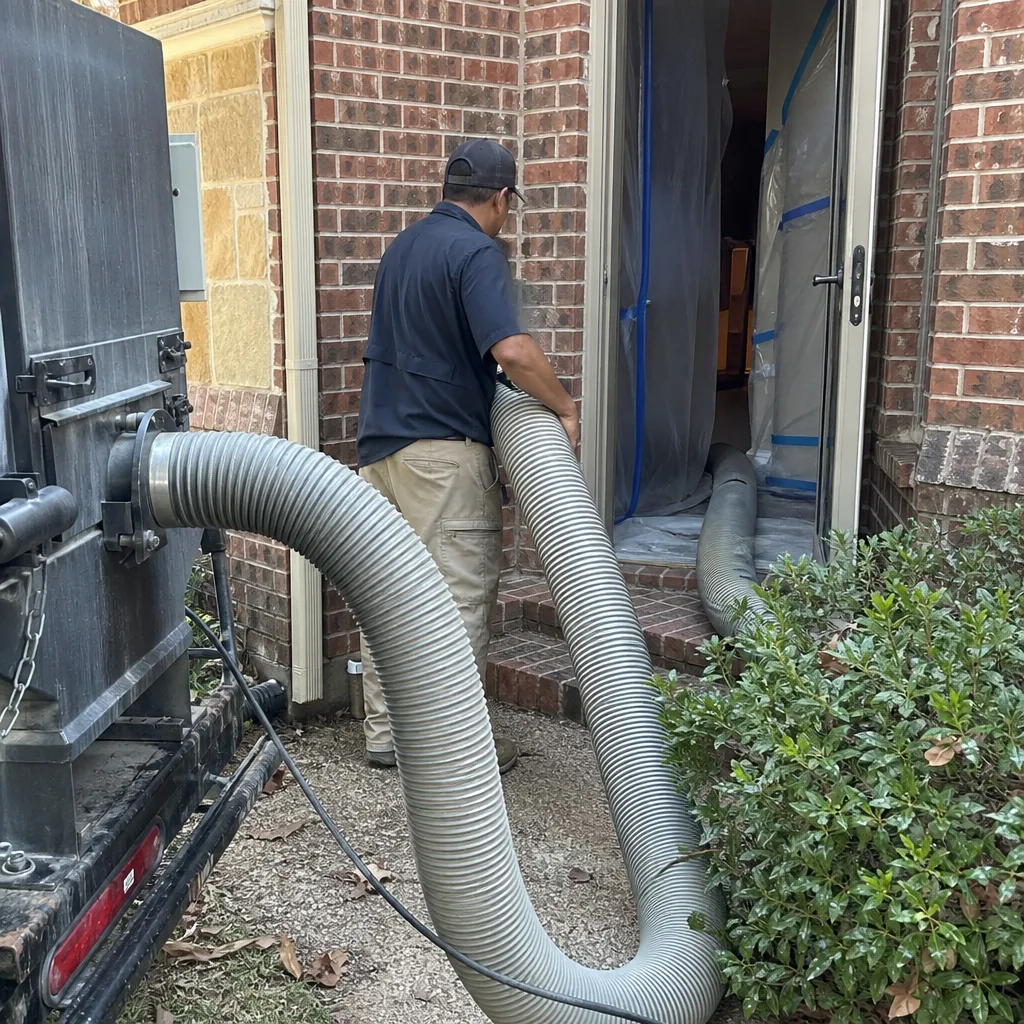
Negative-pressure extraction: This is the core method for professional duct cleaning. A large vacuum unit (Nikro and Abatement Technologies manufacture units we use) is connected to your duct system, creating suction that prevents debris from escaping into your home during agitation. Without negative pressure, brushing or blowing debris loose simply relocates it to your living space. The vacuum unit is typically truck-mounted or a portable unit of comparable CFM rating.
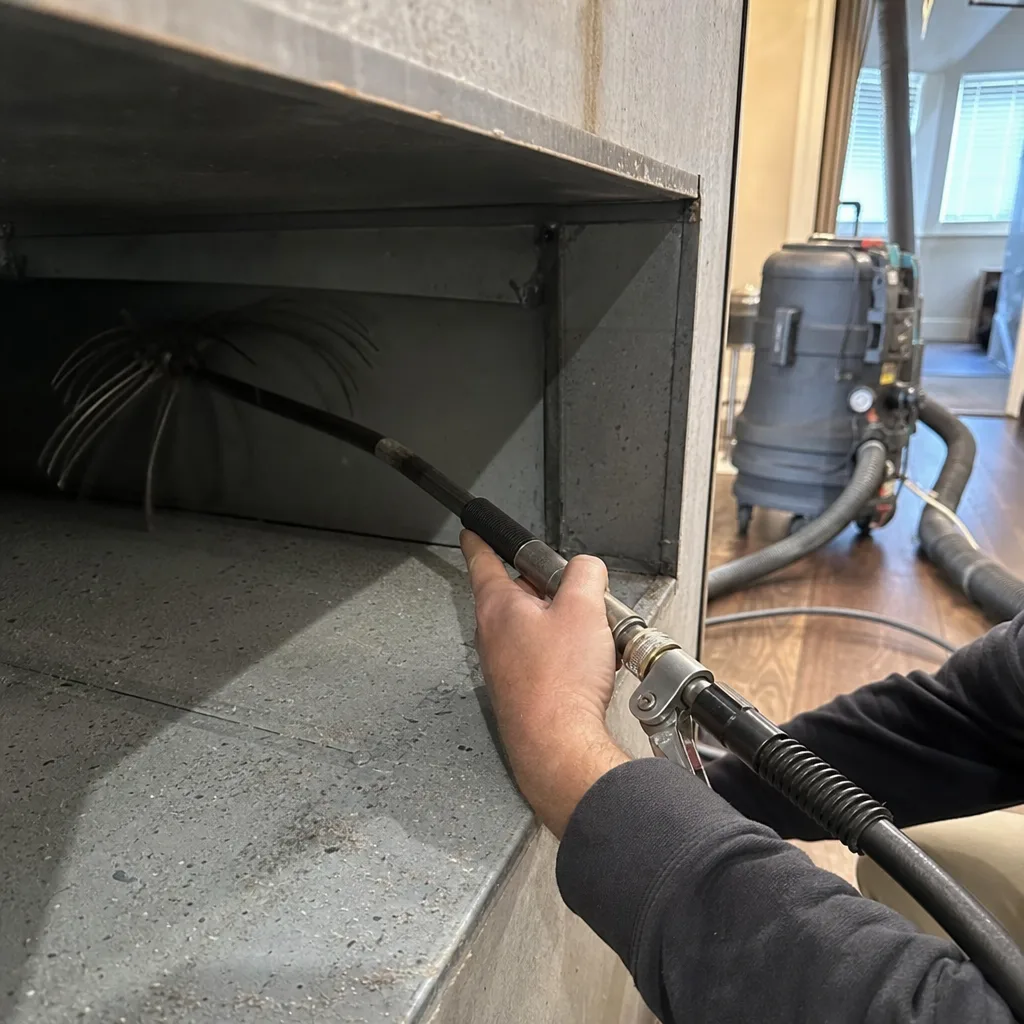
Agitation tools: The Rotobrush system we deploy uses a spinning brush with simultaneous vacuum extraction at the tool head. This matters because brush-only systems knock debris loose but don’t remove it; vacuum-only systems remove loose debris but don’t dislodge caked accumulation. The combination is what produces the before/after difference visible in our photo records.
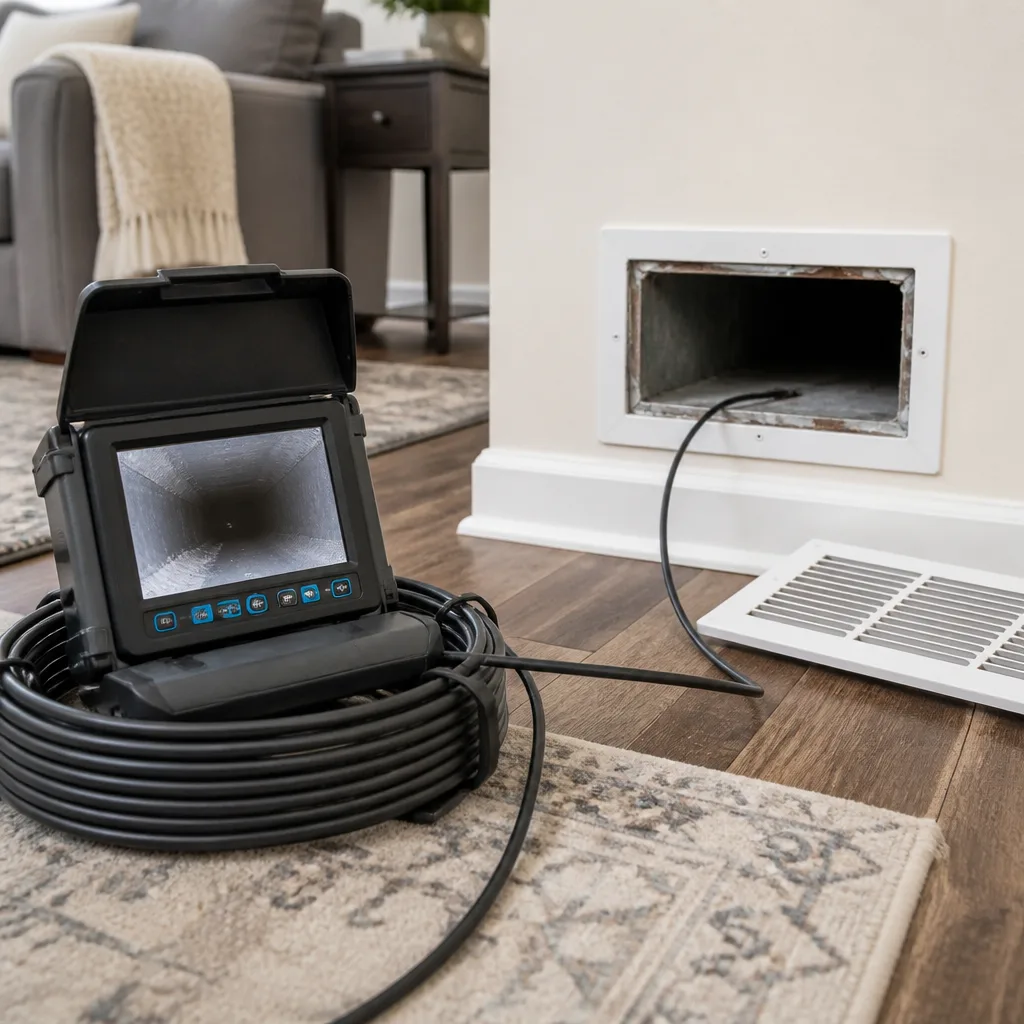
Inspection cameras: Before-and-after claims without photographic evidence are unverifiable. Our standard deliverable includes images from inside every duct run, timestamped and labeled. If a contractor cannot show you what they found and what they achieved, you have no basis to evaluate the work.
What skipping professional equipment costs: We’ve been called to Lewisville homes where a previous “cleaning” left debris dislodged but unextracted, resulting in register dust storms and, in one case, a clogged evaporator coil that required a $1,200 repair. The homeowner paid twice: once for ineffective work, once for the consequence.
Air Duct Cleaning in Lewisville from CleanRun includes the full equipment roster, written scope, and documented photo record on every visit. That is not marketing language; it is the Haven Standard, and it applies to every job since 2013.
Common Mistakes to Avoid
- Assuming all registers tell the same story. A clean kitchen supply register does not mean your master bedroom return is clean. Inspect every register independently; we’ve found 40% variance in contamination levels within single homes in Lewisville’s Creekside neighborhoods.
- Replacing filters on calendar time instead of condition. A filter changed every 90 days during cottonwood season is a filter that bypassed for 60 of those days. Inspect monthly, replace on condition.
- Using the wrong MERV for your system. Higher is not automatically better. A MERV 13 filter in a system with a weak blower motor reduces airflow, strains the motor, and can cause the filter to bow and bypass. Check your HVAC manufacturer’s pressure-drop specifications or ask your technician.
- Ignoring the return plenum. The plenum (the large duct section connecting your return grille to the air handler) is where the heaviest debris accumulates because all return air passes through it. It is not visible to homeowners and requires professional inspection. We’ve found plenums in Lewisville homes with 4-6 inches of accumulated debris that the homeowner had no idea existed.
- Buying on coupon price without written scope. The $79 duct cleaning coupon is a well-documented industry pattern: low entry price, upsold “mold treatment,” “sanitizing,” and per-vent add-ons that inflate the final invoice. We do not offer coupons. We offer a written price before work starts, every time, under Haven Standard Clause 1.
- Failing to document. Without photographs and a dated log, your maintenance history is your word against a buyer’s inspector or an insurance adjuster’s assumption. Documentation takes minutes; its absence can cost thousands in disputes or reduced sale price.
- Cleaning ducts that don’t need it. NADCA is correct: clean when contaminated. We’ve declined work in Lewisville homes where our inspection camera showed clean ductwork and the homeowner simply assumed “it’s been three years.” Unnecessary cleaning wastes money and, in rare cases with aggressive techniques, can damage aged flex duct.
When to Call a Professional
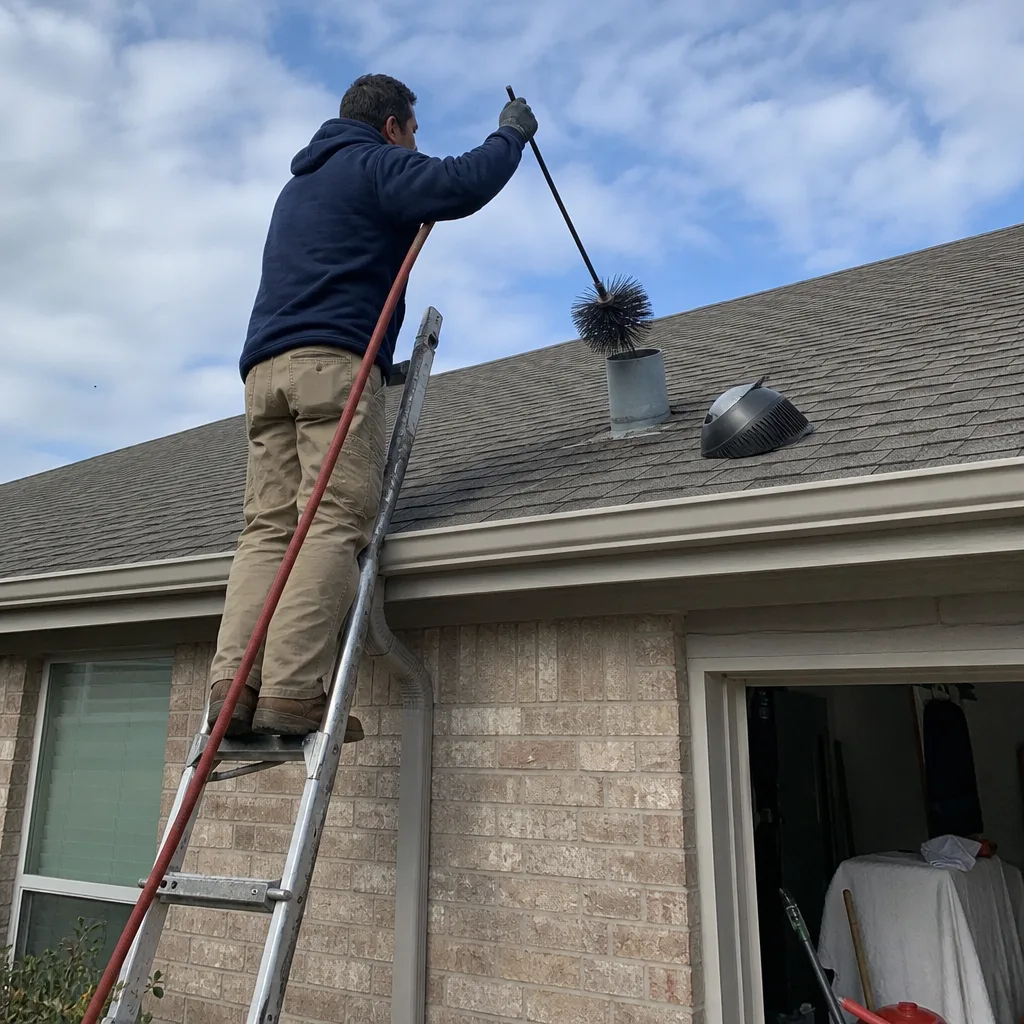
Call a licensed contractor when: your register inspection shows fail conditions beyond 12 inches of visible duct; you observe moisture, mold, or musty odor from any register; your filter track contains debris that suggests long-term bypass; you’ve had water intrusion, pest activity, or construction dust exposure; or it’s been more than three years since your last professional inspection with photo documentation.
CleanRun Air Duct Cleaning Lewisville offers free estimates in Lewisville. Every estimate includes a written price before work starts, a documented photo record of every duct run, and the 365-Day Done Right Promise backed in writing. Call (940) 240-8552 to schedule. If you have a written estimate from another contractor, we provide a Free Second Opinion at no cost, with our number next to theirs in writing.
CleanRun Air Duct Cleaning Lewisville home | Dryer Vent Cleaning in Lewisville | HVAC Cleaning in Lewisville
Frequently Asked Questions
Whole-system air duct cleaning for a typical Lewisville home ranges from $400 to $700, with inspection-only services at $180 to $340. The exact price depends on system size, duct accessibility, and contamination level. We quote one flat price per system in writing before any work begins - no per-vent add-ons, no post-arrival upsells. Call (940) 240-8552 for a written estimate at no cost.
The $79-$149 coupon price typically covers a brief vacuuming of accessible registers, with the actual cleaning scope sold as add-ons once the technician is in your home. We’ve reviewed competitor invoices from Lewisville customers that started at $89 and closed at $680. Our price is the price: agreed in writing, before work starts, under Haven Standard Clause 1.
Demand a documented photo record of inside every duct run, before and after. Our standard deliverable includes timestamped, labeled images from each run, delivered as part of the job record. If a contractor cannot or will not provide this, you have no verification that work occurred beyond the register face.
Every 2-3 years for typical Lewisville homes with standard filter maintenance. Compress to annually if you live near active construction, have pets that shed heavily, or experience the cottonwood and cedar pollen loading common to Lewisville’s riparian and wind-exposed neighborhoods. Extend only if your professional inspection with photo documentation shows minimal accumulation.
You can clean the first 12 inches of visible ductwork and the register face, which this checklist covers. Beyond that, shop vacuums lack the negative-pressure containment and agitation tools required to extract debris without redistributing it. We’ve been called to remediate DIY attempts that deposited debris deeper into the system. For full duct runs, hire a contractor with professional extraction equipment.
Humidity affects ducts directly: the July-August window with dew points above 70°F creates condensation risk on cold supply ducts in attics, which can combine with debris to support microbial growth. Hard water does not directly affect ductwork but can scale humidifier components in your air handler, requiring separate maintenance. If your Lewisville home has a whole-house humidifier, include it in your annual professional inspection scope.
The Bottom Line
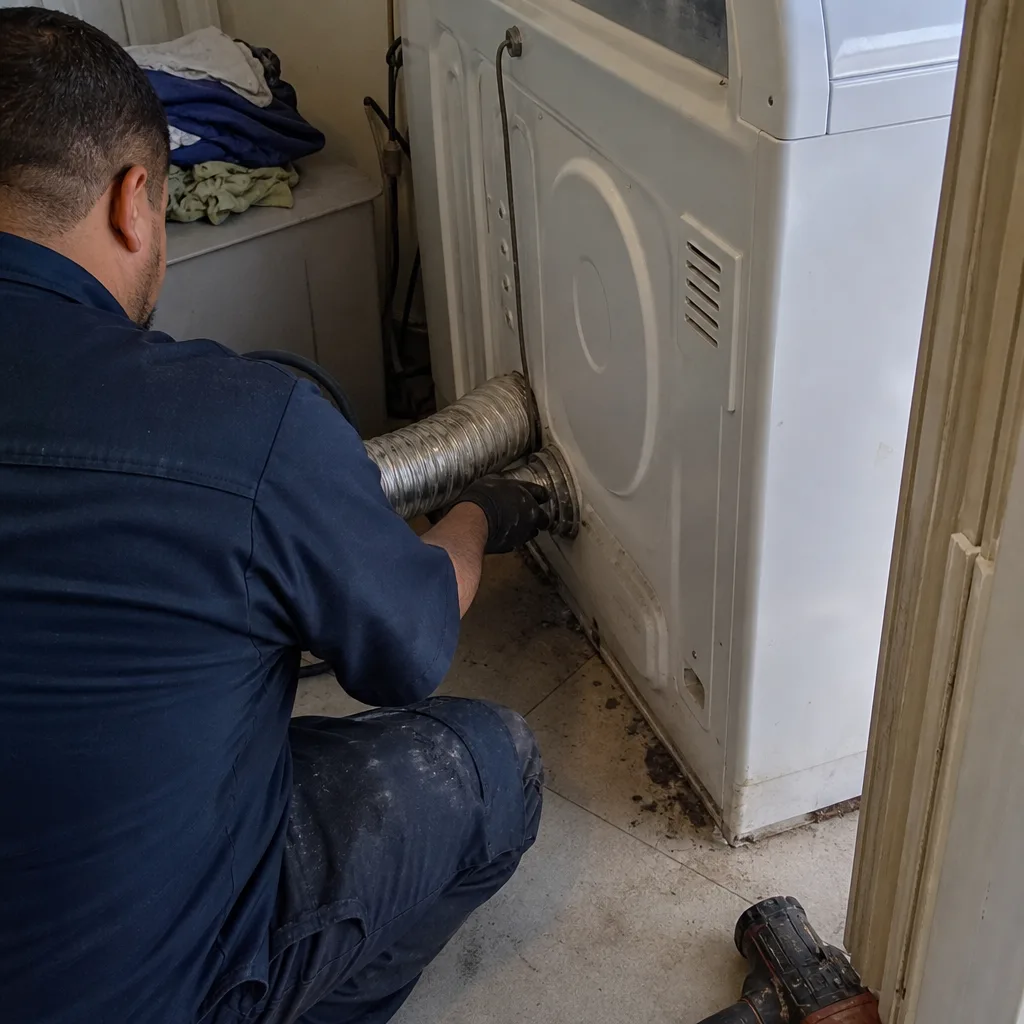
A maintenance checklist is only as good as its boundaries. This guide gives Lewisville homeowners a clear line: inspect registers monthly, filters quarterly, and the first 12 inches of ductwork with a flashlight and camera. Document everything. Know your local triggers - construction dust, cottonwood season, summer humidity - and compress your intervals when they hit. For anything beyond 12 inches of visible duct, hire a contractor who provides a written price before work, photographs every run, and stands behind the work with a written guarantee. The alternative is guessing, and guessing is expensive.
Written by Tomas Reyes, Owner at CleanRun Air Duct Cleaning Lewisville, serving Lewisville since 2013.